Garage Floor Care: Big Red Hydraulic Automotive Floor Jack T830020JS
Learn how to use and maintain the Big Red hydraulic automotive floor jack T830020JS to protect epoxy, PVC tile, and polished concrete garage floors.
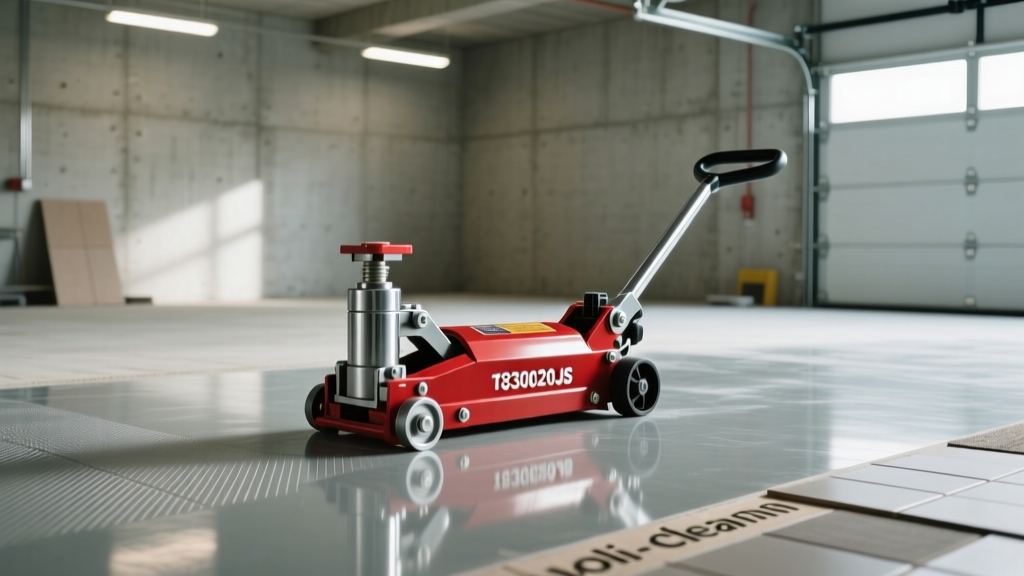
The Intersection of Heavy Lifting and Garage Flooring Preservation
Upgrading to a high-performance garage floor—whether metallic epoxy, polyaspartic, or interlocking PVC tiles—requires a fundamental shift in how you handle heavy shop equipment. The Big Red hydraulic automotive floor jack T830020JS is a staple in residential and light-commercial garages, prized for its 3-ton lifting capacity and rugged steel construction. However, its factory-installed steel casters and hydraulic fluid reservoirs pose significant threats to pristine flooring surfaces if operated without a dedicated maintenance and cleaning playbook.
When maintaining or deep-cleaning a garage floor, moving vehicles and heavy machinery is unavoidable. Dragging a 40-pound steel floor jack across a freshly cured epoxy coating or snapping the interlocking tabs of PVC tiles due to concentrated point-loads are common, costly mistakes. This guide details the exact protocols for utilizing, modifying, and maintaining the T830020JS to ensure your flooring investment remains flawless during heavy automotive work.
The T830020JS utilizes AW32 hydraulic oil. If a seal fails and fluid drips onto a newly applied epoxy or polyurethane topcoat, it can act as a plasticizer, softening the chemical cross-link and causing permanent delamination or dark, penetrating stains on unsealed concrete. Always inspect the jack's release valve and cylinder seals before rolling it onto a finished floor.
Big Red T830020JS Profile: Floor Impact Analysis
To understand how the Big Red hydraulic automotive floor jack T830020JS interacts with specialty flooring, we must analyze its physical footprint and weight distribution. The factory steel wheels are designed for raw concrete, not cosmetic or modular flooring systems.
| Jack Specification | Flooring Vulnerability | Required Mitigation |
|---|---|---|
| Steel Front Casters (2.5" dia) | Gouges polyaspartic coatings; snaps PVC tile tabs under dynamic load. | Swap to 90A durometer polyurethane non-marring wheels. |
| Steel Rear Wheels (4.5" dia) | Concentrates point-load PSI, crushing hollow-core interlocking tiles. | Use a 1/4" thick rubber load-spreading mat during rolling. |
| AW32 Hydraulic Reservoir | Oil leaks stain porous concrete and degrade epoxy chemical resistance. | Install a secondary drip tray or wrap the cylinder base. |
| 40 lbs Total Unit Weight | Inertia scratching when pushed abruptly across metallic flake epoxy. | Push from the handle base, never drag by the lifting arm. |
The Maintenance & Cleaning Playbook for Jacks on Specialty Floors
Integrating the T830020JS into your garage floor maintenance routine requires a strict operational sequence. Follow these steps every time you need to lift a vehicle for floor detailing, degreasing, or recoating prep.
Step 1: Pre-Roll Jack Decontamination
Before the jack touches your finished floor, clean its undercarriage. Shop floors accumulate micro-grit, metal shavings, and dried mud on the wheel axles. Use a stiff nylon brush and a citrus-based degreaser like Zep Heavy-Duty Citrus to scrub the casters. Metal shavings embedded in the wheel treads will act like sandpaper on a high-gloss epoxy finish.
Step 2: Wheel Modification (The Polyurethane Swap)
The most critical upgrade for the Big Red hydraulic automotive floor jack T830020JS is replacing the factory steel wheels. Purchase aftermarket polyurethane tread wheels with a 90A durometer rating and sealed precision bearings. Polyurethane provides the necessary rigidity to support a 3-ton load without flat-spotting, while remaining soft enough to prevent micro-scratching on polyaspartic and epoxy surfaces.
Step 3: The Load-Spreading Protocol for Modular Tiles
If your garage features interlocking PVC or polypropylene tiles (such as RaceDeck or Swisstrax), rolling a heavy steel jack directly over the seams can disengage the locking mechanisms. Always lay down a 3mm thick vulcanized rubber mat (minimum 24" x 48") to distribute the point-load PSI across multiple tiles before positioning the jack.
Flooring-Specific Protocols When Using the T830020JS
Different garage flooring materials react differently to the mechanical stress of hydraulic jacks. According to industry guidelines on epoxy maintenance, preserving the chemical and physical integrity of the surface requires tailored approaches.
- Metallic Epoxy & Polyaspartic Coatings: These surfaces are highly susceptible to scratching from lateral friction. Never pivot the T830020JS on its front casters while under load. Lift the vehicle, then reposition the jack by carrying the handle to distribute weight evenly across all four wheels before rolling.
- Polished & Densified Concrete: While highly scratch-resistant, polished concrete is vulnerable to staining. The T830020JS must be inspected for weeping hydraulic fluid at the release valve. If fluid contacts the concrete, it will penetrate the densifier layer and require a specialized poultice draw-out process.
- Interlocking PVC Tiles: Avoid leaving the jack stationary in one spot for more than 48 hours. Prolonged static loads from the steel frame can cause permanent indentation in softer PVC formulations, especially in unclimate-controlled garages where summer heat softens the plastic.
Troubleshooting Matrix: Hydraulic Leaks on Garage Floors
Even with meticulous maintenance, hydraulic seals degrade. If the T830020JS leaks AW32 fluid onto your floor, immediate and specific remediation is required to prevent permanent damage. Expert cleaning protocols dictate avoiding harsh solvents that can strip floor coatings.
| Floor Type | Immediate Action (0-15 Mins) | Deep Cleaning Remediation | Chemicals to AVOID |
|---|---|---|---|
| Epoxy / Polyaspartic | Blot with microfiber; do not wipe. | Wash with Simple Green Pro HD and warm water. | Acetone, MEK, Brake Cleaner. |
| PVC Interlocking Tiles | Lift tile, clean subfloor to prevent mold. | Degrease tile with diluted Dawn dish soap. | Xylene, Toluene, Paint Thinner. |
| Polished Concrete | Apply oil-absorbent clay (kitty litter). | Poultice with diatomaceous earth and acetone. | Muriatic acid (strips polish). |
Jack Maintenance to Prevent Floor Contamination
Protecting your floor starts with maintaining the Big Red hydraulic automotive floor jack T830020JS itself. A well-maintained jack is a clean jack. Implement this bi-annual maintenance schedule to ensure the tool remains floor-safe.
Pro-Tip: Bleed the hydraulic cylinder every 12 months. Trapped air causes the jack to 'spongy' drop, which can slam the lifting saddle onto a vehicle's pinch weld, dropping debris and rust flakes directly onto your pristine epoxy floor.
- Seal Inspection: Wipe the main ram cylinder with a lint-free cloth. Run your finger around the base seal. If you feel any moisture or residue, the O-ring is failing and must be replaced using a Torin-compatible seal kit before the jack re-enters the finished floor zone.
- Fluid Level Check: Open the oil filler plug on the reservoir. The AW32 fluid should be exactly 3/16" below the inner cylinder. Overfilling causes blowout leaks when the jack is stored horizontally; underfilling causes cavitation and erratic lowering.
- Chassis Wipe-Down: The welded steel frame of the T830020JS collects aerosolized brake dust and road grime. Wipe the entire chassis down with an isopropyl alcohol (IPA) solution (70% concentration) to remove static-cling dust that would otherwise transfer to your floor upon contact.
By treating your heavy lifting equipment as an integral part of your garage flooring ecosystem, you eliminate the primary sources of mechanical and chemical damage. The Big Red hydraulic automotive floor jack T830020JS is a highly capable tool, but its factory configuration assumes raw, unfinished concrete. By upgrading the casters, enforcing strict pre-roll cleaning, and utilizing load-spreading mats, you ensure that your automotive maintenance never compromises your flooring investment.