Selecting a Furry Variety of Carpet: Shag and High-Pile Guide
Explore the furry variety of carpet with our taxonomy guide. Compare shag, high-pile, and faux fur fibers, padding specs, and room-by-room selection.
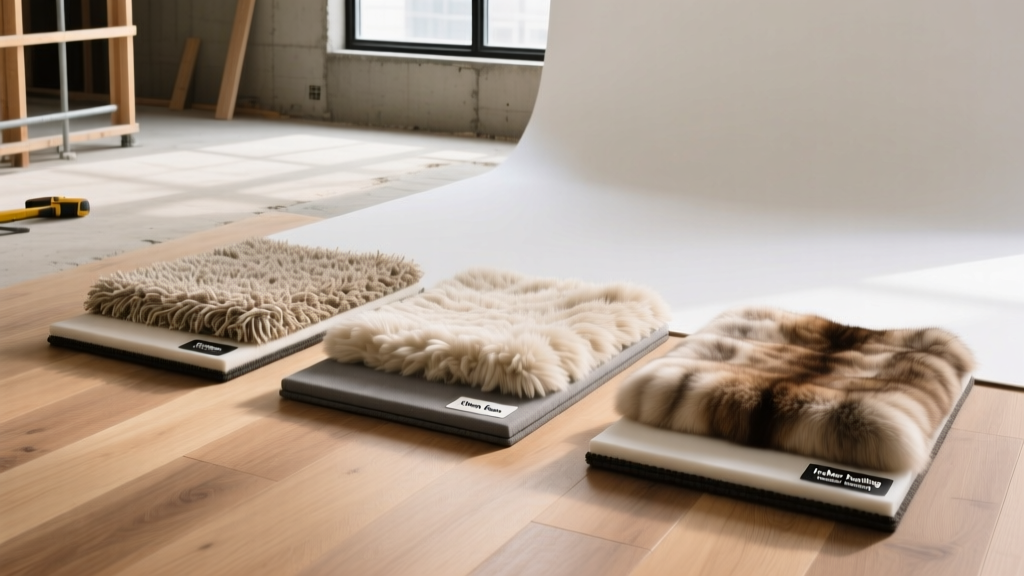
The Material Taxonomy of Furry Carpets
When interior designers and flooring specialists refer to a furry variety of carpet, they are describing a structural classification rather than a single fiber type. This category encompasses any textile floor covering with a pile height exceeding 1 inch, including traditional shag, modern high-pile plush, frieze, and synthetic faux fur overlays. The defining characteristic is the deep, tactile surface that traps air, providing superior acoustic dampening and thermal insulation compared to low-pile commercial carpets.
Selecting the correct material within this taxonomy requires understanding how different fibers behave when extruded into long, unsupported tufts. A fiber that performs exceptionally well in a tight, low-pile loop may completely collapse or mat when stretched into a 2-inch shag.
| Fiber Type | Resilience & Crush Resistance | Stain Resistance | Avg. Material Cost (per sq ft) | Best Application |
|---|---|---|---|---|
| Nylon 6,6 | Excellent (springs back well) | High (with factory treatment) | $4.50 - $8.00 | High-traffic living areas, family rooms |
| Polyester (PET) | Poor to Fair (prone to matting) | High (water-based), Low (oil-based) | $2.00 - $4.50 | Low-traffic bedrooms, guest rooms |
| Wool | Good (natural crimp retains shape) | Moderate (requires prompt cleaning) | $9.00 - $16.00 | Luxury master suites, formal lounges |
| Acrylic (Faux Fur) | Poor (flattens under furniture) | Moderate | $12.00 - $25.00 | Area rugs, accent zones, nurseries |
For wall-to-wall installations of a furry variety of carpet, Nylon 6,6 remains the industry standard due to its molecular memory, which allows tall tufts to bounce back after being compressed by foot traffic. Polyester, while exceptionally soft and budget-friendly, lacks this structural memory and will permanently mat in high-traffic pathways within 12 to 18 months.
Technical Specifications: Pile Height, Density, and Face Weight
The luxurious feel of high-pile flooring is governed by three critical metrics. Ignoring these specifications is the primary cause of premature failure in shag installations.
- Pile Height: True shag and furry carpets range from 1.0 inch to 3.0 inches. Anything below 1.0 inch is classified as a standard plush or textured cut pile.
- Face Weight: This measures the ounces of fiber per square yard. For high-pile carpets, look for a face weight between 40 oz and 60 oz. Weights below 35 oz will result in a sparse, stringy appearance that exposes the primary backing.
- Stitch Rate: The number of stitches per inch. A lower stitch rate (e.g., 6-8 stitches) creates the loose, shaggy aesthetic, but must be balanced with a high face weight to maintain structural integrity.
The Padding Trap: Why Standard Rebond Ruins Shag
The most catastrophic mistake made during the installation of a furry variety of carpet is using standard 1/2-inch, 6-pound rebond polyurethane padding. Tall pile requires a firm foundation. If the pad is too thick and soft, the carpet tufts will 'bottom out'—meaning the foot compresses the fiber all the way down to the hard subfloor. This repeated bottoming-out breaks the fiber backing and causes severe, irreversible matting.
The Fix: Mandate a high-density, low-profile pad. Specify a 1/4-inch to 3/8-inch thickness with an 8-pound to 10-pound density rating. High-density felt or specialized memory foam pads designed specifically for high-pile textiles are required to maintain the warranty.
Room-by-Room Selection Framework
Because of their deep pile structure, these carpets interact uniquely with environmental factors and household traffic. Use this decision matrix to determine placement.
Optimal Environments
- Master Bedrooms: The ideal environment. Low foot traffic, barefoot use, and a desire for acoustic dampening and warmth make high-pile nylon or wool the perfect choice.
- Nurseries: Provides a soft, safe surface for infants. Ensure the carpet is certified for low VOC emissions to protect indoor air quality, referencing EPA guidelines on volatile organic compounds in flooring materials.
- Reading Nooks / Sunrooms: Creates a distinct, cozy zone. Acrylic faux fur overlays work well here as accent pieces.
High-Risk Environments (Avoid)
- Staircases: The tall pile bends over the stair nose, creating a severe slip hazard and accelerating wear at the bend radius. Use low-profile carpet or hard surface transitions on stairs.
- Dining Rooms: Chair casters will permanently crush the pile, and dropped food particles become nearly impossible to extract from 2-inch deep fibers.
- Basements: High-pile carpets trap ambient moisture against the subfloor, increasing the risk of mold growth beneath the dense textile layer.
Maintenance Protocols and Edge Cases
Maintaining a furry variety of carpet requires a departure from standard vacuuming routines. The long fibers are highly susceptible to mechanical damage from improper cleaning equipment.
The Vacuuming Dilemma
Standard upright vacuums utilize a rotating beater bar (brush roll) to agitate dirt from the base of the carpet. In a high-pile shag, the beater bar will aggressively grab, pull, and snap the long tufts, leading to a frayed, damaged appearance.
Pro-Tip: Vacuum Configuration
Always disable the brush roll when cleaning high-pile carpets. Use a suction-only canister vacuum or an upright with a 'Hard Floor / High Pile' setting that lifts the beater bar entirely. Alternatively, use a specialized high-pile vacuum head featuring wide, non-rotating air channels. The Carpet and Rug Institute (CRI) maintains a certified vacuum list indicating which models are safe for deep-pile textiles.
Managing Shedding and Sprouting
Wool and staple-fiber polyester shags will shed heavily for the first 60 to 90 days post-installation. This is a normal off-gassing of loose fibers cut during manufacturing. Additionally, 'sprouting'—where a single tuft extends slightly higher than the rest—is common. Never pull a sprouted fiber; simply trim it flush with the surrounding pile using sharp grooming shears.
Cost Breakdown and Installation Realities
Budgeting for a furry variety of carpet requires accounting for specialized installation labor and premium padding requirements. The deep pile makes seaming significantly more difficult, as installers must hand-trim the long fibers at the seam line to prevent a visible ridge.
| Cost Component | Polyester Shag (Budget) | Nylon 6,6 High-Pile (Mid-Tier) | Wool / Faux Fur (Luxury) |
|---|---|---|---|
| Material (per sq ft) | $2.00 - $4.50 | $4.50 - $8.00 | $9.00 - $25.00 |
| High-Density Pad (per sq ft) | $0.75 - $1.25 | $1.00 - $1.75 | $1.50 - $2.50 |
| Specialty Installation (per sq ft) | $1.50 - $2.50 | $2.00 - $3.50 | $3.50 - $6.00 |
| Estimated Total Project (per sq ft) | $4.25 - $8.25 | $7.50 - $13.25 | $14.00 - $33.50 |
When soliciting bids, explicitly verify that the installer has experience with power-stretching high-pile textiles. If the carpet is not stretched to the manufacturer's specified tension (usually requiring a power stretcher rather than a knee kicker), the heavy, thick material will develop ripples and buckles within the first year of use.