How to Clean Carpet: Top Brand Formulas and Extractor Deep-Dive
Compare top carpet cleaning brands like Bissell and Rug Doctor. Learn how to clean carpet using specific enzymatic formulas and commercial extractors.
The Chemistry of Carpet Cleaning: Surfactants and pH Levels
Understanding how to clean carpet effectively requires moving beyond generic supermarket sprays and examining the chemical engineering behind professional-grade product lines. Carpet soils are not uniform; they consist of dry particulate matter, oil-based residues, and water-soluble stains. Top-tier brands formulate their solutions using specific surfactant profiles to address these distinct soil types.
Brands like Resolve Professional Strength and Bissell Pro Max Clean & Protect rely heavily on anionic surfactants combined with alkaline builders (pH 9.0 to 10.5). This high pH is highly effective at saponifying oils and breaking down greasy foot-traffic lanes. However, leaving high-pH residues in the carpet fibers leads to rapid re-soiling and cellulose browning in natural-fiber backings.
For organic stains like pet urine, blood, or food spills, oxidizing and enzymatic product lines are required. Nature's Miracle Advanced Stain and Odor Eliminator utilizes a bio-enzymatic formula containing specific protease and amylase enzymes that digest protein and starch molecules. Unlike oxidizers (like hydrogen peroxide-based OxiClean Carpet & Area Rug Remover), which bleach the stain through a chemical reaction, enzymes physically consume the organic matter. Enzymes require a dwell time of 10 to 15 minutes and a humid environment to remain active, whereas oxidizers work in 3 to 5 minutes but carry a higher risk of stripping carpet dyes if left unmonitored.
Machine Deep-Dive: Bissell vs. Rug Doctor vs. Hoover
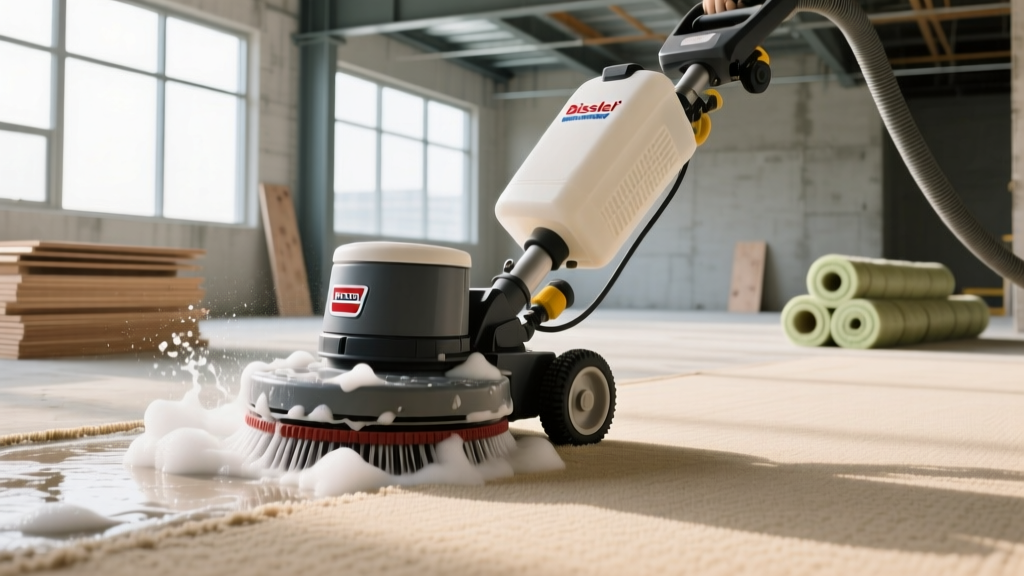
The mechanical extraction phase is where the actual soil removal occurs. Consumer-grade spot cleaners lack the water-lift (measured in inches of mercury) and spray pressure (PSI) required to flush deep-pile carpets. When evaluating how to clean carpet using portable extractors, three dominant brand lines dictate the residential and light-commercial market in 2026.
| Machine Model | Motor Amps | Tank Capacity | Brushroll Tech | Spray Pressure | 2026 Avg. Price |
|---|---|---|---|---|---|
| Bissell Big Green 86T3 | 12 Amps | 1.75 Gallon | DirtLifter PowerBrush | ~50 PSI | $379.00 |
| Rug Doctor Pro Deep Cleaner | 10 Amps | 2.8 Gallon | Vibrating Brush | ~45 PSI | $39.99 / day (Rental) |
| Hoover PowerScrub Elite FH50251 | 10 Amps | 1.25 Gallon | SpinScrub Brushes | ~35 PSI | $249.00 |
The Bissell Big Green 86T3 remains the benchmark for residential deep cleaning. Its dual-tank system ensures that clean water and dirty water never mix, a critical feature for preventing cross-contamination. The 50 PSI spray pressure is sufficient to penetrate 1-inch plush nylon piles. Conversely, the Rug Doctor Pro relies on a vibrating brush mechanism rather than rotating bristles, which is gentler on delicate Berber and loop-pile carpets that can easily fray under aggressive rotating brushrolls.
Fiber-Specific Protocols: Nylon 6,6 vs. Triexta
Your carpet's polymer composition dictates the thermal and chemical limits of your cleaning protocol. According to the IICRC S100 Standard for Professional Cleaning of Textile Floorcoverings, applying incorrect heat or chemistry can permanently alter the fiber's molecular structure.
- Nylon 6,6 (e.g., Shaw Anso, Mohawk Ultron): Highly resilient and stain-resistant due to factory-applied fluorochemical coatings. Requires hot water extraction (150°F to 180°F for truck-mounts; maximum tap heat for portables). Nylon is susceptible to acid-dye stains (coffee, red wine) if the factory stain-resist coating degrades. Re-applying a fluoropolymer protector like Scotchgard Heavy Traffic Carpet Protector post-extraction is mandatory to maintain warranty compliance.
- Triexta (e.g., Mohawk SmartStrand): Inherently stain-resistant at the polymer level, requiring no topical chemical coatings. Triexta is hydrophobic, meaning water-based stains sit on the surface. However, it is highly oleophilic (attracts oils). When learning how to clean carpet made of Triexta, you must use a solvent-based pre-spray or a high-surfactant alkaline formula to cut body oils, followed by a thorough extraction to prevent wicking.
- PET Polyester: Excellent colorfastness but poor resilience. PET carpets crush easily and attract oil-based soils rapidly. Avoid high-heat extraction, which can melt or distort the fiber tips. Stick to warm water (120°F) and heavy agitation.
Step-by-Step Extraction Protocol for Deep Soiling
To achieve professional-level results using consumer-grade brand equipment, follow this exact sequence. Skipping the dry soil removal phase will turn particulate dirt into mud, driving it deeper into the carpet backing.
- HEPA Dry Extraction: Vacuum the area with a CRI Seal of Approval vacuum cleaner. Make four passes: two north-south, two east-west. This removes up to 85% of dry particulate soil.
- Pre-Spray Application: Apply an alkaline pre-spray (like Bissell Tough Stain Pre-Treat) to high-traffic zones. Allow a 10-minute dwell time. Do not let the solution dry.
- Mechanical Agitation: Use a carpet rake or a counter-rotating brush (CRB) to work the pre-spray into the base of the pile. This breaks the surface tension of the soil.
- Hot Water Extraction: Fill the extractor's clean tank with hot tap water (approx. 120°F) and the manufacturer-specified extraction formula. Make one slow, overlapping wet pass forward, and one slow, dry pull backward. Never push and pull the trigger continuously; only spray on the forward stroke to prevent over-wetting.
- Acidic Rinse (Crucial): Empty the clean tank and refill with warm water mixed with an acidic fabric rinse (pH 4.0). Run a final dry-pass over the carpet to neutralize alkaline residues and accelerate drying.
- Air Movement: Deploy high-velocity air movers. Carpet must dry within 6 to 8 hours to prevent microbial growth and delamination of the latex backing.
Troubleshooting Common Extraction Failures
Even with premium brand formulas, chemical and physical reactions can cause post-cleaning anomalies. Here is how to diagnose and fix them:
Wicking (Stains returning after 24 hours): This occurs when a spill has penetrated the primary and secondary backings. During extraction, moisture reactivates the soil in the pad, and as the carpet dries, capillary action pulls the soil back to the fiber tips. Fix: Use a sub-surface extraction tool (like the Water Claw) to flush the pad, or apply a localized encapsulation cleaner that crystallizes the soil so it can be vacuumed away.
Cellulose Browning: Appears as yellow or brown patches on natural fiber carpets (wool, jute, sisal) or carpets with natural backings. This is a lignin reaction caused by high moisture, high pH, and slow drying. Fix: Mist the affected area with a specialized reducing agent or a mild acid rinse (white vinegar diluted 1:10 with water works in a pinch), agitate lightly, and dry rapidly with fans.
Rapid Re-soiling (Sticky feel): Caused by using too much shampoo and failing to rinse. The dried surfactant acts like a magnet for new dirt. Fix: Re-extract the area using only plain hot water and an acidic neutralizer to strip the leftover soap.
For comprehensive warranty requirements and approved cleaning methodologies, always refer to your specific manufacturer's guidelines, such as the Shaw Floors Flooring Care portal, which mandates the use of CRI-approved solutions to keep their lifetime stain warranties valid. Furthermore, verifying that your cleaning products carry the Carpet and Rug Institute Seal of Approval ensures the chemical formulation has been independently lab-tested for colorfastness, residue, and soil removal efficacy.