Luxury Vinyl Plank Taxonomy: SPC vs WPC Core Selection Guide
Navigate the luxury vinyl plank taxonomy. Compare SPC, WPC, and flexible LVP cores, wear layers, and click systems to choose the right floor.
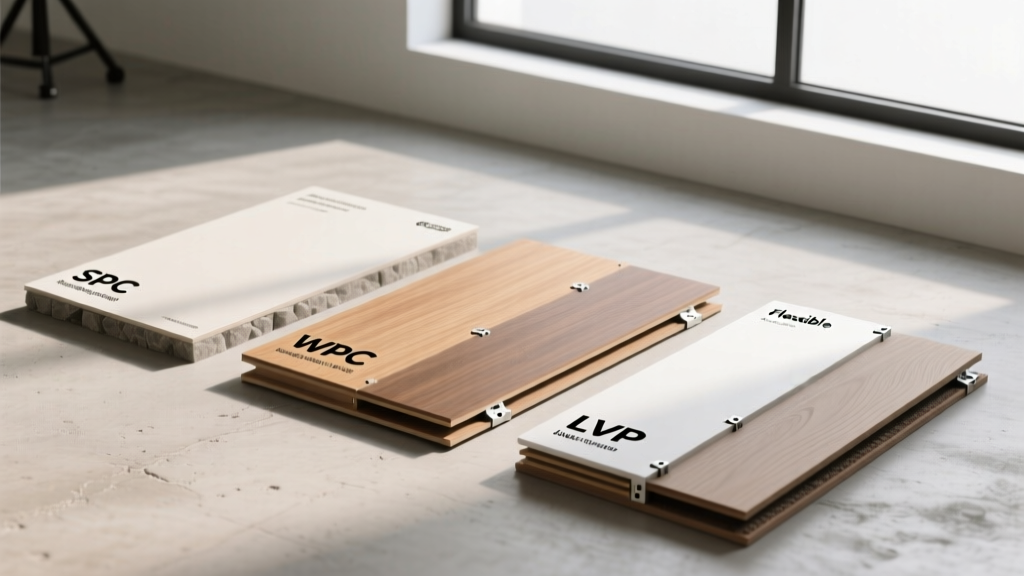
The Evolution of Luxury Vinyl Plank (LVP) Construction
The term "luxury vinyl plank" (LVP) is no longer a monolith. Under the umbrella of ASTM F3261 (Standard Specification for Resilient Luxury Vinyl Flooring), the category has fractured into highly specialized sub-types defined by their core composition, wear layer chemistry, and acoustic backing. Selecting the wrong taxonomy for a specific environment—such as installing a foamed WPC core in a high-impact commercial zone or a rigid SPC core over an uneven subfloor—leads to premature joint failure, telegraphing, and acoustic complaints. This guide dissects the exact material taxonomy of modern LVP to ensure precise specification.
Core Composition Matrix: SPC vs. WPC vs. Flexible
The core layer dictates the dimensional stability, impact resistance, and subfloor forgiveness of the plank. Below is the technical breakdown of the three primary LVP core taxonomies available in the current market.
| Core Type | Material Composition | Density (g/cm³) | Subfloor Tolerance | Impact Resistance | Avg. Material Cost (2026) |
|---|---|---|---|---|---|
| SPC (Stone Plastic Composite) | Limestone powder (60-70%) + PVC stabilizers | ~2.0 | 1/8" over 6 ft | Exceptional (Dent-proof) | $3.00 - $5.50 / sq ft |
| WPC (Wood/Polymer Composite) | Wood flour/foaming agent + PVC resin | ~1.2 | 3/16" over 6 ft | Moderate (Susceptible to point dents) | $4.00 - $7.00 / sq ft |
| Flexible LVP (Dryback/Click) | Pure PVC + plasticizers (no rigid filler) | ~1.4 | 1/16" over 6 ft (Must be perfect) | Low (Telegraphs subfloor flaws) | $1.50 - $3.50 / sq ft |
SPC (Stone Plastic Composite): The Rigid Standard
SPC dominates the residential and light-commercial market due to its extreme dimensional stability. Because it contains no foaming agents, it does not expand or contract significantly with temperature fluctuations (typically <0.05% dimensional change). However, its high density makes it a poor acoustic insulator on its own, necessitating a high-quality attached underlayment in multi-family dwellings.
WPC (Wood Polymer Composite): The Acoustic Performer
WPC utilizes a foaming agent that creates microscopic air pockets within the core. This lowers the density, providing superior underfoot comfort and natural sound dampening. According to the Resilient Floor Covering Institute (RFCI), WPC is ideal for above-grade residential bedrooms and living areas where acoustic transfer and foot fatigue are primary concerns, but it should be avoided in areas with heavy point-loads (e.g., kitchen islands, commercial rolling chairs).
Flexible LVP: The Commercial Glue-Down
While flexible click-LVP exists, the taxonomy is most prominent in glue-down commercial applications. Flexible LVP requires a self-leveling underlayment (SLU) prep to achieve a 1/16" tolerance over 6 feet. Any deviation will result in "telegraphing," where subfloor imperfections permanently mirror through the wear layer.
Decoding the Wear Layer: Mils vs. Millimeters
The wear layer is the clear, protective top coat that dictates the floor's lifespan. Marketing materials often obfuscate thickness metrics, making it critical to convert and verify specifications.
- 12 Mil (0.3mm): Standard residential. Suitable for low-traffic bedrooms and guest rooms. Typically features a standard UV-cured urethane finish.
- 20 Mil (0.5mm): Heavy residential and light commercial (e.g., boutique retail). Usually enhanced with aluminum oxide or ceramic bead additives for micro-scratch resistance.
- 28+ Mil (0.7mm+): Heavy commercial (Class 33/43). Mandatory for high-rolling traffic, grocery aisles, and healthcare corridors. Requires a commercial-grade diamond-hard urethane coating.
"The wear layer thickness only protects against abrasive wear and staining. It does not protect against impact denting. A 28-mil wear layer on a soft WPC core will still dent from a dropped cast-iron pan; impact resistance is strictly a function of the core density."
— Senior Flooring Inspector, Floor Covering News Technical Advisory Board
Underlayment & Acoustic Performance (Delta IIC)
For floating LVP installations, the attached underlayment (pad) is critical for moisture mitigation, joint support, and acoustics. The two dominant materials in the current taxonomy are EVA and IXPE.
EVA (Ethylene-Vinyl Acetate)
EVA is a cost-effective, soft foam. While it provides initial acoustic benefits, it suffers from high "compression set"—meaning it permanently flattens under sustained static loads (like a heavy sofa or kitchen cabinets). This flattening can cause the LVP click-locks to shear and fail over time.
IXPE (Cross-Linked Polyethylene)
IXPE is a closed-cell, chemically cross-linked foam. It is 100% waterproof, highly resistant to compression set, and maintains its structural support for the click-lock joints over the lifespan of the floor. When specifying LVP for multi-family or HOA-regulated properties, always mandate an IXPE pad with a minimum Delta IIC (impact insulation improvement) rating of 22 or higher.
Installation Profile: Valinge vs. Unilin Click Systems
The mechanical locking system is the weakest link in any floating floor taxonomy. Understanding the patent holders behind the click mechanisms helps predict installation speed and joint integrity.
Valinge 5G (Fold-Down)
Uses a flexible glass-fiber or plastic locking tongue. The plank is angled on the long side and simply dropped (folded down) on the short side. Pros: Enables one-person installation; highly forgiving on slightly uneven subfloors. Cons: The plastic tongue can snap if forced at the wrong angle during removal.
Unilin (Angle-Angle)
Requires the plank to be angled into the long side, then the entire row is angled up and dropped into the short side simultaneously. Pros: Extremely rigid mechanical lock; superior sheer strength. Cons: Usually requires a tapping block and two installers; difficult to use in tight corners or closets.
Real-World Selection Framework
Use this decision matrix to select the exact LVP taxonomy for your specific project parameters.
- IF the project is a ground-level basement with minor moisture concerns and heavy furniture → SELECT: SPC Core + 20 Mil Wear Layer + IXPE Pad + Valinge 5G.
- IF the project is a second-story condo with strict HOA acoustic bylaws → SELECT: WPC Core (for natural sound absorption) + 12 Mil Wear Layer + 2mm Acoustic Cork or High-Delta IXPE attached pad.
- IF the project is a commercial retail space with rolling loads and high foot traffic → SELECT: Glue-Down Flexible LVP + 28 Mil Commercial Wear Layer + Full-spread moisture-cured urethane adhesive.
- IF the subfloor is existing ceramic tile with wide, uneven grout lines → SELECT: SPC Core (minimum 5mm total thickness) to prevent grout-line telegraphing, paired with a self-leveling skim coat over the grout joints prior to installation.
For comprehensive installation standards and subfloor moisture testing protocols (such as the ASTM F2170 relative humidity test for concrete slabs), always consult the Forbes Home Improvement LVP Guidelines and the manufacturer's specific technical data sheets before finalizing your material schedule.