Best Luxury Vinyl Tile Brands and Core Product Lines 2026
Deep-dive into 2026 luxury vinyl tile brands. Compare Shaw, Mannington, and AHF product lines, pricing, wear layers, and SPC vs WPC cores.
The 2026 LVT Landscape: Beyond Basic Wood Looks
The luxury vinyl tile (LVT) and luxury vinyl plank (LVP) market has matured significantly. In 2026, the differentiation between premium and builder-grade LVT is no longer just about the printed visual layer; it is defined by core density, bevel engineering, and proprietary topcoat chemistry. According to industry analysis by Floor Covering News, the shift toward Embossed In Register (EIR) texturing and painted micro-bevels has made high-end LVT nearly indistinguishable from site-finished hardwood, even under oblique natural light.
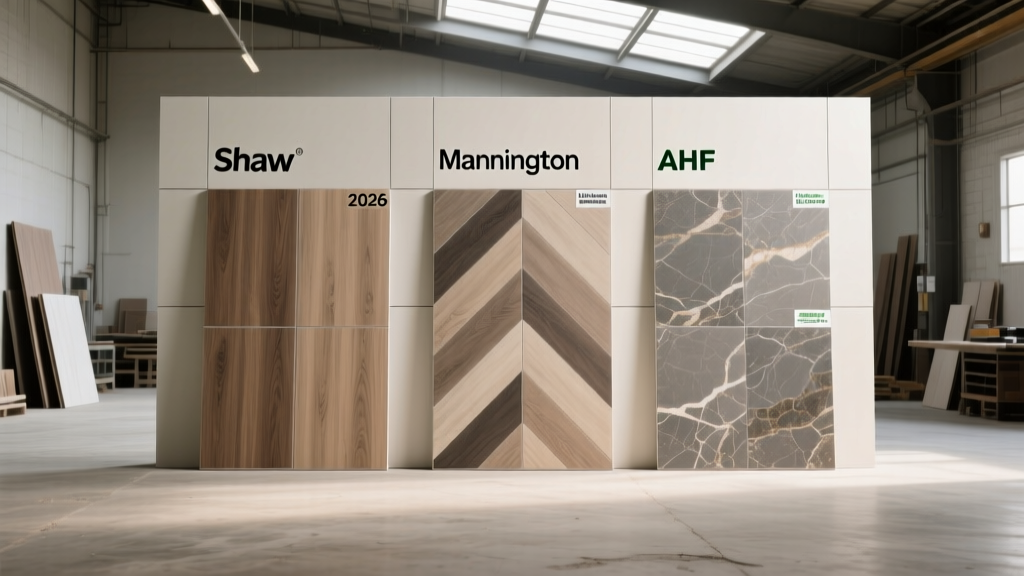
This deep-dive evaluates the top-tier residential and light-commercial LVT product lines from three dominant manufacturers: Shaw Floors, AHF Products (Armstrong), and Mannington. We bypass marketing jargon to focus on dimensional stability, wear layer thickness, locking mechanisms, and real-world procurement costs.
Core Technology: SPC vs. WPC Decision Matrix
Before selecting a brand, you must specify the core technology. The market is split between Stone Plastic Composite (SPC) and Wood Plastic Composite (WPC). Neither is universally superior; the correct choice depends on the installation environment.
SPC (Stone Plastic Composite)
- Composition: Limestone powder and PVC stabilizers.
- Density: Highly rigid, dimensionally stable under extreme temperature fluctuations.
- Best For: Sunrooms, commercial spaces, areas with heavy static loads (e.g., kitchen islands, cast-iron tubs).
- Drawback: Harder underfoot; transmits more impact noise to the subfloor.
WPC (Wood Plastic Composite)
- Composition: PVC, calcium carbonate, and a foaming agent.
- Density: Thicker and less dense, providing superior acoustic dampening and underfoot comfort.
- Best For: Second-story residential installations, bedrooms, and basements with minor subfloor imperfections.
- Drawback: More susceptible to indentation from heavy, concentrated point loads over time.
Brand Deep-Dive: Shaw Floors
Shaw Floors remains a dominant force in the resilient sector, leveraging its acquisition of USFloors to refine its rigid core offerings. Their premium lines focus heavily on visual authenticity and locking system integrity.
Floorté Premio (SPC)
The Floorté Premio line represents Shaw's top-tier SPC offering. It features a 20-mil commercial-grade wear layer and utilizes the 5G tap-lock mechanism, which significantly reduces the risk of joint separation during installation. The EIR texturing aligns perfectly with the visual grain, and the painted bevels prevent the 'repeating pattern' effect common in lower-tier LVT.
- Wear Layer: 20 mil (0.5mm)
- Overall Thickness: 6.5mm (including 1.5mm attached cork underlayment)
- Estimated Cost: $5.50 - $6.20 per sq. ft. (material only)
Valoré (WPC)
For environments prioritizing acoustic performance, the Valoré WPC line offers a thicker profile. While it drops to a 12-mil wear layer, it compensates with a highly forgiving core that bridges minor subfloor deviations.
- Wear Layer: 12 mil (0.3mm)
- Estimated Cost: $4.80 - $5.40 per sq. ft.
Brand Deep-Dive: AHF Products / Armstrong
Following the restructuring of Armstrong's residential flooring into AHF Products, the Vivero and Pryzm lines have been re-engineered to compete directly with Shaw's premium offerings.
Vivero Best (SPC)
The standout feature of the Vivero Best line is the Diamond 10 Technology topcoat. This proprietary aluminum oxide-infused finish provides superior scratch and scuff resistance compared to standard urethane topcoats. It is exceptionally resistant to micro-scratches from pet claws and fine grit.
- Wear Layer: 20 mil with Diamond 10 Topcoat
- Overall Thickness: 5.0mm (plus optional attached pad)
- Estimated Cost: $6.00 - $6.80 per sq. ft.
Expert Note: While the Diamond 10 topcoat excels at scratch resistance, it does not make the SPC core immune to heavy point-load indentation. Always use wide-castor furniture protectors under heavy appliances.
Brand Deep-Dive: Mannington
Mannington's Adura portfolio is widely considered the benchmark for visual depth and structural rigidity in the LVT category.
Adura Rigid (SPC)
Adura Rigid utilizes a K180 fiberglass-reinforced SPC core, which Mannington claims offers superior resistance to thermal expansion compared to standard limestone-only SPC cores. This makes it an excellent candidate for rooms with floor-to-ceiling windows that experience high solar heat gain.
- Wear Layer: 20 mil
- Overall Thickness: 6.0mm
- Estimated Cost: $5.20 - $5.80 per sq. ft.
Adura Max Prime (WPC)
Adura Max Prime focuses on sound absorption, featuring a hydrophobic WPC core and an attached premium underlayment. It is ideal for multi-family residential projects where Impact Insulation Class (IIC) ratings are strictly enforced.
2026 Premium LVT Line Comparison Matrix
| Brand / Line | Core Type | Wear Layer | Topcoat Tech | Bevel Profile | Avg. Price / Sq.Ft. |
|---|---|---|---|---|---|
| Shaw Floorté Premio | SPC | 20 mil | Enhanced Urethane | Painted Micro-Bevel | $5.85 |
| AHF Vivero Best | SPC | 20 mil | Diamond 10 (AlOx) | EIR Painted Bevel | $6.40 |
| Mannington Adura Rigid | SPC (Fiberglass) | 20 mil | Aluminum Oxide | Hand-Scraped Bevel | $5.50 |
| Shaw Valoré | WPC | 12 mil | Standard Urethane | Standard Micro-Bevel | $5.10 |
Critical Failure Modes & Edge Cases
Even premium LVT will fail if environmental and structural parameters are ignored. Based on guidelines from the Resilient Floor Covering Institute (RFCI), the following failure modes account for the vast majority of warranty claims:
1. Subfloor Telegraphing
The Issue: Flexible LVT or thin WPC will mirror any imperfection in the subfloor, causing visible ridges or dips. The Fix: For SPC, ensure the subfloor meets the strict 3/16-inch tolerance over a 10-foot radius. For WPC or flexible glue-down LVT, apply a self-leveling underlayment (SLU) to achieve a perfectly flat surface.
2. Thermal Joint Peaking
The Issue: Direct, unmitigated sunlight through large windows can heat dark-colored LVT planks to over 110°F, causing localized expansion that pushes the locking joints upward (peaking). The Fix: Install UV-blocking window film (minimum 99% UV rejection) and strictly maintain the manufacturer's 1/4-inch perimeter expansion gap. Never pin the floor under heavy cabinetry without leaving an expansion void.
3. Plasticizer Migration (Yellowing)
The Issue: Rubber-backed rugs and mats contain plasticizers that react with the PVC in LVT, causing permanent yellow or brown staining. The Fix: Specify only 'vinyl-safe' rugs made with natural fibers or specialized non-reactive backings. Never use standard latex or rubber pads.
Subfloor Tolerances & Moisture Testing Standards
LVT is entirely impervious to water, but the subfloor beneath it is not. Trapped moisture will lead to mold growth and adhesive failure in glue-down applications. Before installation, you must verify subfloor moisture levels according to ASTM standards:
- Concrete Subfloors: Perform Relative Humidity (RH) testing using in-situ probes per ASTM F2170. The RH must not exceed 75% (or the specific manufacturer's threshold, which is often 80% for premium SPC).
- Calcium Chloride Test: As a secondary check, perform ASTM F1869. Emissions must not exceed 3 lbs per 1,000 sq. ft. per 24 hours.
- Wood Subfloors: Use a pin-type moisture meter. Wood subfloor moisture content must not exceed 12%, and the variance between the subfloor and the LVT material must be less than 2% after a 48-hour acclimation period.
Procurement & Specification Checklist
When drafting specifications or purchasing LVT for a 2026 project, ensure the following parameters are explicitly documented in your procurement order:
- Wear Layer Minimum: Specify 20 mil for all high-traffic residential and light-commercial zones. Drop to 12 mil only for low-traffic guest bedrooms.
- Core Density Requirement: Specify SPC for ground-level or high-sunlight areas; WPC for second-floor acoustic mitigation.
- Batch/Lot Matching: Require the supplier to fulfill the entire square footage (plus 10% waste factor) from a single manufacturing dye lot to prevent subtle color shifting between batches.
- Acclimation Clause: Verify the manufacturer's acclimation requirements. While many modern SPC products claim 'no acclimation required,' best practice dictates storing the material in the installation environment (65°F - 85°F) for at least 24 hours prior to installation.
- Transition Moldings: Order manufacturer-specific T-moldings and stair noses simultaneously. Third-party moldings rarely match the exact EIR texture and gloss level of premium LVT lines.
By prioritizing core density, topcoat chemistry, and strict adherence to RFCI subfloor preparation standards, you ensure the luxury vinyl tile installation performs flawlessly for its expected 15-to-20-year lifecycle.