Luxury Vinyl Tile Flooring Selection: Core Types & Wear Layers
Master luxury vinyl tile flooring selection with our material taxonomy. Compare SPC, WPC, and flexible cores, wear layers, and 2026 installation costs.
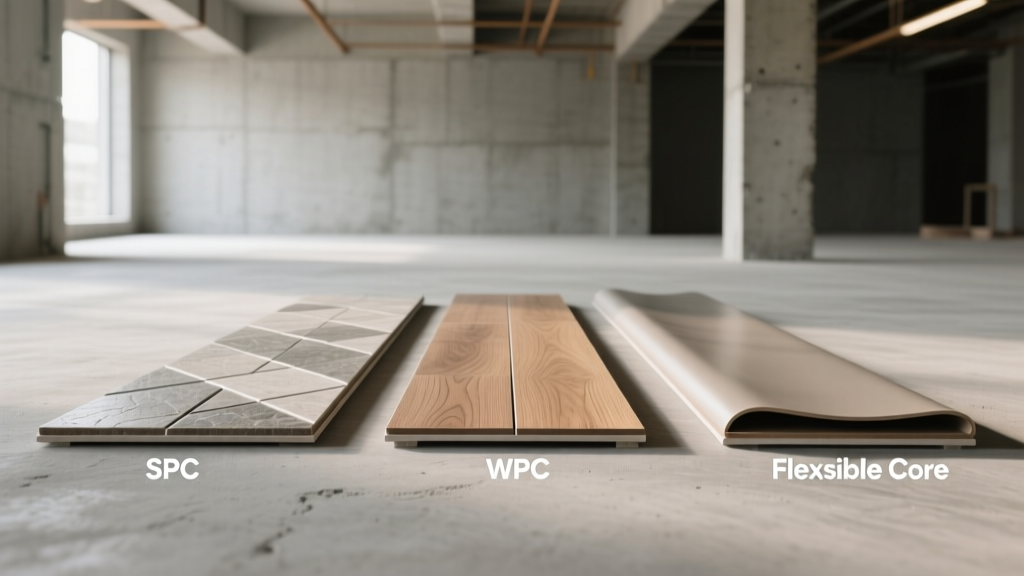
While luxury vinyl plank (LVP) dominates wood-look installations, luxury vinyl tile flooring (LVT) remains the definitive choice for replicating natural stone, poured concrete, and geometric ceramics. LVT typically utilizes square or rectangular formats (12x12, 18x18, or 24x24 inches) and demands a precise understanding of its internal construction to ensure longevity. Selecting the wrong core material or wear layer thickness for a specific traffic zone leads to premature edge chipping, seam failure, or subfloor telegraphing.
This taxonomy breaks down the exact material composition, structural layers, and performance metrics required to specify the correct LVT for residential and commercial environments.
The Four-Layer Anatomy of LVT
Every luxury vinyl tile is engineered as a composite sandwich. According to the ASTM Committee F06 on Resilient Floor Coverings, these layers must meet strict dimensional stability and wear resistance standards. The anatomy from top to bottom includes:
- Wear Layer: A clear, unprinted PVC film coated with a protective urethane or ceramic bead finish. This is the only layer that dictates scratch and scuff resistance.
- Printed Design Film: A high-resolution PET or PVC film created via rotogravure printing. Premium LVT uses multiple print passes to create depth and realistic stone veining.
- Core Layer: The structural backbone that dictates dimensional stability, dent resistance, and installation method. (Detailed in the taxonomy below).
- Backing Layer: Often an attached cork, IXPE foam, or fiberglass layer that provides acoustic dampening, moisture resistance, and subfloor forgiveness.
Core Material Taxonomy: SPC vs. WPC vs. Flexible
The core layer is the primary differentiator in LVT pricing and performance. The industry categorizes cores into three distinct chemical formulations, each with specific failure modes and ideal use cases.
1. Stone Plastic Composite (SPC)
SPC cores are manufactured by combining 60-70% limestone dust (calcium carbonate) with 30-40% polyvinyl chloride and stabilizers. The resulting core is incredibly dense, rigid, and highly resistant to indentation from heavy point loads (like appliance legs or piano casters). Because it lacks a foaming agent, SPC is thinner (typically 4mm to 6mm) but boasts superior dimensional stability, meaning it will not expand or contract significantly with temperature fluctuations.
SPC's rigidity is its greatest weakness during installation. If the subfloor varies by more than 3/16-inch over a 10-foot radius, the rigid click-lock joints will experience shear stress and eventually snap, leading to seam peaking. Self-leveling compound is almost always mandatory for SPC installations over older concrete slabs.
2. Wood Plastic Composite (WPC)
WPC cores blend PVC with wood-like flour and a chemical foaming agent. This aeration process creates a thicker (5mm to 8mm), lighter, and softer core. WPC provides superior underfoot comfort and higher Impact Insulation Class (IIC) ratings for multi-story soundproofing. However, the foamed structure makes it susceptible to permanent indentation under heavy, concentrated weight.
3. Flexible (Dryback) LVT
Flexible LVT consists of 100% solid PVC without rigid stone or wood composites. At 2mm to 3mm thick, it is entirely pliable and must be fully adhered to the subfloor using a pressure-sensitive or hard-set acrylic adhesive. It is the most cost-effective option but will 'telegraph' (mirror) any subfloor imperfections, debris, or trowel marks directly through the surface.
Core Performance Comparison Matrix
| Metric | SPC (Stone Composite) | WPC (Wood Composite) | Flexible (Dryback) |
|---|---|---|---|
| Density & Rigidity | Very High (Rigid) | Moderate (Semi-Rigid) | Low (Highly Flexible) |
| Dent Resistance | Excellent | Fair to Poor | Moderate |
| Acoustic Dampening | Poor (Requires thick underlayment) | Excellent (Inherent sound absorption) | Fair (Depends on adhesive bond) |
| Subfloor Forgiveness | Very Low (Telegraphs unevenness) | Moderate | Zero (Telegraphs all imperfections) |
| Avg. Material Cost (2026) | $2.80 - $5.50 / sq. ft. | $3.50 - $6.50 / sq. ft. | $1.50 - $3.00 / sq. ft. |
Decoding Wear Layer Thickness and Finishes
The wear layer is measured in 'mils' (1 mil = 1/1000th of an inch, not millimeters). A common procurement error is confusing a 20-mil wear layer with a 20mm overall product thickness. The Resilient Floor Covering Institute (RFCI) provides clear guidelines on matching mil thickness to traffic zones.
- 12 Mil (0.3mm): Suitable for light residential traffic (bedrooms, low-use living areas). Will show micro-scratches from pet claws within 2-3 years.
- 20 Mil (0.5mm): The baseline for heavy residential and light commercial. Required for homes with large dogs, high foot traffic, or entryways. Meets ASTM F1700 Class III wear standards.
- 28 Mil to 40 Mil (0.7mm - 1.0mm): Strictly for heavy commercial applications (retail, healthcare, high-volume restaurants). Overkill for residential use and adds unnecessary cost and surface stiffness.
Urethane vs. Ceramic Bead Topcoats
The raw PVC wear layer is inherently soft and prone to scuffing. Manufacturers apply a topcoat to harden the surface. Standard enhanced urethane provides basic protection but requires periodic floor stripping and re-polishing in commercial settings. Ceramic bead finishes (such as Shaw's ArmourBead or similar proprietary aluminum-oxide/ceramic blends) embed microscopic ceramic particles into the urethane. This creates a matte, highly scuff-resistant surface that hides micro-scratches and eliminates the need for buffing, making it the superior choice for realistic stone-look LVT where a high-gloss 'plastic' shine would ruin the aesthetic.
Installation Method Selection Framework
The installation method is dictated by the core type and the environmental conditions of the space.
- Click-Lock (Floating): Used exclusively for SPC and WPC rigid cores. The tiles feature machined tongue-and-groove edges that snap together. Requires a 1/4-inch expansion gap around the perimeter. Best for DIY installations and environments where the flooring may need to be removed later.
- Glue-Down (Full Spread): Used for flexible LVT and some commercial-grade SPC. Requires a moisture-cured urethane or acrylic adhesive. This method permanently bonds the floor to the subfloor, eliminating hollow sounds and preventing rolling chairs from catching on seams.
- Loose Lay: A niche category of flexible LVT featuring a high-friction, fiberglass-reinforced backing. It relies on surface tension and perimeter double-sided tape to stay in place. Ideal for temporary installations or over raised access floors in commercial IT spaces.
Expert Insight on Moisture Testing: Before installing any glue-down or click-lock LVT over a concrete slab, conduct a quantitative moisture test. The ASTM F2170 relative humidity (RH) probe test is the industry standard. If the RH reading exceeds 75-80% (depending on the adhesive manufacturer's specs), you must apply a penetrating epoxy moisture mitigation sealer before proceeding, or risk adhesive re-emulsification and tile migration.
Real-World Cost Breakdown (2026 Estimates)
Budgeting for luxury vinyl tile flooring requires looking beyond the per-square-foot material cost. Subfloor preparation and installation labor often eclipse the material expense.
- Material (Mid-Grade 20-mil SPC): $3.50 - $4.50 / sq. ft.
- Subfloor Prep (Self-leveling compound & primer): $1.20 - $2.00 / sq. ft. (Only if required)
- Labor (Click-Lock Floating): $1.50 - $2.50 / sq. ft.
- Labor (Glue-Down): $2.00 - $3.50 / sq. ft. (Includes adhesive troweling)
- Moisture Mitigation (Epoxy Sealer): $2.50 - $4.00 / sq. ft. (Only if slab fails RH test)
Final Selection Decision Tree
Use this framework to specify the exact LVT profile for your project:
- If installing over an uneven, older wooden subfloor: Choose WPC click-lock. Its thickness and flexibility will bridge minor subfloor deflections without joint failure.
- If installing in a sunroom, solarium, or over radiant heat: Choose SPC click-lock. The limestone composite will not expand or warp under extreme thermal cycling, provided the surface temperature stays below the manufacturer's limit (usually 85°F).
- If installing in a commercial space with heavy rolling loads (hospital beds, pallet jacks): Choose 28-mil flexible dryback LVT. The full-spread adhesive bond prevents the tiles from shifting or 'walking' under dynamic rolling friction.
- If prioritizing acoustic privacy in a multi-family condo: Choose WPC with an attached 1.5mm cork or IXPE acoustic backing to achieve an IIC rating of 50 or higher, complying with most HOA sound transmission codes.
By matching the core density, wear layer thickness, and installation method to the specific mechanical and environmental demands of the space, you ensure the luxury vinyl tile flooring performs flawlessly for its intended lifecycle.