Marley Dance Floor Durability: Lifespan Analysis & Wear Guide
Discover the true lifespan of a marley dance floor. We analyze durability factors, common wear patterns, and maintenance protocols for peak performance.
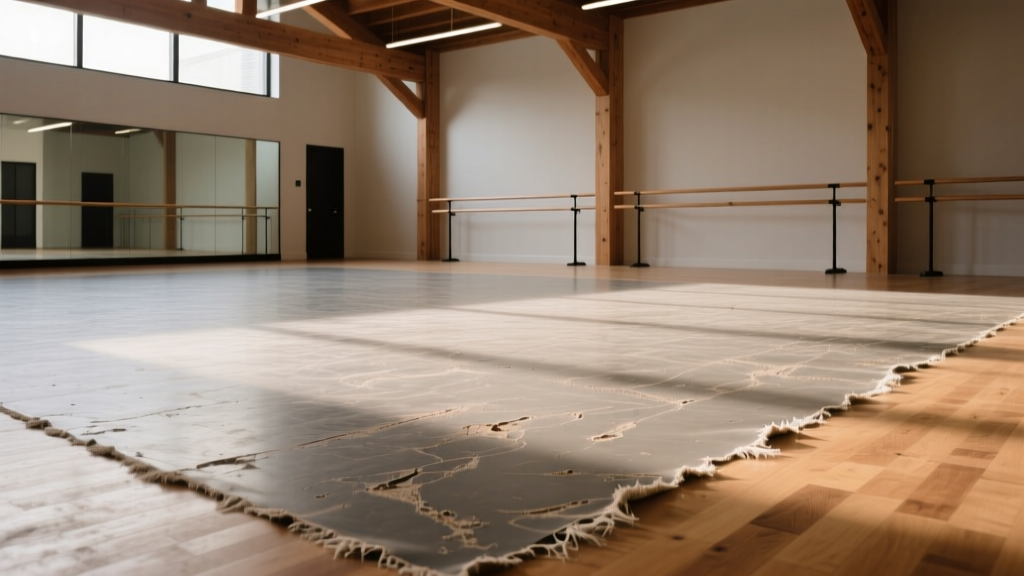
The Anatomy of a Marley Dance Floor: Why Durability Varies
The term "marley" has become a genericized trademark for any vinyl performance flooring used in dance studios and theatrical stages. Originally developed by Marley Floors Ltd in the mid-20th century, modern marley floors are highly engineered, calendered PVC (polyvinyl chloride) surfaces designed to provide specific slip-resistance and shock-dispersion properties. However, not all vinyl dance surfaces are manufactured equally, and their durability hinges entirely on their structural composition.
High-performance marley floors are produced through a calendering process, where PVC resin, mineral fillers, and plasticizers are pressed between heated rollers to create a dense, dimensionally stable sheet. This is vastly superior to extruded vinyl, which is prone to thermal expansion and severe shrinkage over time. When evaluating the lifespan of a marley dance floor, facility managers must distinguish between homogeneous and heterogeneous construction:
- Homogeneous Vinyl: The wear layer and the core are identical in composition. If the surface is scuffed, the material underneath offers the exact same slip-resistance and color. These floors routinely last 12 to 15+ years under heavy use.
- Heterogeneous Vinyl: Features a distinct, thin wear layer over a printed or foam-backed core. Once the wear layer (often just 0.3mm to 0.5mm thick) is penetrated by aggressive footwork or pointe shoes, the floor fails. Lifespan is typically limited to 5 to 8 years.
Expected Lifespan by Usage Tier and Traffic Volume
The longevity of a marley surface is directly correlated to weekly traffic hours, the type of footwear used, and the underlying subfloor mechanics. The following data matrix outlines realistic replacement cycles based on 2026 facility management benchmarks.
| Facility Type | Average Weekly Usage | Primary Wear Factors | Expected Lifespan (Homogeneous) | Expected Lifespan (Heterogeneous) |
|---|---|---|---|---|
| Professional / Pre-Pro Studio | 45+ hours | Pointe shoes, aggressive contemporary floorwork, high-impact jumps | 7 – 10 years | 3 – 5 years |
| University / High School | 25 – 40 hours | Mixed footwear, ballet, jazz, tap (if permitted), stagecraft equipment | 10 – 12 years | 5 – 7 years |
| Community / Recreational | 10 – 20 hours | Soft-soled shoes, children's ballet, low-impact adult fitness | 15+ years | 8 – 10 years |
| Home / Private Studio | < 10 hours | Barefoot or soft canvas slippers, minimal abrasive debris | 20+ years | 12 – 15 years |
Primary Failure Modes and Degradation Mechanics
Understanding how a marley dance floor degrades allows facility managers to intervene before catastrophic failure occurs. The three most common failure modes are chemical, mechanical, and environmental.
1. Plasticizer Migration and Outgassing
PVC requires plasticizers to remain flexible and shock-absorbent. Over time, these chemical compounds can migrate to the surface (outgassing) or leach into incompatible subfloors. When a marley floor loses its plasticizers, it becomes brittle, shrinks, and pulls away from the seams. Modern premium manufacturers have shifted toward bio-based, non-phthalate plasticizers which demonstrate significantly higher resistance to outgassing, extending the flexible lifespan of the vinyl by up to 30% in low-humidity environments.
2. Surface Scuffing vs. True Wear Layer Penetration
Dance studios frequently confuse surface scuffing with structural wear. Rubber soles, street shoes, and even certain tap shoes will leave black transfer marks on the vinyl. This is a superficial transfer of material, not a degradation of the marley itself. True wear penetration occurs when the microscopic pores that provide the floor's R10 slip-resistance rating are physically sanded away by repetitive friction from canvas ballet slippers or the hardened resin blocks of pointe shoes.
3. Chemical Degradation from Improper Cleaning
Brand-Specific Durability Benchmarks and 2026 Pricing
When specifying a marley floor for a new build or renovation, relying on established manufacturers ensures access to homogeneous formulations and reliable warranty support. Below is an analysis of the industry-standard options and their current market pricing.
- Harlequin Cascade (Homogeneous): The industry standard for professional ballet and contemporary dance. At 2.0mm thick, it offers exceptional resistance to pointe shoe penetration and heavy stage traffic. 2026 Cost: $3.60 – $4.20 per sq. ft.
- Harlequin Studio (Heterogeneous): A 1.8mm multi-purpose floor with a foam backing for slight shock absorption. Best for multi-use community centers where tap and jazz are common. 2026 Cost: $2.40 – $2.80 per sq. ft.
- Rosco Adagio (Homogeneous): A 1.5mm thick, highly durable surface favored by theatrical touring companies due to its lighter weight and ease of rolling. Excellent scuff resistance. 2026 Cost: $2.10 – $2.50 per sq. ft.
- Rosco Reversible (Heterogeneous): A budget-friendly 1.5mm option with two distinct colors (e.g., black/grey). Prone to faster wear on the top layer but highly cost-effective for low-budget school districts. 2026 Cost: $1.30 – $1.60 per sq. ft.
For comprehensive technical data sheets and installation tolerances, facility managers should consult the Harlequin Floors technical specifications or the Rosco dance flooring catalog directly.
Extending the Lifespan: Evidence-Based Maintenance Protocols
A rigorous, chemically appropriate maintenance schedule is the single most effective way to maximize the ROI of a marley dance floor. Implement the following protocol:
- Daily Dry Maintenance: Use a microfiber dust mop to remove abrasive particulate matter (sand, dirt, rosin dust). Rosin buildup must be addressed immediately, as it creates sticky patches that increase friction and lead to ankle injuries.
- Weekly Damp Mopping: Use a pH-neutral vinyl cleaner specifically formulated for dance floors (e.g., Harlequin Daily Cleaner or Rosco All-Purpose Cleaner). Dilute strictly according to manufacturer instructions. Use a flat microfiber mop; avoid string mops which leave excess moisture in the seams.
- Bi-Annual Deep Cleaning: If rosin or sweat buildup becomes embedded, use a specialized vinyl dance floor stripper. Apply the solution, agitate gently with a soft-bristle brush, and extract the liquid with a wet-vac. Never allow stripping solutions to pool on the surface.
- Seam Inspection: Every six months, inspect all taped or hot-welded seams. Thermal expansion and contraction can cause vinyl to pull apart. Re-apply 2-inch matte black vinyl tape or schedule a professional hot-weld touch-up to prevent moisture from infiltrating the subfloor.
Repair vs. Replace: The Cost-Benefit Matrix
When a marley floor sustains localized damage—such as a tear from dropped stage equipment or a deep gouge from a misplaced scenic spike—facility managers must decide between patching and full replacement.
For cuts smaller than 3 inches, a color-matched PVC repair paste can be applied, sanded flush, and sealed. This restores structural integrity but will remain visually apparent under stage lighting. For larger tears, a professional technician can cut out the damaged section and hot-weld a replacement patch using a matching vinyl scrap and a specialized heat gun. Hot welding creates a waterproof, permanent bond that is vastly superior to chemical adhesives or seam tape. However, if the floor is exhibiting widespread plasticizer loss (evidenced by edge shrinkage exceeding 1/4 inch across multiple seams) or if the slip-resistance has degraded below the R9 threshold, patching is a liability. Full replacement is the only safe option.
FAQ: Marley Floor Longevity and Subfloor Mechanics
Can you install a marley floor directly over concrete without a subfloor?
Technically, yes, but it is strongly discouraged and violates modern dance medicine standards. Marley vinyl is strictly a wear surface; it possesses zero inherent shock absorption. Installing it directly over concrete creates an area-elastic failure, transferring the full impact force of jumps directly into the dancers' joints, leading to shin splints and stress fractures. Furthermore, concrete retains moisture and fluctuates in temperature, which will cause the PVC to sweat, promote mold growth, and accelerate adhesive failure. A properly engineered sprung subfloor (either a traditional basket-weave wood system or a high-density foam-backed modular panel) is mandatory for both dancer safety and the structural longevity of the vinyl.
Does UV exposure degrade marley vinyl?
Yes. Prolonged exposure to ultraviolet light breaks down the polymer chains in PVC, leading to severe fading, chalking, and accelerated brittleness. Studios with extensive glass walls or skylights must specify UV-stabilized marley formulations or install architectural window films that block 99% of UV rays to protect the flooring investment.
How does humidity affect the lifespan of the floor?
Marley floors require a stable indoor climate. The ideal environment is 65°F to 75°F with a relative humidity (RH) between 40% and 60%. In arid environments or during winter months when HVAC systems drastically drop indoor RH below 30%, the vinyl will contract, causing seams to gap and the material to stiffen. Running commercial humidifiers to maintain 45% RH is a non-negotiable requirement for preserving the floor's dimensional stability.