Modern Floor Lamps & Flooring: A Protection & Cleaning Playbook
Discover how to protect hardwood, LVP, and tile from heavy modern floor lamps. Expert cleaning playbooks and footpad material science.
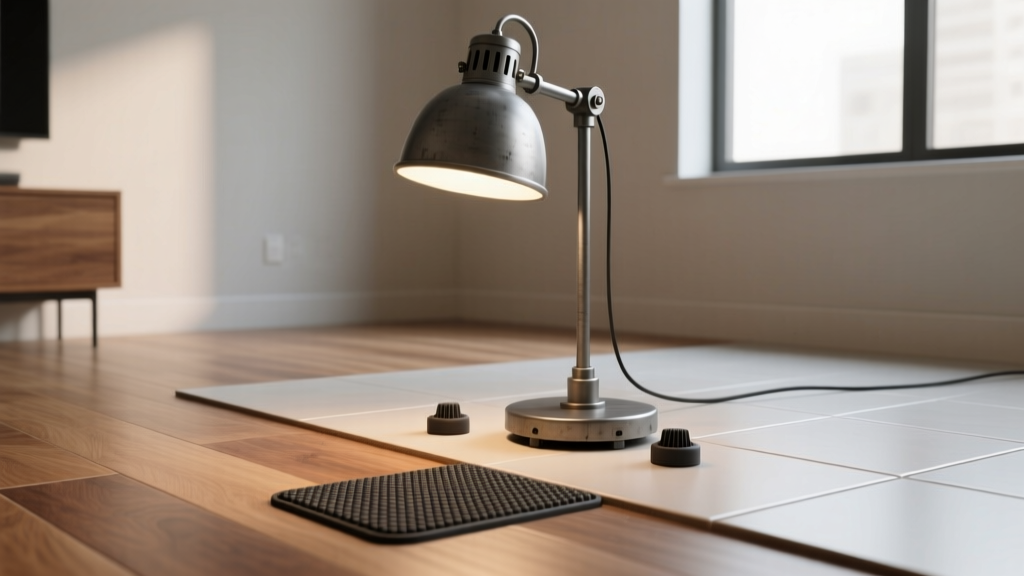
Point-Load Physics: Why Modern Lamp Bases Threaten Flooring
The shift toward architectural, sculptural lighting in modern interior design has introduced a hidden structural challenge for residential flooring. Contemporary modern floor lamps—particularly arc lamps, oversized torchieres, and industrial counterbalance models—frequently utilize solid marble, poured concrete, or weighted steel bases ranging from 35 to 65 pounds. Unlike a sofa, which distributes weight across a wide footprint, a modern floor lamp concentrates its entire mass into a base often measuring less than 12 inches in diameter.
This creates a severe point-load scenario. A 45-pound lamp resting on a 3-inch diameter metal base exerts approximately 6.3 pounds per square inch (PSI) of continuous downward force. While this seems low compared to a human footstep (which can exceed 15 PSI dynamically), the static, unyielding nature of the load causes long-term compressive creep in resilient floors and micro-fractures in rigid surface finishes. When combined with the "shadow zone" dust accumulation and thermal output of integrated smart-lighting transformers, modern floor lamps require a specialized flooring maintenance playbook.
Material-Specific Vulnerability & Protection Matrix
Different flooring options react uniquely to the static weight, friction, and micro-climates generated by heavy floor lamps. Below is a breakdown of how modern lamp bases interact with popular flooring materials and the specific protocols required to mitigate damage.
Hardwood & Engineered Wood
Modern hardwood floors are typically coated with aluminum oxide polyurethane finishes. While highly scratch-resistant, these finishes are brittle. Dragging a 50-pound metal lamp base across engineered wood creates micro-fractures in the finish, exposing the wood veneer to ambient moisture. Furthermore, if the lamp features a halogen bulb or a poorly ventilated LED driver at the base, localized heat can cause the polyurethane to soften and permanently bond to certain synthetic footpads.
- Protection Protocol: Use 100% wool felt pads with a Shore A durometer rating of 60-70. Avoid adhesive-backed pads; instead, use tap-in nail glides for permanent bases, or heavy-duty silicone sleeves that slip over the metal base edge.
- Cleaning Playbook: Dust the perimeter of the base weekly using a horsehair brush attachment. Never use wet mops near the base, as water will wick under the heavy weight and become trapped against the wood finish.
Luxury Vinyl Plank (LVP) & Laminate
LVP is highly susceptible to plasticizer migration. Many modern floor lamps ship with cheap, vulcanized rubber or synthetic foam footpads. When these pads sit under heavy static loads on PVC-based LVP, a chemical reaction occurs. The plasticizers in the vinyl leach into the rubber pad, resulting in permanent, indelible yellow or brown stains that cannot be cleaned or buffed out.
- Protection Protocol: Immediately discard any factory-installed rubber pads. Replace them with 100% platinum-cured silicone pads or non-staining woven felt. According to the Shaw Floors Care Guide, avoiding rubber-backed mats and pads is critical to preventing permanent chemical staining on resilient vinyl surfaces.
- Cleaning Playbook: Lift the lamp entirely (do not tilt and roll) to clean underneath. Use a pH-neutral vinyl cleaner; alkaline cleaners will degrade the wear layer over time when trapped under a heavy base.
Polished Concrete & Natural Stone
While stone and concrete can easily support the compressive weight of a marble-base lamp, the primary threat is alkaline efflorescence and scratching. If the lamp base is made of unsealed steel or iron, ambient humidity trapped beneath the base can cause flash-rusting, which stains porous concrete and light-colored marble. Additionally, microscopic silica dust trapped under the base acts as sandpaper when the lamp is vibrated (e.g., from nearby foot traffic or subwoofer bass), etching the polished surface.
- Protection Protocol: Apply a high-density Teflon (PTFE) slide pad to the base. Teflon prevents moisture trapping and allows the lamp to glide over microscopic debris without grinding it into the stone.
- Cleaning Playbook: Use a specialized stone pH-neutral cleaner. Move the lamp bi-weekly to prevent moisture entrapment and allow the stone to breathe.
The "Shadow Zone" Maintenance Protocol
The area directly beneath and immediately surrounding a modern floor lamp base creates a unique micro-environment. Airflow is restricted, static electricity from the lamp's wiring attracts fine particulate matter, and the visual "shadow zone" often leads to neglected cleaning. Over time, this results in a hardened ring of dust and grime that bonds to the floor finish.
| Flooring Material | Dust Accumulation Rate | Recommended Tool | Cleaning Frequency | Chemical Restriction |
|---|---|---|---|---|
| Solid Hardwood | High (Static Attraction) | Microfiber wand + Horsehair brush | Weekly | No ammonia, no steam |
| LVP / WPC Vinyl | Moderate | Soft-bristle dust mop | Bi-weekly | No solvent-based degreasers |
| Polished Concrete | Low (Dense Surface) | HEPA-filter canister vacuum | Monthly | No acidic etching cleaners |
| Ceramic / Porcelain Tile | High (Grout Trapping) | Grout brush + Enzymatic cleaner | Bi-weekly | Avoid abrasive pumice stones |
When moving a heavy arc lamp to vacuum, never tilt it onto its base edge and drag it. This concentrates the entire 50+ pound weight onto a single millimeter of the base rim, generating over 100 PSI of shear force. This will instantly gouge LVP, scratch aluminum oxide hardwood finishes, and chip tile grout. Always lift the lamp from the central pole, or use a specialized furniture dolly with a non-marring rubber lip.
Footpad Material Science: Selecting the Right Interface
The interface between the lamp base and the floor is the most critical variable in flooring preservation. The National Wood Flooring Association (NWFA) and resilient flooring manufacturers universally agree that the wrong footpad material causes more damage than the furniture itself. Here is the material science breakdown for modern floor lamp bases:
- Needle-Punch Wool Felt: The gold standard for hardwood. Unlike synthetic felt, wool does not melt under the heat of LED drivers and does not off-gas chemicals that react with polyurethane. Look for 1/4-inch thickness with a dense, compressed core.
- Platinum-Cured Silicone: The only safe option for LVP and WPC vinyl. Silicone is chemically inert and will not trigger plasticizer migration. Ensure the silicone is "platinum-cured" rather than "tin-cured," as tin-cured silicone can sometimes leave oily residues on high-gloss vinyl.
- PTFE (Teflon) Glides: Ideal for stone, concrete, and large-format tile. PTFE has an incredibly low coefficient of friction, allowing heavy bases to slide over grout lines without catching and chipping the tile edges.
- Materials to Ban: Vulcanized rubber, neoprene, PVC-based foams, and cheap thermoplastic elastomers (TPE). These will permanently stain vinyl and leave black scuff marks on porous stone.
Troubleshooting Existing Lamp Base Damage
If a modern floor lamp has already been sitting on your flooring without proper protection, use this diagnostic framework to determine the remediation strategy:
Symptom: Yellow/Brown Ring on LVP
- Diagnosis: Plasticizer migration caused by a rubber footpad.
- Action: This is a permanent chemical change in the vinyl wear layer. No cleaner, bleach, or abrasive will remove it. The affected plank must be cut out and replaced using a leftover piece from the original installation lot.
Symptom: Dull, Hazy Circle on Hardwood
- Diagnosis: Moisture entrapment or heat-softening of the polyurethane finish beneath a non-breathable foam pad.
- Action: Remove the lamp and pad. Allow the area to acclimate to room humidity for 14 days. If the haze persists, the finish has permanently crystallized in a deformed state. A professional screen-and-recoat of the affected board is required.
Symptom: Micro-Scratches on Polished Concrete
- Diagnosis: Silica dust grinding beneath a metal base.
- Action: Clean the area thoroughly with a HEPA vacuum. Apply a concrete polishing compound and use a low-speed rotary buffer with a white (non-abrasive) pad to restore the localized gloss. Seal with a penetrating silicate densifier to prevent future micro-scratching.
By understanding the point-load physics and chemical interactions unique to modern floor lamps, you can preserve the integrity and aesthetic of your flooring investment. Always prioritize chemically inert footpads and implement a strict "lift, never drag" relocation protocol during routine maintenance.