How Can You Get Stains Out of Carpet by Fiber Type?
Discover how can you get stains out of carpet based on fiber taxonomy. Expert cleaning chemistry and methods for nylon, wool, polyester, and olefin.
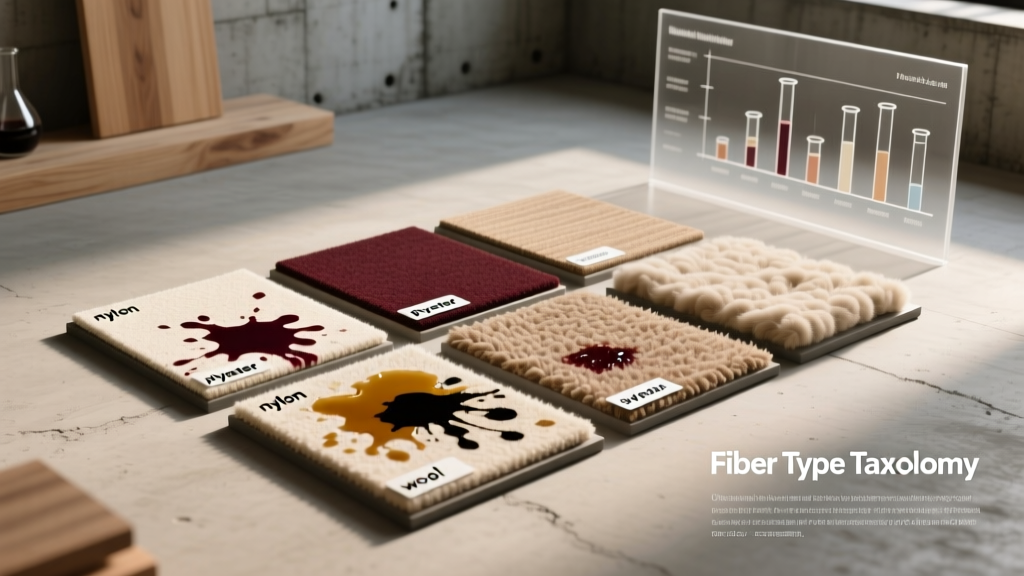
The Science of Carpet Fibers and Stain Absorption
Understanding how to remove a stain requires understanding the molecular taxonomy of the carpet fiber itself. Carpet fibers are complex polymers, and their susceptibility to staining—and the chemistry required to reverse it—is dictated by their dye sites, hydrophobic properties, and thermal thresholds. A universal cleaning approach often leads to fiber degradation, color bleeding, or permanent setting of the soil. To effectively address spills, professionals rely on material-specific protocols aligned with standards set by the Institute of Inspection, Cleaning and Restoration Certification (IICRC).
Before applying any solvent, surfactant, or oxidizer, you must correctly identify the carpet's fiber composition. The methodology for answering the question of how can you get stains out of carpet shifts dramatically whether you are dealing with a synthetic polyamide or a natural protein fiber.
Carpet Fiber Taxonomy: Identifying Your Material
While a burn test or microscopic analysis provides definitive identification in a lab environment, field identification relies on manufacturer tags, installation records, or tactile diagnostics. The four primary carpet fiber categories dictate your chemical arsenal:
- Nylon (Polyamide 6 and 6,6): Accounts for roughly 60% of residential carpets. Highly durable but possesses positively charged dye sites that attract negatively charged food and beverage dyes.
- Wool (Natural Protein): A premium, hydrophilic fiber with overlapping cuticle scales that can trap particulate soil. Highly sensitive to alkaline chemicals and high heat.
- Polyester (PET) and Triexta (PTT): Hydrophobic (repels water) but oleophilic (attracts oils). Inherently stain-resistant to water-based spills but prone to oil-based soil accumulation.
- Olefin (Polypropylene): Often used in loop-pile Berbers and outdoor carpets. Solution-dyed with no open dye sites, making it highly resistant to chemical bleaching but vulnerable to friction burns.
How Can You Get Stains Out of Carpet? Material-Specific Protocols
Nylon (Polyamide) Carpets
Nylon fibers are manufactured with cationic (positive) dye sites to accept acid dyes during production. Unfortunately, common household stains like coffee, wine, and mustard also contain anionic (negative) colorants that bind to these exact same sites. If you use an alkaline cleaner (pH > 8) on a nylon stain, you open the fiber's cuticle and drive the stain deeper into the dye sites.
The Protocol: Use a neutral to slightly acidic pre-spray (pH 6.5 - 7.5) to break down the soil, followed by an acidic rinse (pH 3.0 - 5.0). The acid rinse neutralizes alkaline residues and closes the nylon dye sites, locking out future soil. For severe tannin stains (coffee, tea), apply a specialized tannin spotter containing mild reducing agents, but never exceed a pH of 8.0.
Wool (Natural Protein) Carpets
Wool is a protein fiber held together by disulfide bonds. High-alkaline cleaners (pH > 8.0) cause hydrolysis, breaking these bonds and resulting in permanent yellowing and fiber brittleness. Furthermore, wool's hydrophilic nature means it absorbs water rapidly; over-wetting leads to prolonged drying times, jute backing rot, and mold proliferation.
The Protocol: Strictly use products certified by the WoolSafe Organization. These formulations are buffered to a safe pH range of 5.0 to 8.0 and contain no optical brighteners or harsh solvents. Water temperature during extraction must never exceed 150°F (65°C). For protein-based stains (blood, vomit), use an enzymatic digester specifically formulated for cold-water application, as heat will coagulate the proteins and set the stain permanently.
Polyester (PET) and Triexta
Polyester and its advanced derivative, Triexta (often branded as SmartStrand), lack the open dye sites found in nylon, making them virtually impervious to water-based food dyes. However, their oleophilic nature means they act like magnets for cooking oils, body oils, and petroleum-based soils. Standard water-based carpet shampoos will simply smear these oils across the fiber.
The Protocol: To remove oil-based stains from PET, you must utilize a solvent-based pre-spray. Formulations containing d-Limonene (citrus solvent) or mild glycol ethers effectively emulsify the lipid structures. Follow with a high-surfactant encapsulation cleaner to crystallize the suspended oils for easy vacuum extraction once dry.
Olefin (Polypropylene)
Olefin is a solution-dyed fiber, meaning the color is added to the liquid polymer before the fiber is extruded. There are no dye sites to strip, which grants Olefin extraordinary chemical resistance. However, Olefin has a very low melting point (around 300°F). Aggressive mechanical scrubbing generates friction heat, which will permanently melt and fuzz the fiber tips.
The Protocol: Rely on chemical dwell time rather than mechanical agitation. Because Olefin is bleach-safe, severe organic stains or color transfers can be treated with a 3% sodium hypochlorite solution or a stabilized hydrogen peroxide oxidizer, followed by a thorough sodium thiosulfate neutralizing rinse to halt the oxidation process.
Stain Chemistry Matrix: Matching Solvent to Spill
Selecting the correct chemical agent prevents fiber damage and ensures complete soil suspension. The following matrix outlines the primary solvent categories and their compatibility across fiber taxonomies.
| Spill Category | Primary Chemical Agent | Ideal pH Range | Nylon Safe? | Wool Safe? | Olefin Safe? |
|---|---|---|---|---|---|
| Tannins (Coffee, Wine) | Acidic Reducing Agents | 2.5 - 4.5 | Yes (with acid rinse) | No (Risk of yellowing) | Yes |
| Proteins (Blood, Dairy) | Enzymatic Proteases | 6.0 - 8.0 | Yes | Yes (Cold water only) | Yes |
| Lipids (Oils, Grease) | d-Limonene / Glycol Ethers | 7.0 - 9.0 | Yes | Caution (Test first) | Yes |
| Synthetic Dyes (Ink) | Oxygen Bleach (H2O2) | 3.0 - 5.0 | Yes (Low concentration) | No | Yes (High concentration) |
Advanced Extraction Techniques and Equipment
Chemical application is only half of the soil removal equation. Mechanical extraction dictates the final outcome. The Carpet and Rug Institute (CRI) Seal of Approval program tests extractors for soil removal efficiency and moisture management.
- PSI (Pounds per Square Inch): Truck-mounted units should deliver 300-500 PSI at the wand jet to effectively flush the fiber base without delaminating the secondary backing.
- Vacuum Lift (Inches of Mercury): A minimum of 12-14 inches of mercury (Hg) is required to recover 90%+ of the injected moisture, ensuring dry times under 6 hours.
- Wand Glide Speed: Maintain a steady 1 to 1.5 seconds per linear foot on the pull-back stroke to allow the vacuum slot sufficient dwell time to extract suspended soil.
Critical Mistakes That Destroy Carpet Fibers
- Using Laundry Detergent on Wool: Household laundry detergents are highly alkaline (pH 10-12) and contain optical brighteners. This will permanently hydrolyze wool fibers and cause irreversible yellowing.
- Over-Scrubbing Olefin: Using a stiff-bristled brush on polypropylene generates friction heat, melting the fiber tips and creating a permanent fuzzy, matted appearance.
- Skipping the Acid Rinse on Nylon: Failing to neutralize alkaline pre-sprays with an acid-side rinse leaves a sticky, high-pH residue that acts as a magnet for rapid re-soiling, causing the stain to 'return' within weeks.
- Heat Setting Protein Stains: Applying hot water extraction (>130°F) to blood, egg, or milk stains will cook the proteins into the fiber matrix, making them impossible to remove.
FAQ: Troubleshooting Stubborn Carpet Stains
Why did my carpet stain reappear two weeks after cleaning?
This phenomenon, known as 'wicking,' occurs when a spill has penetrated past the carpet face yarn and saturated the underlying pad. During cleaning, the surface is extracted, but moisture trapped in the pad slowly migrates upward via capillary action as the carpet dries, bringing dissolved soil back to the surface. To resolve this, the pad must be treated with a sub-surface extraction tool or, in severe cases, the pad must be replaced and the subfloor sealed.
Can I use hydrogen peroxide on all carpet types?
No. While 3% hydrogen peroxide is an excellent oxidizer for organic stains on synthetic fibers like nylon and olefin, it is strictly prohibited on natural wool. Oxidizers can destroy the melanin and natural pigments in wool, leading to irreversible bleaching and fiber degradation. Always test oxidizers on an inconspicuous area first.
What is the best approach for unknown, dried stains?
When the origin of a dried stain is unknown, follow a systematic escalation protocol. Begin with a volatile dry solvent to lift lipid-based soils. If no transfer occurs, move to a neutral-pH aqueous surfactant. Finally, if the stain persists and the fiber is confirmed synthetic, apply a mild acidic tannin spotter. Never jump straight to high-pH alkaline strippers, as this risks setting unknown protein or tannin stains permanently.