Sisal Carpet Durability: Real Lifespan and Wear Analysis
Analyze sisal carpet durability, expected lifespan, and common failure modes. Learn expert maintenance tips to maximize your natural fiber flooring investment.
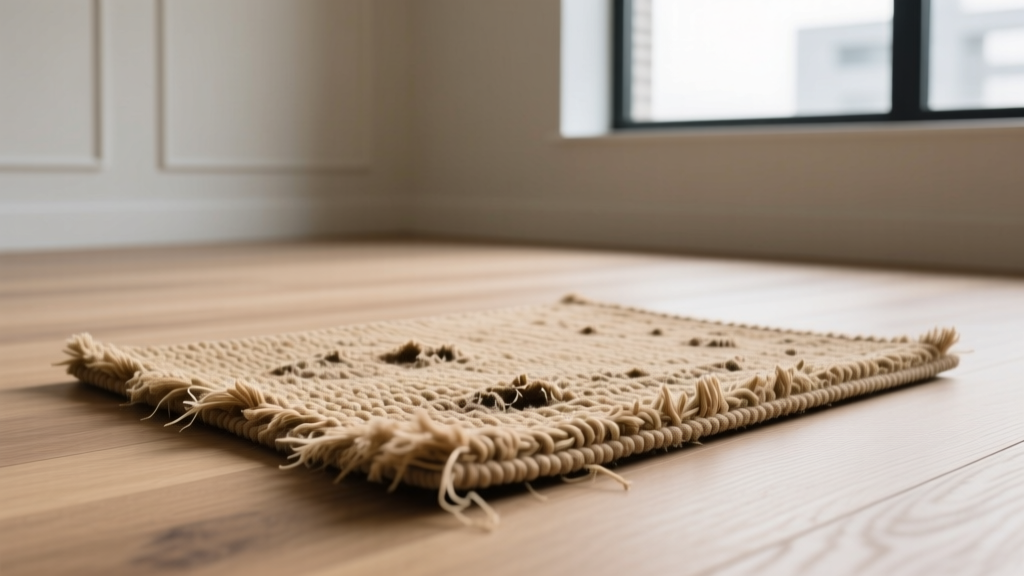
The Anatomy of Sisal: Why Agave Fibers Outlast Synthetics
Sisal carpet is woven from the structural fibers of the Agave sisalana plant. Unlike synthetic nylon or polyester, which rely on petroleum-based polymers for resilience, sisal derives its durability from raw cellulose and hemicellulose structures. According to the Food and Agriculture Organization (FAO), sisal fibers possess a tensile strength of up to 700 MPa, making them historically suitable for marine rigging and heavy-duty agricultural twine. This extreme tensile strength translates directly to flooring: sisal resists tearing and structural breakdown under heavy static loads far better than softer natural fibers.
However, this rigidity introduces a critical trade-off. Sisal lacks the natural elasticity of wool. When a heavy piece of furniture compresses wool fibers, they spring back. When sisal fibers are crushed beyond their bending radius, they suffer permanent structural deformation or micro-fractures. Understanding this mechanical limitation is the first step in accurately predicting the material's lifespan in a residential or commercial environment.
Expected Lifespan by Traffic Zone
While general industry estimates place natural fiber flooring in the 10-to-15-year range, actual longevity is strictly dictated by foot traffic volume and particulate management. The International Association of Certified Home Inspectors (InterNACHI) notes that natural fiber carpets degrade rapidly when subjected to abrasive soils.
| Installation Zone | Average Foot Traffic | Expected Lifespan | Primary Wear Indicator |
|---|---|---|---|
| Master Bedroom / Guest Room | Low (Barefoot / Socks) | 15 - 20+ Years | UV fading near windows |
| Living Room / Dining Area | Moderate (Shoes off) | 10 - 15 Years | Fiber fraying at pivots |
| Main Hallways / Stairs | High (Directional traffic) | 7 - 10 Years | Center-path fiber breakage |
| Entryways / Mudrooms | Extreme (Grit / Moisture) | 3 - 5 Years | Hydrolysis and abrasive scoring |
High-Traffic vs. Low-Traffic Degradation Rates
In high-traffic zones, the primary enemy is not the foot itself, but the microscopic silica (sand and dirt) trapped in the weave. Because sisal fibers are stiff and feature a ribbed surface texture, they do not envelop dirt particles. Instead, grit sits on the surface. Every footstep grinds this silica into the fiber, acting like sandpaper. Over 3 to 5 years, this abrasive micro-scoring severs the cellulose chains, leading to the characteristic 'fuzzing' or 'pilling' seen in degraded sisal.
Primary Failure Modes: How Sisal Carpet Actually Dies
To maximize your investment, you must engineer your environment against sisal's three fatal vulnerabilities.
1. Hydrolytic Degradation and Edge Fraying
Sisal is highly hygroscopic. In environments where ambient relative humidity (RH) frequently exceeds 65%, or in areas prone to liquid spills, the fibers absorb moisture, expand, and lose structural cohesion. Over time, this cycle of swelling and shrinking causes the latex backing to delaminate and the bound edges to fray. If installing in a coastal climate or a basement, a commercial-grade dehumidifier maintaining 35-55% RH is mandatory.
2. Photo-Oxidation (UV Fading)
Unlike synthetics that are solution-dyed with UV stabilizers, sisal is typically dyed post-harvest or left in its natural state. Direct, unfiltered sunlight breaks down the lignin in the agave fibers. South-facing rooms with large windows will experience noticeable bleaching or yellowing within 24 to 36 months unless treated with UV-blocking window films (minimum 99% UV rejection rating).
3. Seam Splitting from Humidity Swings
Natural fibers expand in high humidity and contract in low humidity. If a sisal carpet is installed wall-to-wall without proper perimeter expansion gaps, winter heating (which drops indoor RH below 20%) will cause the carpet to shrink, resulting in catastrophic seam splitting or pulling away from the tack strips.
Sisal vs. Other Natural Fibers: Durability Matrix
When specifying natural flooring, architects and designers often weigh sisal against alternative botanical fibers. Below is a technical comparison of their structural properties.
| Material | Tensile Strength | Moisture Resistance | Elasticity / Recovery | Best Application |
|---|---|---|---|---|
| Sisal | Very High (700 MPa) | Poor (Hygroscopic) | Low (Rigid, crushes) | Living areas, offices, stairs |
| Jute | Low (300 MPa) | Very Poor (Rots easily) | Medium (Soft) | Low-traffic bedrooms only |
| Seagrass | High (500 MPa) | Good (Non-porous) | Low (Brittle) | Kitchens, dining rooms |
| Wool | Medium (200 MPa) | Moderate (Repels liquid) | Very High (Springy) | High-traffic, luxury zones |
Proactive Maintenance: Extending the 15-Year Mark
Proper maintenance of sisal is entirely counterintuitive to homeowners accustomed to synthetic carpets. The Carpet and Rug Institute (CRI) emphasizes dry extraction methods for natural fibers to prevent cellulose damage.
- Daily/Weekly Particulate Removal: Use a canister vacuum with a suction-only parquet head. Never use a beater bar or rotating brush. The stiff bristles will mechanically fray the sisal weave and pull up loose fibers, accelerating the aging process.
- Bi-Annual Dry Extraction: Utilize a host-based dry cleaning system (such as the HOST Dry Carpet Cleaning System). These systems use moist, absorbent sponges that trap dirt and are vacuumed away, introducing less than 2% moisture to the fiber.
- Liquid Spill Protocol: Blot immediately with a clean, white, absorbent microfiber cloth. Do not rub. If a spot treatment is required, use a specialized natural-fiber cleaner with a strictly neutral pH (7.0). Test in an inconspicuous corner first.
Expert Insight: 'The most common cause of premature sisal replacement is well-intentioned but destructive cleaning. Homeowners see a wine spill, grab an alkaline-based carpet foam, and scrub. The chemical reaction with the agave's natural tannins guarantees a permanent brown stain that no amount of rinsing will remove.' — Senior Flooring Inspector, National Institute of Carpet and Floorlayers.
Installation Variables That Dictate Longevity
The lifespan of your sisal carpet is effectively sealed on the day of installation. Ignoring environmental acclimation or substrate preparation will void most manufacturer warranties (including premium brands like Stark Carpet and Fibreworks).
Subfloor and Padding Specifications
For stretch-in installations over wood subfloors, the padding dictates how much shock the sisal fibers must absorb. A pad that is too thick or too soft will allow the rigid sisal to bend sharply underfoot, leading to fiber breakage. Specify a high-density felt or rebond pad with a minimum density of 8 lbs/ft³ and a maximum thickness of 1/4 inch to 3/8 inch.
For direct glue-down installations over concrete slabs (common in commercial spaces or basements), moisture testing is non-negotiable. Perform a Calcium Chloride Moisture Vapor Emission Rate (MVER) test. The slab must emit less than 3.0 lbs of moisture per 1,000 square feet per 24 hours. If the slab exceeds this, a two-part epoxy moisture mitigation system must be applied before the adhesive, otherwise, the trapped vapor will degrade the natural latex backing and cause the carpet to release from the floor.
ROI and Replacement Economics
Premium sisal carpet typically ranges from $6.00 to $14.00 per square foot for the material, with professional installation adding $1.50 to $3.00 per square foot. While the initial capital outlay is higher than mid-grade nylon ($3.00 - $5.00/sq ft), the ROI is calculated differently. Sisal does not suffer from the 'ugly-out' phase common in synthetics, where fibers mat down and look perpetually dirty after 7 years. A well-maintained sisal floor in a moderate-traffic zone retains its architectural aesthetic for 15 years, effectively lowering the annualized cost of ownership while providing a biophilic design element that synthetic alternatives cannot replicate.