Bugs From Carpet? Taxonomy of Bug-Resistant Flooring Options
Discover how to eliminate bugs from carpet by transitioning to bug-resistant flooring. Compare LVP, tile, and hardwood with expert subfloor protocols.
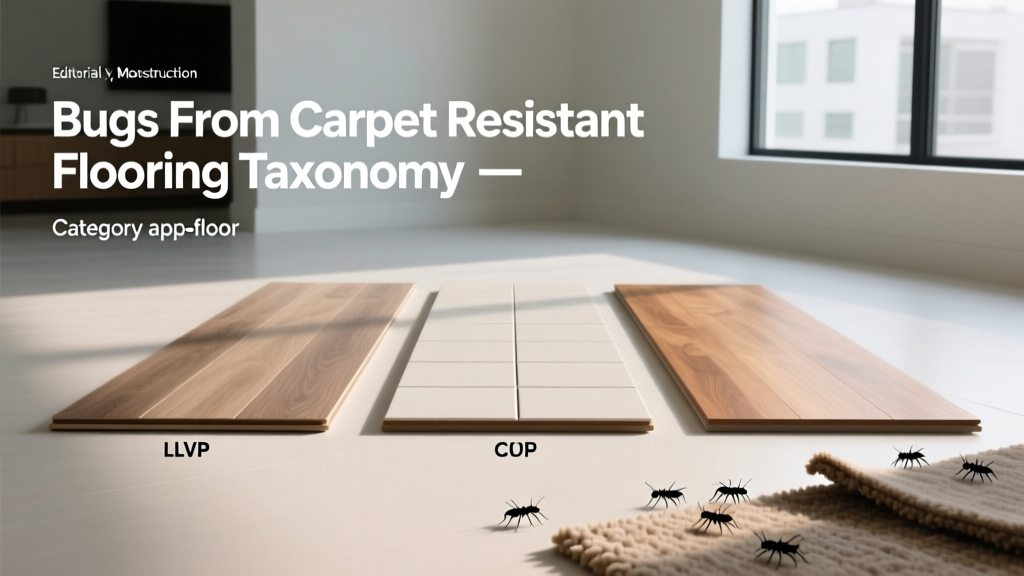
The Entomological Reality: Why Carpets Harbor Pests
Dealing with bugs from carpet is rarely a surface-level cleaning issue; it is a structural material failure. Woven textiles, particularly those containing natural fibers like wool, jute, or cotton, provide an ideal microclimate for three distinct classes of household pests. Understanding the taxonomy of these organisms is the first step in selecting a replacement flooring material that inherently starves them.
1. Dermestidae (Carpet Beetles): Unlike bed bugs, carpet beetles do not feed on blood. The larvae consume keratin, a protein found in natural animal fibers (wool carpets, hides, feathers). According to the National Pest Management Association, synthetic carpets are largely immune to beetle consumption, but the backing and accumulated organic debris in synthetic piles still support larvae.
2. Dermatophagoides (Dust Mites): These microscopic arachnids thrive in the high-humidity, high-debris environment of carpet padding. They feed on shed human skin cells trapped deep within the carpet tufts. The Environmental Protection Agency (EPA) notes that maintaining indoor humidity below 50% is critical, but carpets trap localized moisture, creating persistent micro-habitats.
3. Siphonaptera (Fleas): Fleas use the dense, dark environment of carpet padding as a pupation chamber. The vibration of footsteps triggers the adult flea to emerge, making carpeted high-traffic areas primary infestation zones.
Material Taxonomy: Hard Surface vs. Soft Surface Vulnerability
When evaluating flooring to eradicate bugs from carpet, the fundamental shift is from porous, three-dimensional fibrous matrices to two-dimensional, non-porous hard surfaces. The table below maps material vulnerability against pest biology.
| Flooring Material | Carpet Beetle Vulnerability | Dust Mite Habitat Suitability | Flea Pupation Risk | Required Maintenance Protocol |
|---|---|---|---|---|
| Wool/Natural Carpet | High (Primary food source) | High (Traps skin/moisture) | High (Deep pile protection) | Daily vacuum, annual hot-water extraction |
| Synthetic Carpet (Nylon/PET) | Low (Synthetic tufts) | Moderate (Padding traps debris) | High (Pile depth) | Bi-weekly vacuum, chemical treatments |
| Luxury Vinyl Plank (LVP) | Zero (Inorganic PVC core) | Zero (No depth for trapping) | Zero (No pupation crevices) | Damp mopping, sweep |
| Porcelain Tile (Epoxy Grout) | Zero | Zero | Zero | Standard mopping |
| Engineered Hardwood | Zero (Finished surface) | Zero | Low (Micro-gaps in poorly installed floors) | Sweep, specific pH wood cleaner |
Bug-Resistant Flooring Alternatives: A Selection Guide
Transitioning away from carpet requires selecting materials that eliminate the biological vectors pests rely on. Below is a technical breakdown of the top three hard-surface alternatives.
Luxury Vinyl Plank (LVP) with Rigid Core
LVP has become the primary replacement for infested carpet due to its 100% waterproof nature and inorganic composition. For pest eradication, specify a Stone Plastic Composite (SPC) or Wood Plastic Composite (WPC) rigid core.
Porcelain Tile with 100% Solid Epoxy Grout
While porcelain tile itself is entirely impervious to pests, the grout lines are the critical failure point. Standard cementitious grout is highly porous, trapping microscopic organic matter, moisture, and dust mite food sources.
To create a truly bug-proof floor, you must pair rectified porcelain tile with a 100% solid epoxy grout (such as Laticrete SpectraLOCK or Mapei Kerapoxy). Epoxy grout cures to a glass-like, non-porous finish that prevents organic debris from embedding in the joints, completely eliminating the dust mite food supply.
Engineered Hardwood with Aluminum Oxide Finish
If you prefer the aesthetic of wood, engineered hardwood offers superior dimensional stability compared to solid wood, reducing the micro-gaps where pests might hide. Specify planks finished with aluminum oxide coatings. This finish creates a microscopic, impenetrable shield that prevents organic matter from penetrating the wood grain. Ensure the installation utilizes a full-spread adhesive method rather than a floating floor; floating floors leave a void between the subfloor and the hardwood that can harbor pests.
Transitioning Away from Carpet: Subfloor Remediation Protocol
Ripping out a carpet infested with bugs from carpet is only 50% of the solution. The wooden subfloor beneath the carpet pad is often heavily contaminated with larvae, eggs, and organic debris. Installing new flooring over an untreated subfloor will result in lingering odors and potential pest resurgence.
Follow this exact 4-step subfloor remediation protocol before installing hard surfaces:
- Mechanical Removal and HEPA Extraction: Remove the carpet, pad, and tack strips. Use a commercial HEPA-filter vacuum to remove all loose debris, larvae, and pupae from the subfloor.
- Enzymatic Cleaning: Apply an enzymatic cleaner (designed for pet urine and organic breakdown) to the subfloor. This breaks down the proteins and uric acid left behind by pests and pets, removing the pheromone trails that attract new insects.
- Borate Treatment Application: Apply a glycol-based borate wood preservative (such as Bora-Care or Timbor) to the exposed wooden subfloor. The active ingredient, disodium octaborate tetrahydrate, penetrates the wood and acts as a permanent stomach toxin for wood-destroying insects and a deterrent for general pests. Allow 48 hours for penetration and drying.
- Moisture Barrier Installation: Before laying LVP or hardwood, roll out a 6-mil polyethylene vapor barrier (if installing over a concrete slab) or a specialized acoustic/moisture underlayment to seal the treated subfloor.
Do not apply liquid borate treatments if your subfloor has a moisture content exceeding 19%. Use a pinless moisture meter to test the subfloor. If moisture is high, address the leak or crawlspace ventilation issue first; otherwise, the borate solution will not penetrate the wood properly and may promote fungal growth.
Cost Analysis: Carpet Replacement vs. Ongoing Pest Treatment
Homeowners often hesitate to replace carpet due to upfront costs, opting instead for repeated chemical pest treatments. However, a 2026 lifecycle cost analysis demonstrates that transitioning to hard-surface flooring yields a positive ROI within 4 to 6 years when factoring in pest control, deep cleaning, and premature carpet replacement.
| Cost Category | Carpet Maintenance & Pest Control (Per 500 sq ft) | LVP Installation & Remediation (Per 500 sq ft) |
|---|---|---|
| Material Cost | $1,500 - $2,500 (Mid-grade nylon) | $2,500 - $4,000 (Rigid core SPC, 20-mil) |
| Demo / Disposal | $250 | $400 (Includes tack strip removal) |
| Subfloor Remediation | $0 | $350 (Borate treatment & prep) |
| Annual Pest Control | $300 - $500 (Targeted IGR sprays) | $0 |
| Annual Deep Cleaning | $200 (Hot water extraction) | $0 |
| 5-Year Total Cost | $4,250 - $6,000 | $3,250 - $4,750 |
Note: Costs reflect national averages for 2026. Labor rates vary significantly by region, with coastal and metropolitan areas commanding a 20-30% premium.
Frequently Asked Questions
Can bugs survive in the foam padding under vinyl plank flooring?
No. Closed-cell foam underlayments (like IXPE or EVA) used beneath LVP do not contain organic food sources, nor do they have the open-cell structure required for pests to burrow or pupate. Furthermore, the weight of the LVP and furniture compresses the foam, eliminating void spaces.
Will bed bugs infest hardwood floors after leaving the carpet?
Bed bugs (Cimex lectularius) do not infest flooring materials; they infest the host's resting areas (mattresses, sofas). While they can hide in the expansion gaps of poorly installed hardwood, using a high-quality silicone caulk or color-matched wood filler on perimeter expansion gaps eliminates these harborages. For more on bed bug harborage behaviors, refer to the Centers for Disease Control and Prevention (CDC) guidelines.
Is bamboo flooring a good alternative to carpet for pest resistance?
Strand-woven bamboo is highly resistant to pests due to its extreme density (Janka hardness rating of 3,000+ lbf) and the high-heat, high-pressure manufacturing process that destroys any residual organic starches. However, it must be properly acclimated and sealed to prevent micro-cracking, which could theoretically create crevices for debris accumulation.