Swisstrax Flooring Durability: Lifespan & Wear Analysis
Analyze Swisstrax flooring durability, load limits, and lifespan. Discover how interlocking polypropylene tiles perform in garages and workshops.
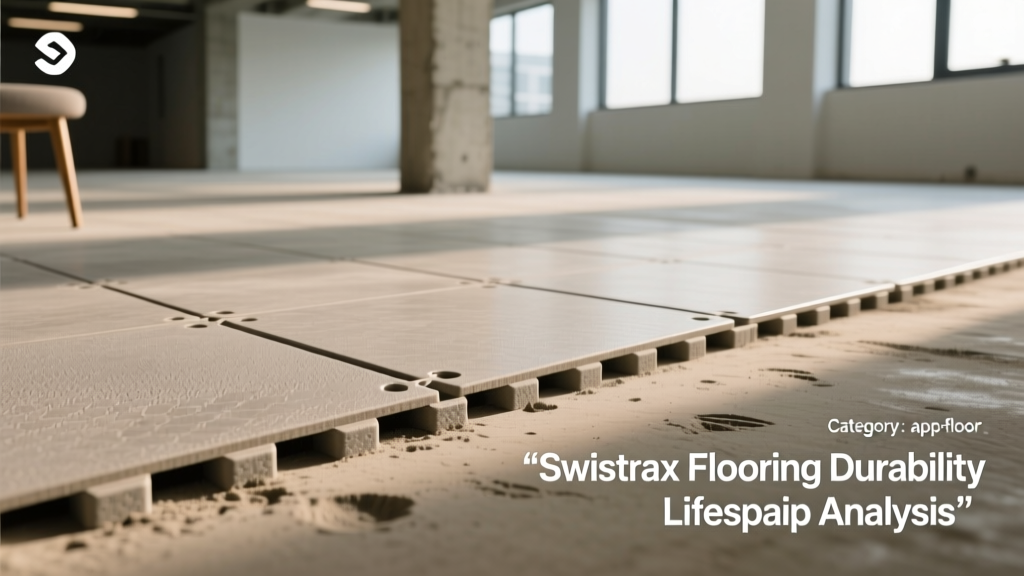
Modular interlocking tiles have fundamentally disrupted the residential and commercial garage flooring market, offering a rapid-deployment alternative to epoxy and polyaspartic coatings. Among rigid polypropylene options, Swisstrax flooring commands a premium price point, necessitating a rigorous analysis of its long-term durability, structural lifespan, and specific failure modes. This guide deconstructs the material science, load-bearing mechanics, and real-world aging characteristics of Swisstrax tiles to determine their true lifecycle value.
Material Composition: Impact Copolymer Polypropylene Mechanics
The foundational durability of Swisstrax flooring stems from its base resin: impact copolymer polypropylene (PP). Unlike homopolymer PP, which exhibits high stiffness but becomes brittle at low temperatures, impact copolymer integrates ethylene-propylene rubber (EPR) domains into the polymer matrix. According to the British Plastics Federation, this EPR integration dramatically increases the material's notched Izod impact strength, allowing the tiles to absorb blunt force trauma—such as dropped wrenches or heavy automotive components—without shattering or cracking, even in unheated winter garages.
Furthermore, rigid PP contains zero plasticizers. This is a critical distinction when comparing Swisstrax to flexible PVC garage tiles. Soft PVC relies on chemical plasticizers to maintain flexibility. Over time, these plasticizers migrate to the surface and react with the antioxidants in hot rubber tires, resulting in permanent yellow or brown 'hot tire pickup' stains. Because Swisstrax is formulated from rigid PP, it is chemically immune to hot tire staining, preserving its aesthetic lifespan indefinitely in automotive environments.
Structural Load Limits and Point-Load Deflection
While marketing materials often highlight massive roll-over weight capacities, static point-load deflection is the true metric of structural longevity in a garage environment. The interlocking loop-and-peg system must distribute localized weight across the underlying concrete grid. Below is a breakdown of the structural specifications across the primary Swisstrax profiles, based on Swisstrax Official Garage Flooring Specifications and independent load testing.
| Model Profile | Thickness | Roll-Over Limit | Point-Load PSI | Primary Use Case |
|---|---|---|---|---|
| Ribtrax | 0.625 inches | 75,000 lbs | ~250 PSI | Heavy Automotive, Lifts, Workshops |
| Diamondtrax | 0.500 inches | 50,000 lbs | ~180 PSI | Standard Residential Garages |
| Cointrax | 0.500 inches | 50,000 lbs | ~180 PSI | Commercial Showrooms, Light Duty |
Thermal Expansion and Environmental Stress
Polypropylene possesses a relatively high Coefficient of Linear Thermal Expansion (CLTE), measured at approximately 6 x 10^-5 in/in/°F. In practical terms, this means that a 20-foot continuous run of Swisstrax flooring will expand or contract by roughly 0.8 inches across a 100°F temperature swing (e.g., from a 20°F winter morning to a 120°F summer afternoon in a non-climate-controlled garage).
If the flooring is installed wall-to-wall without adequate perimeter spacing, this thermal expansion will cause the floor to 'tent' or buckle in the center of the room. Proper installation mandates a minimum 1/2-inch expansion gap along all perimeter walls and fixed obstructions (like workbenches or pillars). Failure to accommodate this CLTE is the single most common cause of premature structural failure in modular PP floors.
Chemical Resistance and Subfloor Interaction
Swisstrax tiles exhibit exceptional resistance to a wide array of automotive and household chemicals. The non-porous nature of polypropylene prevents the absorption of:
- Battery Acid (Sulfuric Acid): Will not etch or degrade the PP surface if wiped within 24 hours.
- Brake Fluid & Motor Oil: Completely inert; cleans easily with standard degreasers.
- Road Salts & Magnesium Chloride: Will not cause osmotic blistering or surface spalling.
However, the primary chemical vulnerability lies beneath the tiles. While the grid design allows liquids to drain through to the concrete subfloor, trapped moisture against unsealed concrete can lead to alkaline efflorescence. Over a period of 5 to 10 years, the buildup of crystalline salt deposits on the concrete can create an abrasive layer that slowly wears down the underside of the PP support pegs. Sealing the concrete subfloor with a basic penetrating silane/siloxane sealer prior to installation is highly recommended to prevent this sub-surface degradation.
Expected Lifespan and Degradation Timeline
When installed correctly on a stable, moisture-managed subfloor, Swisstrax flooring follows a predictable aging curve. The following timeline outlines the expected physical state of the flooring over a 15-year lifecycle:
- Years 1–3 (Peak Integrity): The floor maintains its original structural rigidity and aesthetic finish. Interlocking loops remain perfectly seated with zero lateral shift under vehicular turning forces.
- Years 4–7 (Micro-Abrasion Phase): High-traffic pathways (specifically the driver-side entry/exit zones) will begin to show micro-scratching. This is highly visible on the smooth surfaces of Cointrax and Diamondtrax, but effectively hidden by the directional channels of the Ribtrax profile.
- Years 8–12 (UV & Environmental Weathering): If the garage door faces south and remains open frequently, the tiles will be subjected to high UV exposure. While Swisstrax incorporates Hindered Amine Light Stabilizers (HALS) to prevent polymer chain scission, extreme UV exposure will eventually cause a slight 'chalkiness' or matte finish on the surface layer. Structural integrity remains uncompromised.
- Years 15+ (Joint Fatigue): After a decade and a half of thermal cycling and mechanical loading, the interlocking loop-and-peg joints may experience minor fatigue, leading to slightly looser connections in heavy-traffic zones. However, the tiles will remain fully functional and safe for continued use.
Edge Cases: Common Failure Modes and Mitigation
Despite its high durability, Swisstrax flooring is not indestructible. Understanding specific edge cases is vital for maximizing the product's lifespan.
Standard hydraulic jack stands feature small, stamped-steel feet that concentrate the entire corner-weight of a vehicle into an area of less than 4 square inches. This localized pressure can easily exceed 400 PSI, surpassing the yield strength of the PP grid and causing permanent indentation or catastrophic cracking, particularly in cold weather when the polymer is stiffer. Mitigation: Always place a 1/2-inch thick plywood or high-density rubber load-distribution pad under jack stand feet.
Rolling Tool Cabinets: Heavy, hard-caster mechanic toolboxes (often exceeding 800 lbs) can cause localized shear stress on the interlocking joints when rolled over the floor repeatedly. Upgrading the toolbox to soft polyurethane casters will distribute the weight and eliminate joint shear.
Maintenance Protocols for Maximum Longevity
Maintaining Swisstrax flooring requires minimal effort, but improper cleaning techniques can accelerate surface wear. Avoid using stiff wire-bristle brushes or high-pressure washers (above 1,500 PSI) with zero-degree nozzles, as these can physically scour the PP surface and strip the factory UV protectant layer.
For routine maintenance, a stiff synthetic-bristle push broom is sufficient to clear debris from the Ribtrax channels. For deeper cleaning, a standard pH-neutral floor cleaner applied with a microfiber mop will lift embedded oils without compromising the polymer structure. By adhering to these material-specific maintenance protocols, the functional and aesthetic lifespan of the flooring will comfortably extend beyond the standard 15-year warranty period.