Master Carpet Shark Knife Techniques for Flawless Carpet Trimming
Master carpet installation with Carpet Shark knife techniques. Learn precise wall trimming, seaming, and blade selection for flawless flooring results.
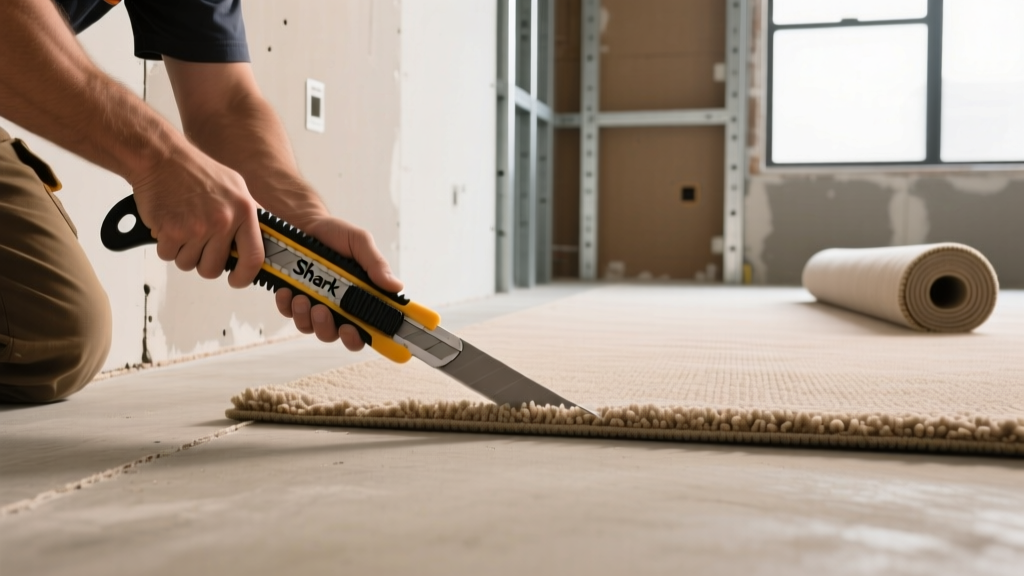
Precision Trimming: The Core of Professional Carpet Installation
The difference between a mediocre and a masterful carpet installation rarely lies in the power stretching phase; it is decided at the trimming edge. A poorly executed trim leads to frayed fibers, visible gaps at the baseboard, and premature delamination from the tack strip. For professional flooring contractors, the Carpet Shark knife system has become an industry staple for mitigating these risks. Known for its ergonomic, high-torque grip and specialized blade housing, the Carpet Shark allows installers to apply consistent downward and lateral pressure without wrist fatigue, even when cutting high-density 60 oz. face-weight residential plush or rigid commercial backings.
According to the Carpet and Rug Institute (CRI) 104 Installation Standard, all textile floor coverings must be trimmed to fit precisely within the designated tack strip clearance zone, typically leaving a 1/4-inch to 1/2-inch gap between the cut edge and the wall. Achieving this millimeter-perfect tolerance requires more than a sharp blade; it demands a systematic approach to tool geometry, cutting angles, and backing manipulation.
Carpet Shark Blade Matrix: Selecting the Right Edge
The Carpet Shark handle accommodates several blade profiles. Selecting the incorrect blade for the specific carpet construction is the leading cause of edge failure. Below is the definitive matrix for blade selection based on material type and installation phase.
| Blade Profile | Best Application | Cutting Direction | Carpet Type / Weight |
|---|---|---|---|
| Standard Hook | Wall trimming, tuck-zone clearing | Upward (from backing) | Residential plush, Berber (40-60 oz.) |
| Heavy-Duty Hook | Thick backings, double-jute layers | Upward (from backing) | High-density commercial, woven wool |
| Straight / Slant | Seam peaking, micro-trimming, vinyl cuts | Downward (top-down) | Vinyl-backed, felt-backed, seam tape |
| Concave / Notched | Cutting around cylindrical obstacles | Variable | All types (specifically for pipes/vents) |
The Wall-Trimming Sequence: Millimeter-Perfect Execution
Executing a flawless wall trim requires a specific physical sequence to ensure the carpet locks into the tack strip nails without pulling back under tension. Follow this exact procedure when using your Carpet Shark knife along perimeter walls.
- Establish the Overhang: After rough-cutting the carpet, leave exactly a 2-inch to 3-inch overhang past the tack strip. Do not attempt to trim flush immediately after stretching; the carpet needs room to shift during the final power-stretching phase.
- Tuck and Seat: Using a stair tool (not your knife), firmly press the carpet down into the gap between the tack strip and the drywall. This seats the backing against the angled nails.
- Position the Carpet Shark: Insert the standard hook blade into the Carpet Shark handle. Place the flat base of the knife housing against the drywall, angled slightly downward so the hook catches the secondary backing.
- The Cutting Stroke: Apply firm lateral pressure against the wall and pull the knife upward and toward your body in one continuous, fluid motion. Never saw back and forth. A single, confident stroke prevents jagged latex tearing.
- Verify the Clearance: The cut edge should now sit precisely 1/4-inch to 3/8-inch away from the drywall. This gap allows the carpet to expand and contract with humidity changes without buckling, while remaining hidden beneath the baseboard or quarter-round molding.
- Final Tuck: Use a wall trimmer or stair tool to push the freshly cut edge completely down into the tuck zone, locking it over the tack strip nails.
Advanced Techniques: Seaming and Obstacle Cutouts
Double-Cut Seaming with a Straight Blade
When joining two carpet panels, the double-cut method is mandatory for invisible seams. Switch your Carpet Shark to a straight/slant blade. Overlap the two carpet edges by 2 inches. Place a straightedge (seaming board) over the overlap. Press the Carpet Shark firmly against the straightedge and cut through both layers simultaneously.
Critical Edge Case: If you are seaming a high-pile carpet, place a scrap piece of old carpet or a specialized seam board underneath the cut line. This prevents the blade from scoring the subfloor and ensures the bottom layer is cut cleanly without dragging the latex.
Cutting Around HVAC Vents and Pipes
For circular obstacles like plumbing pipes, do not attempt to cut from the edge of the room. Instead, measure the exact center point of the pipe relative to the nearest wall. Transfer this measurement to the carpet backing. Using a concave or heavy-duty hook blade, puncture the backing at the center mark and cut outward in a star pattern (four relief cuts) to the diameter of the pipe. This allows the carpet to lay flat without creating tension points that will eventually tear.
Troubleshooting Cutting Defects
If you notice excessive white latex dust or the primary backing separating from the secondary jute layer during trimming, your blade is either severely dulled or you are applying excessive downward pressure. A dull blade drags the latex rather than slicing it. Fix: Snap to a fresh blade segment immediately. A standard hook blade should be snapped or replaced after every 15 to 20 linear feet of cutting on heavy commercial backing.
Symptom: Frayed or Fuzzy Cut Edges
Cause: Cutting from the face side, or using a straight blade on a thick polypropylene Berber.
Fix: Flip the carpet and cut from the backing using a hook blade. If trimming a finished edge (like a stair nose), use a specialized top-and-bottom shear tool rather than a standard utility knife.
Symptom: Gapping at the Seams After Stretching
Cause: The blade drifted during the double-cut, creating an angled bevel rather than a 90-degree vertical cut. When stretched, the angled edges pull apart.
Fix: Ensure your Carpet Shark housing is resting completely flat on the seaming board. Do not tilt the wrist during the pull. Change the blade between the top cut and the bottom cut if the material is exceptionally dense.
Tool Maintenance, Pricing, and Safety Protocols
Investing in professional-grade trimming tools yields immediate returns in labor efficiency and callback reduction. A standard ergonomic Carpet Shark knife handle typically retails between $18.00 and $28.00, while heavy-duty, all-metal variants range from $30.00 to $45.00. Replacement blade packs (usually containing 10 to 50 segments) cost between $4.00 and $12.00 depending on the steel grade and coating (e.g., titanium-coated blades last 30% longer on abrasive fiberglass backings but cost roughly $15.00 per pack).
Maintenance is straightforward but non-negotiable. At the end of every installation, wipe the blade housing with a dry cloth to remove latex residue and carpet fiber dust. Accumulated latex inside the housing will prevent the blade from seating flush, causing the blade to wobble and create jagged cuts. Store the tool with the blade retracted.
Finally, adhere strictly to hand tool safety standards. The Occupational Safety and Health Administration (OSHA) mandates that workers using cutting tools must always cut away from their bodies and ensure the tool is in safe working condition. When snapping off a dulled segment of a snap-off blade, always use the integrated snapper cap on the back of the Carpet Shark handle, and dispose of the severed razor segment in a designated, puncture-proof sharps container. Never leave loose blade segments on the subfloor, as they pose a severe puncture hazard to subsequent trades working in the space.