Tile Backsplash Kitchen Materials: 2026 Selection Taxonomy
Explore the 2026 material taxonomy for your tile backsplash kitchen. Compare porcelain, glass, and stone specs, costs, and ANSI standards.
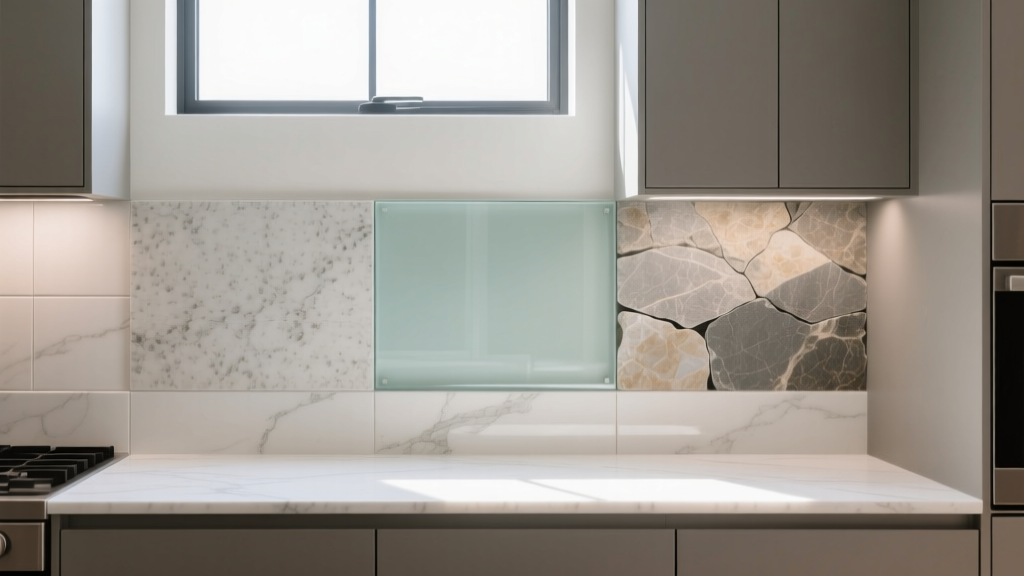
Decoding the Tile Backsplash Kitchen Material Spectrum
Selecting a tile backsplash kitchen material requires moving beyond aesthetic preferences to evaluate the underlying material science. The kitchen backsplash operates as a high-performance thermal and chemical shield, subjected to extreme temperature fluctuations from cooktops, acidic food splatters, and high-velocity grease aerosols. In 2026, the market is dominated by four primary material taxonomies: ceramic/porcelain, architectural glass, natural stone, and gauged porcelain tile panels (GPTP). Understanding the distinct physical properties, absorption rates, and installation mandates of each category is critical to preventing premature failure modes like crazing, etching, and delamination.
Ceramic vs. Porcelain: The ANSI A137.1 Divide
While often grouped together, ceramic and porcelain tiles are governed by the same standard—ANSI A137.1—but diverge sharply in their manufacturing processes and water absorption rates. This distinction dictates their suitability for different kitchen zones.
Porcelain is defined by a water absorption rate of 0.5% or less, achieved through dust-pressing and high-temperature firing (up to 2,500°F). Standard ceramic tile absorbs more than 0.5% (often 3-7%). In a kitchen environment, high-absorption ceramic tiles installed behind a boiling pot or high-BTU gas range are susceptible to thermal shock and moisture ingress, which can lead to glaze crazing (micro-cracking).
Glazed Ceramic and the Crazing Risk
Traditional glazed ceramic tiles, including trending handmade Zellige styles, offer unmatched visual depth. However, their higher porosity requires specific installation protocols. If installed over a greenboard or moisture-prone substrate without a proper waterproofing membrane (like a liquid-applied ANSI A118.10 barrier), the clay body can absorb ambient kitchen humidity. This causes the clay body to expand slightly, while the rigid glass glaze does not, resulting in a web of micro-cracks known as crazing. For 2026 kitchen designs, specify ceramic tiles only for low-splash zones (e.g., away from the primary sink and cooktop) or ensure the substrate is fully decoupled and waterproofed.
Glass Tile: Refraction, Mesh-Mounting, and Thermal Shock
Glass tile provides unparalleled light refraction and color permanence, as it is entirely impervious to water and stains. However, its coefficient of thermal expansion (CTE) is significantly higher than that of ceramic or stone. When exposed to the direct radiant heat of a gas burner, glass expands rapidly. If the adhesive bond cannot accommodate this movement, the tile will shear or crack.
The Thinset Mandate for Glass
Standard unmodified thinset is a critical failure point for glass installations. The National Kitchen & Bath Association (NKBA) and tile manufacturers mandate the use of a highly polymer-modified thinset mortar meeting ANSI A118.4 or the newer ANSI A118.15 (Improved Modified Dry-Set Cement Mortar). Furthermore, because glass is translucent, the color of the thinset directly impacts the final aesthetic. Installers must use a bright white, premium thinset and ensure 100% coverage by back-buttering large-format glass or using a specialized U-notched trowel designed for glass mosaics to eliminate trowel ridge shadowing.
Natural Stone: Navigating Porosity and Etching
Natural stone brings organic variation to a kitchen, but it requires a strict understanding of mineralogy. Stone used in kitchens falls into two chemical categories: calcareous and siliceous.
'The most common failure in natural stone kitchen backsplashes is not physical breakage, but chemical etching. Homeowners often mistake etching for staining, leading to incorrect remediation attempts that further damage the stone surface.' — Natural Stone Institute Care Guidelines
Calcareous vs. Siliceous Stone Performance
- Calcareous Stones (Marble, Travertine, Limestone): Composed primarily of calcium carbonate. These stones are highly reactive to acids (pH below 7). Common kitchen ingredients like lemon juice, vinegar, tomatoes, and wine will instantly dissolve the surface calcium, leaving dull, matte spots known as etching. Honed finishes mask etching better than polished finishes, but the chemical vulnerability remains.
- Siliceous Stones (Granite, Quartzite, Slate): Composed primarily of silica. These are highly acid-resistant and will not etch from culinary acids. However, many commercial quartzites are treated with polyester resins at the factory to fill natural fissures. Prolonged exposure to UV light from a nearby window or high heat from a cooktop can cause these resins to yellow or become brittle over time.
Gauged Porcelain Tile Panels (GPTP): The Seamless Revolution
Governed by ANSI A137.3, GPTP (often referred to as large-format porcelain panels) are manufactured in massive dimensions, such as 120x300cm, with thicknesses ranging from 3.5mm to 12mm. For a tile backsplash kitchen application, 3.5mm to 6mm panels are ideal. They can be installed directly over existing drywall or old tile, creating a virtually seamless surface with zero grout lines in the primary splash zone. This eliminates the primary hygiene vulnerability of traditional tile: grease accumulation in grout joints. The trade-off is the requirement for specialized fabrication tools (bridge saws with continuous rim diamond blades) and a two-person installation crew using suction cup frames to prevent panel fracture during handling.
2026 Kitchen Backsplash Material Selection Matrix
The following matrix synthesizes material properties, maintenance requirements, and current market pricing to facilitate rapid specification decisions.
| Material Taxonomy | Water Absorption | Mohs Hardness | Acid Resistance | 2026 Avg. Cost (Installed) |
|---|---|---|---|---|
| Glazed Ceramic | 3.0% - 7.0% | 5 - 6 | High (Glaze dependent) | $14 - $22 / sq.ft. |
| Porcelain (Rectified) | ≤ 0.5% | 7 - 8 | Absolute | $18 - $35 / sq.ft. |
| Architectural Glass | 0.0% (Impervious) | 5.5 - 6.5 | Absolute | $25 - $55 / sq.ft. |
| Calcareous Stone (Marble) | 0.5% - 3.0% | 3 - 4 | Very Low (Etches easily) | $30 - $65 / sq.ft. |
| Siliceous Stone (Quartzite) | 0.2% - 1.5% | 7 - 8 | High (Resin dependent) | $35 - $75 / sq.ft. |
| GPTP (3.5mm - 6mm Panel) | ≤ 0.1% | 7 - 8 | Absolute | $40 - $85 / sq.ft. |
The Hidden Variables: Grout Chemistry and Joint Sizing
The tile material is only half the equation; the grout matrix dictates long-term hygiene and structural integrity. In 2026, specifying the correct grout chemistry is non-negotiable for kitchen environments.
Grout Taxonomy and ANSI Standards
- Cementitious Grout (ANSI A118.6 / A118.7): The traditional choice, but highly porous. Even when sealed, it will absorb aerosolized cooking oils and tomato pigments over time, leading to permanent discoloration. Restrict use to low-splash accent areas only.
- Single-Component Grout (ANSI A118.12): Often acrylic or urethane-based. These offer excellent stain resistance and color consistency without the need for sealing. They are ideal for standard ceramic and porcelain backsplashes but can struggle with prolonged exposure to high heat directly above a cooktop.
- Epoxy Grout (ANSI A118.3): The gold standard for heavy-use kitchens. Epoxy is completely impervious to water, acids, and oils. While historically difficult to install due to rapid curing times and stickiness, modern 2026 formulations include advanced surfactants that allow for easier water-wash cleanup during installation. It is mandatory for glass mosaics and natural stone in high-splash zones to prevent picture-framing (where the grout stains the edges of the tile).
Decision Framework: Matching Material to Cooking Habits
Finalizing your tile backsplash kitchen selection requires aligning the material taxonomy with the household's specific culinary behavior.
The Heavy Entertainer / High-Heat Cook
Prescription: Gauged Porcelain Tile Panels (GPTP) or large-format rectified porcelain with 1/16-inch joints and Epoxy grout. This combination eliminates 95% of grout lines, provides absolute thermal shock resistance, and ensures that grease and acidic splatters can be wiped away without penetrating the surface.
The Aesthetic-Driven / Light Cook
Prescription: Handcrafted Zellige ceramic or back-painted glass mosaics. If the kitchen relies heavily on takeout, meal prep services, or light cooking (no high-BTU wok burners or aggressive tomato sauce reductions), the thermal and chemical vulnerabilities of handmade ceramics and glass are mitigated. Ensure a premium modified thinset is used to accommodate the varying thicknesses of handmade clay.
The Natural Material Purist
Prescription: Honed Quartzite or Granite (Siliceous stones). Avoid marble or travertine unless the client explicitly accepts the development of a natural patina (etching). Specify an impregnating sealer that penetrates the stone's pore structure without altering the surface finish, and mandate a 1/8-inch grout joint with a color-matched single-component urethane grout to allow for natural stone expansion.