Underlayment for Vinyl Flooring: Lifespan and Durability Analysis
Discover how choosing the correct underlayment for vinyl flooring prevents joint failure, moisture damage, and telegraphing to maximize LVP lifespan.
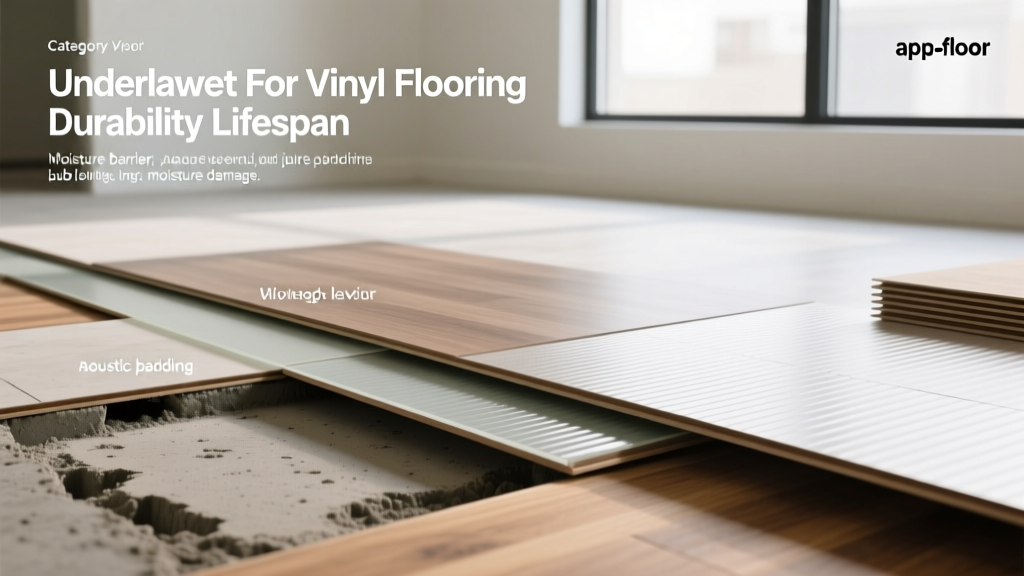
The Hidden Lifespan Multiplier: Why Underlayment Matters for LVP
Luxury Vinyl Plank (LVP) and Stone Plastic Composite (SPC) flooring are heavily marketed for their waterproof cores and scratch-resistant wear layers. However, the actual lifespan of a floating vinyl floor is rarely dictated by the surface material alone; it is fundamentally constrained by the underlayment for vinyl flooring beneath it. A high-quality 20-mil wear layer will fail prematurely if the substrate pad allows excessive deflection, moisture vapor transmission, or subfloor telegraphing.
In 2026, with the industry shift toward rigid-core SPC and WPC (Wood Plastic Composite) products, the mechanical demands on underlayments have changed. Rigid cores are less forgiving of subfloor imperfections than older, flexible LVT. This analysis breaks down the physical and chemical failure modes associated with incorrect underlayment selection and provides a data-driven framework for maximizing your floor's operational lifespan.
Compression Set and Joint Failure: The 1mm vs. 3mm Trap
The most common cause of premature LVP failure is joint separation, driven by the 'compression set' of the underlayment. Modern rigid-core vinyl utilizes precision-milled click-lock mechanisms (such as Valinge 5G or Unilin). These locks are designed to withstand horizontal sheer stress, but they are highly vulnerable to vertical deflection.
When a heavy point load (e.g., a 400 lb refrigerator or a concentrated sofa leg) compresses a thick, low-density foam pad, the vinyl plank dips. If the underlayment does not immediately rebound—a metric known as compression set—the locking mechanism remains under vertical tension. Over 3 to 5 years of cyclic loading, this fatigue causes the microscopic PVC lips of the joint to snap, resulting in visible gaps and moisture infiltration.
Consumers often assume a thicker 3mm foam pad provides better comfort and soundproofing. However, installing a 3mm compressible pad under rigid-core SPC will almost universally void the manufacturer's warranty. Most major brands mandate a maximum underlayment thickness of 1mm to 1.5mm with a high-density compression rating to prevent joint sheer.
Compression Deflection Metrics by Material
| Underlayment Material | Optimal Thickness | Compression Set (Target) | Joint Sheer Risk | Best Application |
|---|---|---|---|---|
| High-Density IXPE Foam | 1.0mm - 1.5mm | < 5% at 10% deflection | Very Low | Residential SPC / WPC |
| Agglomerated Cork | 2.0mm - 3.0mm | < 8% (High Density) | Low | Commercial / Multi-family |
| Standard PE Foam | 2.0mm+ | > 20% | High | Not recommended for LVP |
| Recycled Rubber | 2.0mm - 3.0mm | < 3% | Extremely Low | Heavy Commercial / Gym |
Moisture Vapor Transmission Rates (MVTR) and Plasticizer Migration
While the vinyl plank itself is impervious to liquid water, the interaction between concrete subfloors, moisture vapor, and the underlayment can chemically degrade the flooring system. Concrete slabs continuously emit alkaline moisture vapor. When this vapor is trapped beneath an impermeable underlayment, it can condense and create a highly alkaline environment (pH > 9).
Alkaline moisture attacks the plasticizers within the vinyl backing and the adhesive layers of attached pads. This chemical breakdown, known as plasticizer migration, causes the vinyl to become brittle, shrink, and yellow over time. To prevent this, underlayments installed over concrete must either be highly breathable or incorporate an integrated vapor barrier with a perm rating of less than 0.1 perms, as measured by ASTM F2170 standards for relative humidity testing in concrete slabs.
Expert Insight: Never rely on a standard 6-mil polyethylene sheeting as a standalone vapor barrier beneath a floating floor. It creates a slip plane that increases lateral movement, accelerating joint wear. Instead, use a 2-in-1 underlayment with a laminated film barrier that bonds the moisture protection directly to the acoustic pad.
Material Breakdown: Long-Term Durability of Underlayment Types
Selecting the right material requires balancing acoustic performance (IIC/STC ratings) with structural rigidity. Here is how the primary underlayment materials perform over a 15-year lifecycle.
1. Cross-Linked Polyethylene (IXPE)
IXPE is the industry standard for residential LVP. Its closed-cell structure resists moisture absorption and provides a dense, supportive base. High-quality IXPE pads (like those from FloorMuffler or Roberts) maintain their structural integrity for decades without flattening. Lifespan Impact: Excellent. Protects click-locks from deflection while providing adequate sound dampening.
2. Agglomerated Cork
Cork is a natural, sustainable option with superior acoustic properties. However, for LVP applications, it must be high-density (minimum 11 lbs/ft³). Low-density cork will crush under point loads. Furthermore, cork is hygroscopic; if installed over a damp concrete slab without a proper vapor barrier, it will harbor mold and lose its structural cohesion. Lifespan Impact: High, but strictly conditional on subfloor moisture levels being below 75% RH.
3. Pre-Attached Pads (The Factory Standard)
Most premium SPC products now come with a 1mm IXPE or EVA foam pad factory-laminated to the backing. This ensures uniform thickness and eliminates installation errors. Lifespan Impact: Optimal, provided the installer does not add a secondary roll-out pad beneath it.
The 'Double-Pad' Failure Mode
A frequent and catastrophic installation error occurs when contractors install a roll-out underlayment beneath an LVP product that already features a pre-attached pad. This 'double-pad' scenario creates a sponge-like effect, doubling the vertical deflection underfoot. According to Shaw Floors installation guidelines and similar manufacturer specifications, adding a secondary pad to a pre-attached product immediately voids the structural warranty and accelerates joint failure by up to 400%. If the subfloor requires additional moisture protection, use only a standalone vapor barrier film, not a padded underlayment.
Subfloor Telegraphing and Wear Layer Degradation
Underlayment cannot fix a poorly prepared subfloor; it only masks it temporarily. Subfloor telegraphing occurs when imperfections in the subfloor (divots, high spots, or wide seams) press upward against the vinyl plank. Over time, foot traffic pushes the flexible vinyl down into the divots or over the high spots, causing micro-fractures in the urethane wear layer.
The Resilient Floor Covering Institute (RFCI) mandates that subfloors be flat to within 3/16 inch over a 10-foot radius. Even with a premium 2mm cork underlayment, any deviation exceeding 1/8 inch will eventually telegraph through the floor, leading to localized wear layer failure and visible ridging. Underlayment is a stress-distributor, not a leveling compound.
Decision Framework: Matching Underlayment to Subfloor and Traffic
Use this diagnostic framework to specify the correct underlayment for your specific project parameters to ensure maximum floor longevity.
- Scenario A: Pre-Attached LVP over Wood Subfloor (Second Story)
Action: Do not use any additional underlayment. The pre-attached pad is sufficient. Adding more voids the warranty and compromises joint integrity. - Scenario B: Unattached SPC over Concrete Slab (Basement/Ground Floor)
Action: Use a 1mm to 1.5mm high-density IXPE underlayment with an integrated 6-mil poly film vapor barrier. Ensure concrete RH is below 75% per ASTM F2170 prior to installation. - Scenario C: Commercial Space with Heavy Rolling Loads (Hospital/Retail)
Action: Avoid floating floors if possible. If floating LVT is required, use a 2mm high-density rubber or specialized commercial cork underlayment to minimize compression set under heavy carts and pallet jacks. - Scenario D: Multi-Family Dwelling requiring strict IIC/STC Sound Ratings
Action: Use a 3mm acoustic cork or specialized acoustic rubber underlayment, but pair it exclusively with a thick, high-rigidity WPC core vinyl plank. SPC cores are too brittle to span the slight deflections of thick acoustic pads without risking joint fatigue.
Summary of Lifespan Optimization
The durability of luxury vinyl flooring is a system, not a standalone product. By restricting underlayment thickness to manufacturer specifications (typically 1mm-1.5mm), prioritizing high compression-set materials like IXPE or dense rubber, and rigorously managing moisture vapor transmission from concrete slabs, you eliminate the primary mechanical and chemical vectors for floor failure. Investing in the correct, application-specific underlayment for vinyl flooring is the single most effective way to ensure your LVP reaches its rated 20-to-30-year structural lifespan.