Buying Used Floor Scrubbers in Janesville: 2026 Playbook
Expert playbook for sourcing, inspecting, and maintaining used floor scrubbers in Janesville. Includes pricing, battery testing, and local water tips.
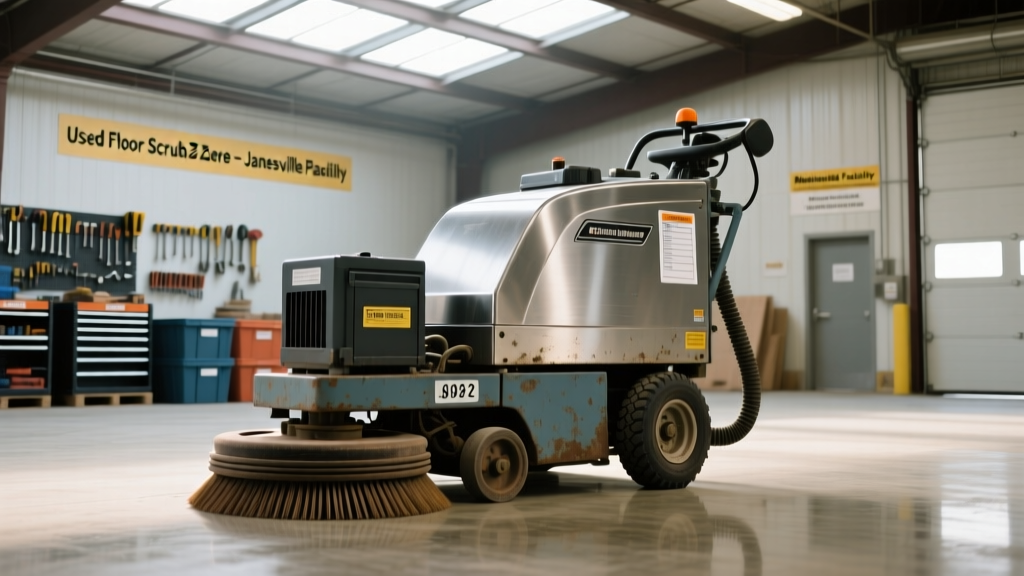
The Janesville Industrial Flooring Landscape
Janesville’s economic evolution from legacy automotive manufacturing to a modern logistics and advanced manufacturing hub has fundamentally changed the region's flooring requirements. Facilities along the I-90/I-39 corridor and the redeveloped industrial parks demand rigorous floor maintenance to manage heavy forklift traffic, rubber tire marks, and particulate dust. When outfitting these facilities, facility managers are increasingly turning to the secondary market. Sourcing used floor scrubbers in Janesville offers a 40% to 60% capital expenditure reduction compared to new equipment, provided the buyer understands the mechanical nuances of commercial cleaning machinery.
The local environment presents unique challenges. Southern Wisconsin's temperature fluctuations affect battery chemistry, and the specific sealants used on polished concrete in modern distribution centers require precise brush pressure calibration. This playbook details the exact inspection protocols, sizing metrics, and maintenance schedules required to successfully deploy used automatic scrubbers in Rock County facilities.
Sizing Your Scrubber: Walk-Behind vs. Ride-On Matrix
Selecting the correct form factor is dictated by facility layout, specifically aisle width and turning radius. According to OSHA standard 1910.176(a), material handling aisles must be sufficiently wide to accommodate the equipment in use. A machine that is too wide will damage racking uprights; a machine that is too small will result in unacceptable labor costs per square foot.
| Machine Type | Model Examples | Ideal Aisle Width | Coverage Rate | Best Janesville Application |
|---|---|---|---|---|
| Compact Walk-Behind | Tennant T1, Kärcher BR 35/12 | 36" - 48" | 15,000 sq ft/hr | Narrow-aisle e-commerce fulfillment centers |
| Standard Walk-Behind | Tennant T5, Nilfisk SC351 | 60" - 84" | 25,000 sq ft/hr | Mid-sized manufacturing assembly floors |
| Ride-On (Stand/Sit) | Tennant M17, Nilfisk SC6500 | 96"+ | 60,000+ sq ft/hr | Big-box logistics hubs, wide-dock staging areas |
Cylindrical Brush vs. Pad Driver: Matching the Substrate
Used machines typically come equipped with one of two scrubbing heads. Understanding the difference is critical for Janesville's mixed-use industrial spaces.
- Disc Pad Drivers (175 - 250 RPM): These rely on downward pressure and rotary friction. They are mandatory for modern, highly polished concrete floors found in new Beloit and Janesville distribution centers. Using a cylindrical brush on high-gloss polished concrete will micro-scratch the surface and destroy the burnished finish.
- Cylindrical Brushes (600 - 900 RPM): These counter-rotating brushes sweep and scrub simultaneously. They are the only viable option for older, pitted concrete, grouted quarry tile, or heavily textured epoxy floors common in retrofitted legacy manufacturing plants. The bristles reach into grout lines and concrete pores that flat pads cannot penetrate.
The 5-Point Used Scrubber Inspection Playbook
When evaluating used floor scrubbers in Janesville, do not rely on visual aesthetics. A freshly painted chassis can hide severe internal degradation. Execute this diagnostic sequence before transferring funds.
1. Squeegee and Skirt Wear Analysis
The rear squeegee blade creates the vacuum seal that allows the recovery tank to pull dirty water off the floor. Inspect the polyurethane or rubber blade. If the blade is worn unevenly or has lost more than 1/8 inch of its original height, it will leave streaks of contaminated water on the floor, creating slip hazards. The National Floor Safety Institute notes that improper water recovery is a leading cause of commercial slip-and-fall liabilities.
2. Battery Load and Chemistry Verification
Most 24V walk-behind scrubbers use four 6V deep-cycle batteries (e.g., Trojan T-105). Do not just check the resting voltage. A resting voltage of 25.2V means nothing if the voltage drops to 18V under load. Engage the scrub and drive motors simultaneously and measure the voltage at the battery terminals. If it drops below 22V, the battery bank is sulfated and requires immediate replacement—a $600 to $900 hidden cost.
3. Vacuum Motor Carbon Brushes
The vacuum motor (often an Ametek Lamb 3-stage bypass) relies on carbon brushes that wear down over time. Access the motor housing and measure the brushes. If they are shorter than 1/4 inch, the motor will soon arc and fail. Replacement brushes cost $30, but a burnt-out armature requires a $450 motor replacement.
4. Solution Valve and Float Calibration
Fill the clean water tank and turn on the solution flow. The mechanical float valve in the recovery tank must shut off the vacuum motor when the tank is full to prevent water from being sucked into the motor. Test this by manually lifting the float cage while the machine is running. The vacuum motor should instantly cut power. If it doesn't, the microswitch is corroded or misaligned.
5. Transaxle and Drive Tire Inspection
Put the machine in neutral and push it. It should roll smoothly. Engage the drive and listen for high-pitched whining from the transaxle, which indicates stripped nylon gears or low lubricant. Check the drive tires for flat-spotting, which causes severe vibration and ruins the squeegee seal during operation.
Janesville and the surrounding Rock County area have notoriously hard municipal and well water, often exceeding 18 grains per gallon. In used machines, inspect the solution tank's internal baffles and the flow-control solenoid for white calcium carbonate scaling. Severe scale buildup restricts water flow to the brush head, causing the machine to run dry and burn out the pad driver motor. If heavy scale is present, negotiate a 15% price reduction to cover professional descaling and solenoid replacement.
2026 Pricing Benchmarks for the Southern Wisconsin Market
The secondary market for commercial cleaning equipment has stabilized following the supply chain disruptions of the early 2020s. When sourcing locally or from regional liquidators, expect the following baseline pricing for functional, non-refurbished units:
- Compact Walk-Behind (12" - 17" path): $1,800 - $3,200. Highly dependent on battery age.
- Standard Walk-Behind (20" - 24" path): $3,500 - $5,500. Units with gel-cell or lithium-ion upgrades command a $1,000 premium.
- Ride-On Scrubbers (26" - 32" path): $7,000 - $14,000. Steering column play and hydraulic lift cylinder leaks are the primary price negotiators here.
Always verify the hour meter. While hour meters can be tampered with, cross-reference the wear on the drive pedal rubber and the steering wheel grip to estimate true usage.
Post-Acquisition Maintenance Protocol
Once deployed, a rigid maintenance schedule prevents the accelerated depreciation common in second-hand equipment. Adhere to this timeline to maximize the lifespan of your used asset.
| Frequency | Action Item | Technical Specification |
|---|---|---|
| Daily | Recovery Tank Rinse | Rinse with 120°F water to prevent anaerobic bacterial growth and odor. |
| Daily | Squeegee Debris Clearing | Remove shrink wrap, banding straps, and wood splinters from the blade edge. |
| Weekly | Battery Watering (Lead-Acid) | Add distilled water to 1/4 inch below the split ring. Never use tap water. |
| Monthly | Vacuum Filter Shake-out | Remove the polyester shroud filter and blow out with compressed air at 40 PSI. |
| Quarterly | Solution Line Flush | Run a 10:1 water-to-white-vinegar solution through the tank to dissolve hard water scale. |
Frequently Asked Questions
Can I use a residential floor cleaner for small Janesville warehouse aisles?
No. Residential machines lack the necessary down-pressure (measured in pounds per square inch) to remove industrial tire marks and do not feature vacuum recovery systems. Using a residential machine in a commercial setting violates ISSA cleaning standards and leaves a slippery, contaminated residue that fails OSHA safety audits.
Are refurbished machines better than 'as-is' used scrubbers?
Certified refurbished units from authorized dealers (like local Tennant or Nilfisk distributors) come with new batteries, squeegees, and a 90-day warranty, but cost 30% more than 'as-is' private sales. If your facility lacks an in-house maintenance technician capable of executing the 5-point inspection playbook, the refurbished premium is a necessary insurance policy against downtime.