Used Walk Behind Floor Scrubber Brookfield: Floor Matching Guide
Learn how to match a used walk behind floor scrubber in Brookfield to your commercial floors. Includes model specs, pad guides, and inspection tips.
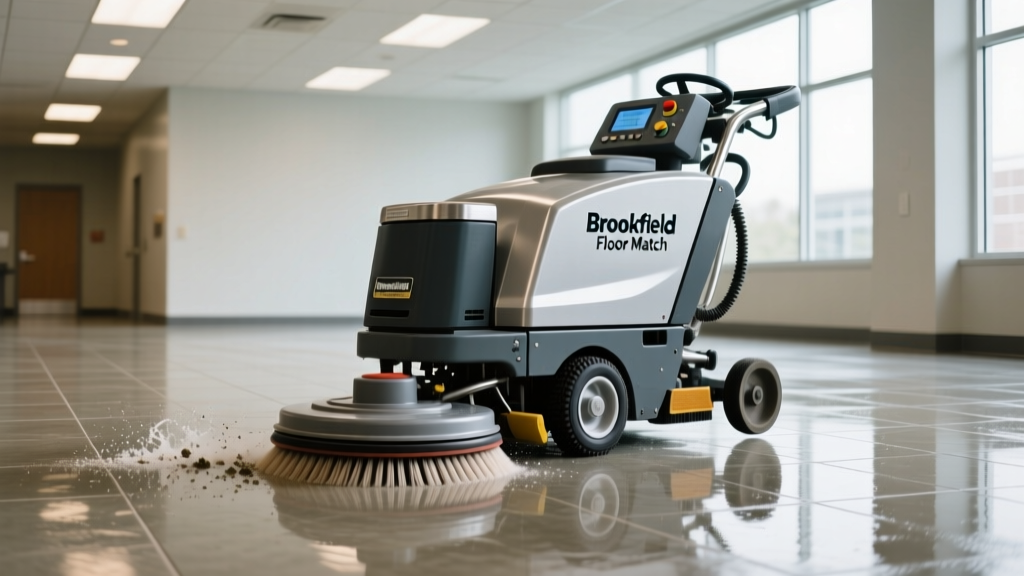
Facility managers navigating the commercial real estate and industrial sectors in the Milwaukee metro area increasingly rely on the secondary equipment market to control overhead. Sourcing a used walk behind floor scrubber in Brookfield offers significant capital savings, but purchasing pre-owned machinery is only half the battle. The true return on investment depends entirely on application-fit: matching the machine's specific mechanical configuration, pad type, and downpressure to your facility's exact flooring substrate.
Buying a scrubber designed for smooth epoxy and using it on grouted quarry tile will result in poor water recovery, accelerated squeegee wear, and potential floor damage. This guide provides a technical framework for matching used walk-behind scrubbers to specific commercial flooring types, ensuring optimal cleaning performance and compliance with slip-resistance standards.
The Brookfield Secondary Equipment Market: 2026 Overview
The Brookfield and greater Waukesha County corridor hosts a dense concentration of logistics hubs, medical campuses, and corporate headquarters. This high turnover of commercial tenants creates a robust secondary market for floor care equipment. In 2026, facility managers can typically source premium used walk-behinds from local liquidators, dealer trade-ins, and regional auctions.
- Tennant T300e (2019-2022 models): $3,800 - $5,200 (Highly available, excellent parts support)
- Nilfisk SC3500 (2020-2023 models): $4,500 - $6,500 (Preferred for tight-turn aisles)
- Clarke Focus II (2018-2021 models): $3,200 - $4,800 (Workhorse for large open warehouses)
While big-box retailers sell new, entry-level scrubbers for roughly $2,500, these units often lack the adjustable downpressure, robust vacuum motors, and durable squeegee assemblies found in used premium-tier machines. Matching a premium used unit to your floor type yields a far superior clean and longer asset lifespan.
Application-Fit Matrix: Matching Machine to Flooring
The core principle of floor scrubbing is balancing mechanical agitation with chemical dwell time and immediate water recovery. The OSHA Walking-Working Surfaces guidelines emphasize that improper cleaning techniques that leave residue or fail to extract water directly contribute to slip-and-fall hazards. Use the matrix below to configure your used walk-behind for your specific substrate.
| Flooring Substrate | Pad / Brush Type | Squeegee Durometer | Downpressure Target | Ideal Used Model Trait |
|---|---|---|---|---|
| Polished Concrete | White Polishing Pad | 60-70 Shore A (Soft) | Low (15-25 PSI) | Adjustable brush head |
| Epoxy / Urethane | Red Scrubbing Pad | 60-70 Shore A | Medium (25-40 PSI) | Standard disc drive |
| Grouted Ceramic Tile | Green/Cylindrical Brush | 50 Shore A (Very Soft) | High (40-60 PSI) | High-vacuum motor |
| VCT / LVT | Red Pad / Soft Brush | 60 Shore A | Low (15-20 PSI) | Chemical metering system |
| Diamond Ground / Rough | Black Stripping Pad | 70+ Shore A (Hard) | Maximum PSI | Heavy-duty cylindrical |
Deep Dive: Scenario-Specific Configurations
Scenario A: Polished Concrete and Epoxy Coatings
Polished concrete relies on a microscopically smooth surface to reflect light. Using an aggressive green or black pad will introduce micro-scratches, permanently dulling the finish and voiding the ISSA Cleaning Industry Standards for surface preservation. When deploying a used Tennant T300e on polished concrete, swap the default pad for a 3M white polishing pad. Furthermore, ensure the squeegee is in pristine condition; a hardened or nicked squeegee will leave streaks of dirty water that dry into visible calcium deposits on the high-gloss surface.
Scenario B: Grouted Ceramic and Quarry Tile
Grout lines present a unique challenge. Standard flat disc pads glide over the tile surface but fail to agitate the recessed grout where soil and biofilm accumulate. For this scenario, you must source a used walk-behind equipped with a cylindrical brush deck (such as the Nilfisk SC3500 with a brush head option). The bristles penetrate the grout lines, while the rotational force throws debris forward into the collection path. Crucially, the squeegee must have a lower durometer (softer rubber) to flex into the grout lines and extract the suspended soil. A hard squeegee will bridge the grout lines, leaving dirty water trapped in the crevices.
Scenario C: Healthcare and VCT/LVT Resilient Floors
Hospitals and clinics in the Brookfield area frequently utilize Luxury Vinyl Tile (LVT) or Vinyl Composition Tile (VCT). These floors require strict chemical dilution to prevent the breakdown of the wear layer. When inspecting a used machine for this environment, prioritize models with an integrated, adjustable chemical metering system (like the Clarke Focus II's onboard dispensing). This eliminates the guesswork of manual mixing and ensures the National Floor Safety Institute (NFSI) slip-resistance ratings are maintained without leaving soapy, hazardous residue.
The 7-Point Mechanical Inspection for Used Units
Before finalizing a purchase from a local Brookfield dealer or private seller, conduct this rigorous mechanical inspection to verify the machine's application readiness:
- Vacuum Motor Amperage Draw: Use a multimeter to check the vacuum motor. A healthy 24V vacuum motor should draw between 12 and 18 amps under load. A high draw indicates worn carbon brushes or bearing failure.
- Solution Valve Integrity: Inspect the solenoid valve for calcium scaling. Hard water in the Waukesha County area frequently causes these valves to stick open, resulting in continuous water flow even when the scrubber is stationary.
- Squeegee Assembly Flexibility: Physically bend the squeegee rubber. If it feels rigid or shows deep cracking, it has lost its plasticizers and will fail to recover water on uneven floors. Replacement costs average $85-$120.
- Drive Motor and Transaxle: Test the machine on a 5-degree incline. Listen for grinding in the transaxle, which indicates stripped internal gears—a common failure point in machines previously used in heavy warehouse environments.
- Pad Driver Clutch: Engage the pad driver while holding the pad stationary (with gloves). The clutch should slip smoothly. If it grabs abruptly or fails to slip, the clutch assembly requires rebuilding.
- Battery Load Testing: Do not rely on the dashboard battery gauge. Perform a 20-minute continuous run test. If the voltage drops below 21V (on a 24V system) under load, the AGM batteries are sulfated and will require a $600+ replacement.
- Recovery Tank Float Valve: Pour water into the recovery tank until it triggers the shut-off float. Ensure the vacuum motor cuts off immediately. A failed float valve will allow water to be sucked directly into the vacuum motor, destroying it.
As of 2026, many newer used models feature Lithium-Iron-Phosphate (LiFePO4) batteries instead of traditional AGM. While LiFePO4 offers opportunity charging and zero maintenance, ensure the used unit includes the proprietary smart charger. Replacing a lost OEM LiFePO4 charger can cost upwards of $800, negating your used-equipment savings.
Total Cost of Ownership: Used Premium vs. New Entry-Level
Facility managers often debate whether to buy a new, lightweight scrubber from a big-box retailer or a used, commercial-grade unit from a specialized Brookfield dealer. The decision hinges on daily run-time and floor conditions.
New entry-level scrubbers (typically 15-inch to 17-inch paths) utilize plastic chassis components, low-amperage vacuum motors, and non-adjustable brush heads. They are adequate for small retail storefronts with smooth VCT. However, in a 20,000-square-foot warehouse with polished concrete or epoxy, these units will fail to recover water at speeds over 2 MPH, leaving dangerous slip hazards.
A used premium walk-behind (20-inch to 22-inch path) features a steel-reinforced chassis, high-CFM vacuum recovery, and adjustable downpressure. While the initial capital outlay for a used premium unit may be $2,000 higher than a new big-box unit, the reduction in labor time (due to faster walking speeds and wider cleaning paths) and the elimination of floor damage claims typically yields a positive ROI within the first 14 months of operation.
Final Sourcing Advice
When searching for a used walk behind floor scrubber in Brookfield, prioritize dealers who offer a 30-day mechanical warranty and have certified technicians on staff. Request the machine's service history and verify that the unit has been load-tested and chemically descaled before delivery. By meticulously matching the machine's mechanical traits to your specific flooring substrate, you transform a simple cleaning task into a strategic floor preservation program.