Ultimate Maintenance Guide for Popular Patio Flooring Options
Preserve your outdoor space with our expert maintenance guide for patio flooring options. Learn cleaning, sealing, and winterization techniques.

The Material-Specific Maintenance Matrix
Selecting from various patio flooring options is only the first step in building a durable outdoor living space. The long-term structural integrity and aesthetic appeal of your patio depend entirely on material-specific maintenance protocols. A cleaning method that restores stamped concrete can permanently etch natural travertine, while a sealer that protects clay pavers might trap destructive moisture in composite decking.
Before executing any seasonal upkeep, consult the matrix below to understand the baseline requirements and physical limits of your specific patio flooring options.
| Material Type | Sealing Requirement | Max Pressure Washing PSI | Primary Failure Mode |
|---|---|---|---|
| Interlocking Concrete Pavers | Optional (Every 3-5 Years) | 1,500 PSI (to protect joints) | Polymeric sand washout & efflorescence |
| Stamped / Poured Concrete | Mandatory (Every 2-3 Years) | 3,000 PSI | UV degradation & acrylic sealer flaking |
| Natural Stone (Travertine/Bluestone) | Highly Recommended (Annually) | 1,200 PSI (Wide fan tip only) | Acid etching & freeze-thaw spalling |
| Porcelain Pavers | Never Required | 3,500 PSI | Epoxy grout discoloration |
| Capped Composite Decking | Never Required | 3,100 PSI (Keep 8 inches away) | Surface scratching & mold in shading |
Concrete Pavers and Stamped Concrete Care
Concrete-based patio flooring options dominate the market due to their versatility, but they are highly porous and susceptible to moisture migration and UV fading.
Managing Polymeric Sand and Joint Stabilization
For interlocking pavers, the joints are the structural weak point. Polymeric sand (such as Alliance Gator Sand Maxx) binds the pavers together and prevents weed growth. Over time, UV exposure and mechanical wear degrade the top 1/8 inch of the sand. During your spring maintenance, inspect the joints. If the sand level has dropped below the chamfer (the beveled edge of the paver), you must re-sand. Do not simply sweep new polymeric sand over old, degraded sand; use a stiff bristle broom to clear the loose top layer first, then apply the new sand and mist it according to the manufacturer's exact hydration schedule to prevent a hazy surface film.
Efflorescence Removal
Efflorescence—the white, powdery salt deposit that migrates to the surface of concrete pavers and stamped concrete—is a common aesthetic issue. According to the Interlocking Concrete Pavement Institute (ICPI), efflorescence is a natural byproduct of cement hydration. To remove it, avoid harsh muriatic acid, which can degrade the concrete matrix and alter the pigment. Instead, use a specialized efflorescence cleaner like SureKlean 600 or a diluted white vinegar solution (1 part vinegar to 4 parts water) for mild cases. Apply, agitate with a nylon brush, and rinse thoroughly.
Sealing Stamped Concrete
Stamped concrete requires a sacrificial wear layer to protect the color hardeners and release agents from UV fading. Solvent-based acrylic sealers (e.g., SuperSeal 25) penetrate deeply and provide a 'wet look' that enhances color, but they are prone to trapping subsurface moisture if applied to damp concrete, resulting in a white haze. Water-based acrylics (e.g., SureKlean Weather Seal) offer a natural matte finish and are more breathable, making them ideal for patios with poor subsurface drainage. Plan to strip and reapply the sealer every 24 to 36 months.
Natural Stone and Porcelain Paver Protocols
When evaluating premium patio flooring options, natural stone and porcelain offer distinct maintenance profiles that dictate their long-term viability in your specific climate.
Acid Sensitivity in Natural Stone
Travertine, limestone, and marble are calcium carbonate-based stones. The Natural Stone Institute explicitly warns that acidic substances—including citrus spills, vinegar, and standard concrete cleaners—will chemically etch the surface, leaving dull, irreversible marks. For routine cleaning of calcareous stone patios, use only pH-neutral, stone-specific alkaline cleaners. To protect against oil stains from outdoor kitchens and BBQ drippings, apply a penetrating, impregnating sealer like StoneTech BulletProof Sealer annually. This sealer does not alter the stone's natural slip resistance but blocks the microscopic pores from absorbing lipids.
Porcelain Pavers: The Low-Maintenance Alternative
Porcelain pavers are fired at extreme temperatures, resulting in a water absorption rate of less than 0.5%. They do not require sealing and are impervious to freeze-thaw damage. The maintenance focus for porcelain patio flooring options shifts entirely to the jointing material. Because porcelain is non-porous, standard cementitious grout will not adhere well and is prone to cracking in exterior, temperature-fluctuating environments. Always use a flexible, UV-stable epoxy or urethane jointing compound (such as Rompox or Gator Tile) to ensure the joints remain watertight and stain-resistant.
Capped Composite Decking Upkeep
While often categorized separately from hardscaping, capped composite decking is a premier elevated patio flooring option. Modern capped composites (like Trex Transcend or Fiberon Promenade) feature a protective polymer shell that completely encases the wood-plastic core. This shell eliminates the need for staining, sealing, or sanding. Trex Care and Cleaning Guidelines recommend simply using warm water and a mild, non-abrasive dish soap with a soft-bristle brush to remove dirt and pollen. For mold and mildew in heavily shaded patio areas, a solution of two parts white vinegar to one part water is highly effective and will not damage the polymer cap. Avoid using metal scrapers or steel wool, which will permanently scratch the protective shell.
When winterizing your patio, the choice of ice melt is critical. Calcium chloride and rock salt (sodium chloride) will cause severe spalling and surface pitting on stamped concrete and natural stone due to osmotic pressure and chemical reactions. Magnesium acetate (CMA) is the only de-icer recommended for natural stone and decorative concrete, as it is non-corrosive, less toxic to surrounding landscaping, and will not trigger the freeze-thaw micro-fractures associated with traditional salts.
Troubleshooting Common Patio Flooring Failures
Even with diligent maintenance, specific environmental factors can cause localized failures. Use this diagnostic guide to address common issues without replacing the entire patio surface.
- Issue: White Haze on Stamped Concrete Sealer.
Cause: Moisture was trapped beneath a solvent-based acrylic sealer during application, or the concrete was sealed while still off-gassing hydration moisture.
Fix: Do not strip the sealer immediately. Wipe the affected area with a clean rag dampened with Xylene. This temporarily re-emulsifies the acrylic, allowing the trapped moisture to escape and clearing the haze. - Issue: Polymeric Sand Washout After Heavy Rain.
Cause: The sand was over-watered during the initial activation process, washing the binding polymers out of the joint, or it rained before the 24-hour curing window elapsed.
Fix: Use a utility knife to scrape out the failed sand to a depth of 1 inch. Allow the joints to dry completely for 48 hours, then refill with a high-performance polymeric sand and mist strictly according to the manufacturer's volume guidelines. - Issue: Localized Etching on Travertine Patio.
Cause: Acidic beverage spill or improper use of a citrus-based outdoor cleaner.
Fix: Clean the area with a pH-neutral stone cleaner. Apply a tin oxide-based stone polishing powder with a damp, soft white pad, buffing in circular motions until the natural polish is restored. Rinse and re-apply penetrating sealer to the spot.
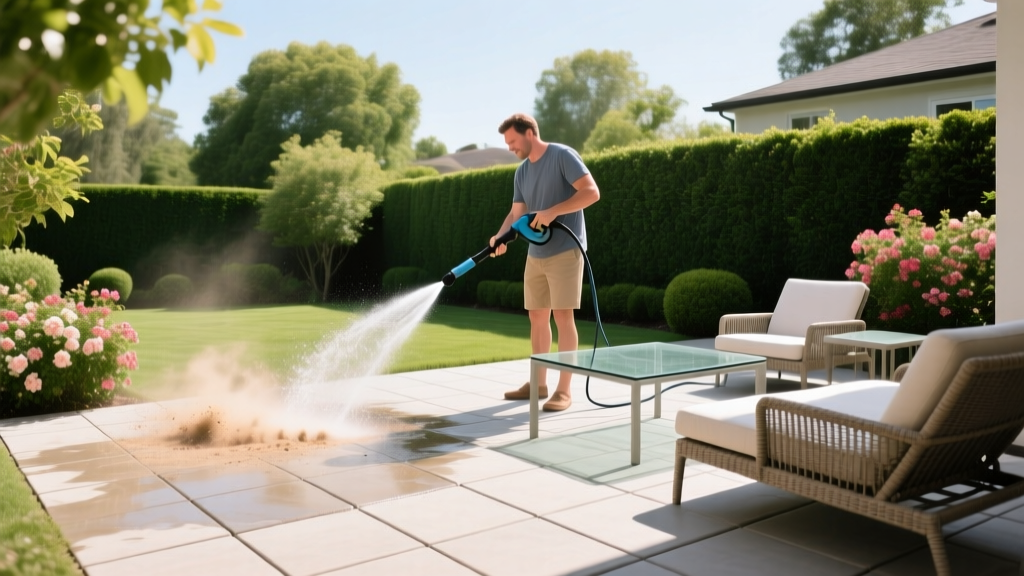
Maintenance Cost Breakdown: DIY vs. Professional
Budgeting for the long-term upkeep of your patio flooring options requires an understanding of both material costs and labor rates. The table below outlines the average 2026 costs for maintaining a standard 400-square-foot patio.
| Maintenance Task | DIY Material Cost (per sq ft) | Professional Service Cost (per sq ft) | Recommended Frequency |
|---|---|---|---|
| Power Washing & Basic Cleaning | $0.05 - $0.10 (Detergent) | $0.40 - $0.80 | Annually (Spring) |
| Concrete Sealer Application | $0.25 - $0.50 | $1.50 - $2.50 | Every 2-3 Years |
| Polymeric Sand Re-Jointing | $0.60 - $1.00 | $2.00 - $3.50 | As Needed (5-7 Years) |
| Natural Stone Impregnating Sealer | $0.80 - $1.50 | $2.50 - $4.00 | Annually or Bi-Annually |
By adhering to these material-specific protocols, you extend the lifespan of your patio flooring options by decades, ensuring the space remains structurally sound and visually striking through every season.
Written by
David NakamuraDavid Nakamura is a licensed architect (AIA) and construction technology writer focused on sustainable building methods, mass timber engineering, and high-performance building envelopes. He holds a Master of Architecture from the University of Washington and is a certified Passive House Consultant (CPHC). David spent eight years at the Seattle firm Mithun, where he led the design of three LEED Platinum projects, before founding his own practice specializing in net-zero residential design. He serves on the editorial advisory board of GreenBuilder Magazine and has authored peer-reviewed papers on cross-laminated timber (CLT) connections for the Journal of Structural Engineering. In his spare time, David teaches woodworking at Pratt Fine Arts Center and kayaks the Puget Sound.
More from David Nakamura
View all
Construction Cost
Labor Cost to Build a Deck Per Sq Ft: 2026 Installation Guide
Discover the exact labor cost to build a deck per sq ft in 2026. This installation guide breaks down contractor rates, complexity factors, and hidden fees.
Aug 4, 2026

Construction Cost
How Much Does It Cost to Build a 3 Bedroom House? Financing Guide
Learn exactly how much it costs to build a 3 bedroom house and explore 2026 financing options, construction loan types, and budget frameworks for your build.
Aug 4, 2026

Construction Cost
Cost to Build a Tennis Court: 2026 Guide
How much does it cost to build a tennis court in 2026? Breakdowns for asphalt, concrete, and synthetic surfaces plus fencing and lighting.
Jul 30, 2026