Wool Carpet Durability: Lifespan, Wear, and ROI Analysis
Analyze wool carpet durability, expected lifespan, and wear resistance. Compare face weights, maintenance costs, and long-term ROI for residential floors.
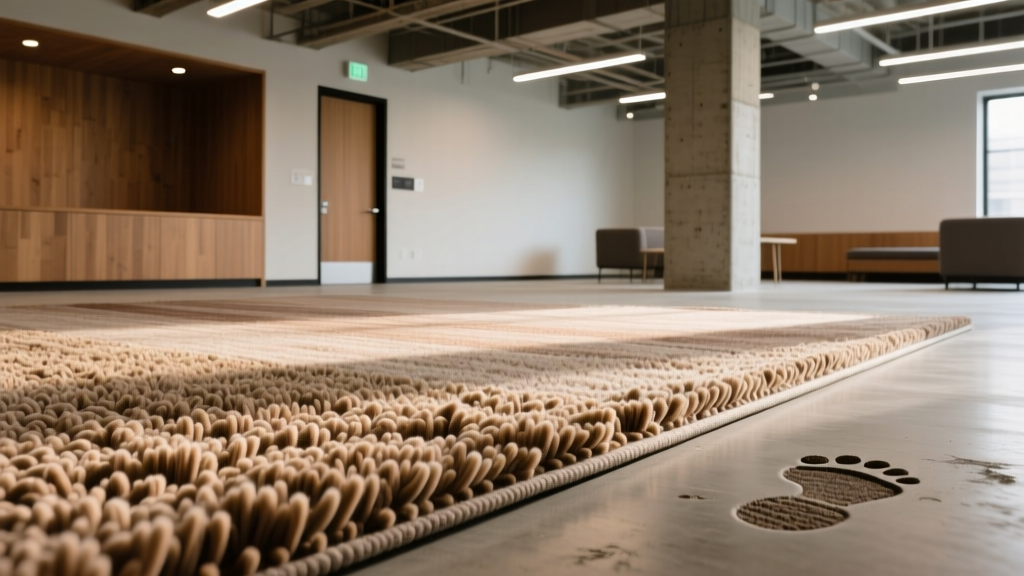
The Anatomy of Wool Fiber: Why It Outlasts Synthetics
When evaluating flooring for long-term durability, wool carpet operates on a fundamentally different chemical and structural level than synthetic alternatives like nylon or polyester. Wool is a complex, naturally occurring protein fiber composed primarily of keratin. Its exceptional lifespan is not merely a result of thickness, but of its microscopic architecture.
Each wool fiber features an outer layer of overlapping scales (the cuticle) coated in a natural lipid called lanolin. This hydrophobic barrier causes liquid spills to bead on the surface, providing a critical time window for extraction before a stain sets. Beneath the cuticle, the cortex contains a three-dimensional helical structure known as the 'natural crimp.' This crimp acts as a microscopic coil spring. When subjected to the compressive forces of foot traffic and heavy furniture, the hydrogen bonds and disulfide bridges within the keratin allow a single wool fiber to bend up to 20,000 times without fracturing. By comparison, cotton fibers typically break after roughly 3,000 bends, and standard synthetic staples lack the same elastic memory, leading to permanent crushing and matting over time.
The 'crush resistance' of wool carpet is directly tied to its elastic recovery rate. High-grade New Zealand or British wool boasts an elastic recovery of over 95% after prolonged compression. This means that heavy furniture indentations will naturally rebound once the load is removed and the fibers are lightly steamed, a physical property that synthetic extrusions cannot replicate without chemical heat-setting treatments.
Lifespan Expectations: Wool vs. Synthetic Alternatives
The upfront cost of wool carpet is undeniably higher than synthetic options, but analyzing durability requires shifting the metric from 'initial purchase price' to 'cost per year of usable life.' According to data aggregated by The Woolmark Company and independent flooring inspectors, a properly maintained 100% wool carpet in a residential setting routinely achieves a 20- to 25-year functional lifespan before requiring replacement due to wear.
| Material Type | Avg. Lifespan | Installed Cost (per sq. ft.) | Amortized Annual Cost |
|---|---|---|---|
| 100% Wool | 20 - 25 Years | $9.00 - $16.00 | $0.36 - $0.80 |
| Nylon 6,6 | 12 - 15 Years | $5.00 - $9.00 | $0.33 - $0.75 |
| Triexta (PTT) | 15 - 20 Years | $6.00 - $10.00 | $0.30 - $0.66 |
| Polyester (PET) | 5 - 8 Years | $3.50 - $6.00 | $0.43 - $1.20 |
While polyester (PET) presents the lowest barrier to entry, its lack of resilient memory leads to rapid matting in high-traffic corridors, often forcing a premature replacement cycle at year six or seven. Wool's amortized annual cost aligns closely with premium nylon, but it delivers superior acoustic dampening, natural thermal insulation, and the indoor air quality benefits of a low-VOC natural material, as noted by the Environmental Protection Agency (EPA).
Critical Durability Metrics: Calculating Density and Face Weight
A common mistake consumers make when purchasing wool carpet is focusing exclusively on 'face weight' (measured in ounces per square yard). While face weight indicates the amount of fiber used, it does not account for pile height. A 60-ounce carpet with a tall, 0.75-inch pile will actually perform worse under heavy foot traffic than a 45-ounce carpet with a tight, 0.3-inch pile. True durability is determined by density.
To calculate the density rating of a wool carpet, use the industry-standard formula:
Real-World Density Scenarios
- Scenario A (Luxury Plush): 60 oz. face weight, 0.80" pile height. Density = (60 × 36) ÷ 0.80 = 2,700. This is a low-density carpet suitable only for low-traffic bedrooms. It will crush and mat in hallways.
- Scenario B (High-Performance Loop): 50 oz. face weight, 0.30" pile height. Density = (50 × 36) ÷ 0.30 = 6,000. This is an exceptionally dense, highly durable carpet ideal for stairs, hallways, and active living areas.
For high-traffic residential zones, specify a wool carpet with a minimum density rating of 5,000. For commercial applications or extremely active households with large dogs, aim for a density rating exceeding 6,500, typically achieved through tight loop (Berber) constructions.
Common Failure Modes and Prevention Protocols
Wool carpet rarely fails due to simple mechanical abrasion; it fails due to chemical degradation, biological threats, or improper maintenance. Understanding these specific failure modes is critical to maximizing the material's 25-year lifespan.
1. Alkaline Hydrolysis (Chemical Degradation)
Wool is highly sensitive to alkaline environments. The isoelectric point of wool keratin is roughly pH 4.5. When cleaned with highly alkaline solutions (pH > 8.5), the cystine (disulfide) bonds within the fiber structure begin to break down. This results in permanent yellowing, loss of tensile strength, and a harsh, brittle texture. Never allow a carpet cleaning service to use standard synthetic carpet shampoos on wool. Always mandate the use of Carpet and Rug Institute (CRI) Seal of Approval products specifically formulated for wool, which maintain a strict pH balance between 4.5 and 8.0.
2. Photodegradation (UV Fading and Yellowing)
The amino acids in wool, particularly tryptophan and tyrosine, absorb ultraviolet light. Prolonged exposure to direct, unfiltered sunlight (specifically wavelengths below 400nm) causes photo-oxidation, leading to a phenomenon known as 'sun yellowing.' This is most noticeable in pale colors like ivory or light gray. To mitigate this in south-facing rooms with expansive glazing, install UV-blocking window films (such as the 3M Prestige series) that reject 99% of UV rays without significantly altering visible light transmission.
3. Keratinophagous Insects (Moths and Beetles)
Because wool is a natural protein, it is a food source for the larvae of webbing clothes moths (Tineola bisselliella) and carpet beetles (Anthrenus verbasci). These insects do not eat synthetic fibers. To prevent biological failure, ensure the wool carpet you purchase has been treated at the mill with a permethrin-based mothproofing agent (such as Mitin FF), which is permanently bound to the fiber and survives hot water extraction. If you prefer an untreated, chemical-free organic wool carpet, you must commit to rigorous, weekly vacuuming to physically remove eggs and larvae before they can mature and cause structural damage to the pile.
Long-Term ROI and Maintenance Economics
The maintenance protocol for wool carpet is slightly more demanding than for solution-dyed synthetics, but the economic trade-off favors wool over a multi-decade horizon. Wool naturally masks soil due to the opaque, non-transparent nature of the fiber and its complex surface scales, meaning it 'looks clean' longer between vacuuming cycles. Furthermore, wool's natural resistance to static electricity prevents it from actively attracting airborne dust and particulate matter, reducing the overall frequency of required deep hot-water extractions.
"When specifying flooring for a forever home, the 15-year replacement cycle of synthetic carpets introduces massive hidden costs, including furniture moving, baseboard touch-ups, and landfill waste. Wool's 25-year lifecycle effectively cuts the lifetime flooring budget in half, while providing a biophilic, acoustically superior environment."
Ultimately, selecting wool carpet is an exercise in lifecycle economics. By prioritizing density over face weight, strictly controlling cleaning pH levels, and proactively managing UV exposure, homeowners can leverage the natural resilience of keratin fibers to achieve a floor covering that outlasts multiple generations of synthetic alternatives.