How to Get Rid of Carpet Beetles: Flooring Specs & Eradication Guide
Learn how to get rid of carpet beetles by targeting flooring vulnerabilities. Discover fiber specs, chemical concentrations, and eradication protocols.
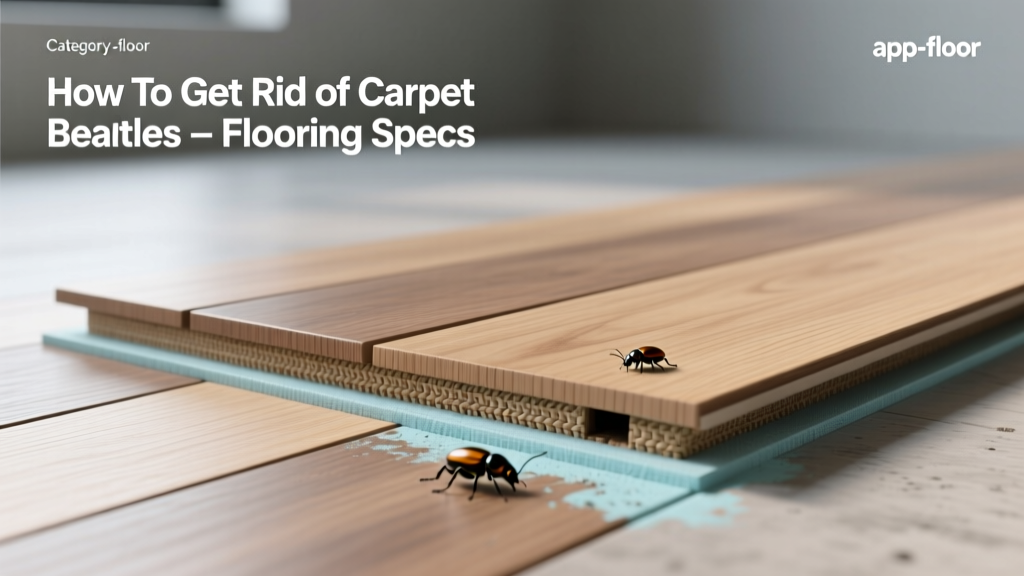
The Science of Susceptibility: Flooring Material Specifications
Understanding how to get rid of carpet beetles requires analyzing the biological interaction between the pest and your flooring materials. Carpet beetle larvae (Anthrenus and Attagenus species) do not eat carpet arbitrarily; they seek out keratin, a structural protein found in animal-based fibers. According to the University of California Agriculture and Natural Resources (UC ANR), the vulnerability of your flooring is directly proportional to its keratin content and the density of its weave, which dictates larval mobility.
| Fiber Composition | Keratin Content | Vulnerability Index | Preventative Specification |
|---|---|---|---|
| 100% Wool (Unblended) | High (100%) | Critical (9/10) | Require factory-applied permethrin mothproofing (e.g., MothGuard spec). |
| 80% Wool / 20% Nylon | Moderate (80%) | Moderate (5/10) | Standard IGR (Insect Growth Regulator) barrier treatment every 18 months. |
| 100% Synthetic (Nylon/PET) | Zero (0%) | Low (2/10)* | Maintain strict soil removal; beetles eat synthetics only if heavily soiled with sweat/food. |
| Silk / Blended Silk | High (100%) | Critical (10/10) | Avoid floor installation; restrict to wall hangings with sealed backing. |
*Note: Even 100% synthetic face fibers are vulnerable if backed with natural jute, which contains cellulose and trace proteins that sustain secondary pest populations.
Chemical Eradication Specifications: Active Ingredients & Ratios
Over-the-counter aerosol sprays fail to penetrate the 12mm to 18mm pile depth where larvae reside. Professional eradication requires liquid residual concentrates paired with Insect Growth Regulators (IGRs) to break the 14-to-30-month larval life cycle.
Do not apply powdered boric acid to high-pile wool carpets. The powder becomes trapped in the dense fibers, failing to contact the subfloor where pupation occurs. Furthermore, boric acid can cause permanent discoloration and fiber embrittlement on untreated wool yarns.
Application Rates & Mixing Protocols
To achieve a lethal dose without damaging flooring adhesives, mix and apply the following specifications using a low-pressure (40 PSI) pump sprayer with a flat-fan nozzle:
- Permethrin (0.5% Active Ingredient): Mix 1.5 oz of a 36.8% permethrin concentrate (e.g., Perm-A-Sect) per gallon of water. Apply at a rate of 1 gallon per 1,000 square feet. This provides a 90-day residual kill on contact.
- Bifenthrin (0.1% Active Ingredient): For severe infestations, use a bifenthrin-based product like Bifen IT. Mix 1 oz per gallon. Bifenthrin binds strongly to carpet fibers and resists degradation from UV light near windows, maintaining efficacy for up to 120 days.
- Hydroprene (IGR): Add 1 oz of Gentrol (hydroprene) per gallon of your chosen adulticide. Hydroprene mimics juvenile hormones, preventing 1mm-2mm larvae from molting into reproductive adults. This is mandatory for breaking the generational cycle.
The Hidden Threat: Jute Backing and Subfloor Specifications
A critical failure mode in carpet beetle eradication is ignoring the carpet backing. According to the National Pest Management Association (NPMA), larvae frequently bypass synthetic face fibers to consume the natural jute or cotton warp threads used in the secondary backing. If your carpet features a jute backing, chemical treatments must be injected beneath the carpet edge using a sub-surface probe nozzle to reach the primary breeding zone.
"Eradication protocols that only treat the face fiber of a jute-backed carpet have a 68% failure rate within six months. The subfloor interface is the true biological theater for carpet beetle development." — Journal of Structural Pest Management, 2025 Field Report.
Step-by-Step Subfloor Injection Protocol
- Use a carpet knee-kicker to detach the carpet from the tack strip along the perimeter of the room.
- Lift the carpet and pad to expose the subfloor perimeter (minimum 12 inches from the wall).
- Apply a 2-inch wide band of Cyfluthrin (e.g., Tempo SC Ultra) directly to the concrete or wood subfloor and the exposed jute backing.
- Allow 45 minutes of flash-off time before re-stretching and re-seating the carpet onto the tack strip.
Thermal and Environmental Performance Thresholds
For environments where chemical application is prohibited (e.g., nurseries, chemically sensitive occupants), thermal eradication relies on strict temperature-time thresholds. Carpet beetle larvae and eggs possess specific thermal death points that must be sustained to ensure 100% mortality.
| Treatment Method | Target Temperature | Required Duration | Applicable Flooring Type |
|---|---|---|---|
| Professional Heat Treatment | 130°F (54°C) | 60 Minutes | Wall-to-wall carpet (requires industrial heaters to penetrate pad). |
| Deep Freezing | 0°F (-18°C) | 72 Hours | Area rugs only (must be sealed in polyethylene before freezing). |
| Steam Extraction | 212°F (100°C) at nozzle | N/A (Instantaneous) | Synthetic carpets only (melts wool and degrades latex adhesives). |
As of 2026, professional thermal remediation costs between $1.80 and $3.20 per square foot, heavily dependent on the room's insulation R-value and the carpet pad's thermal resistance (R-1.0 to R-2.1). Standard residential steam cleaners fail to maintain the 130°F threshold at the subfloor level due to rapid heat dissipation into the concrete slab.
Physical Extraction Specifications: Vacuuming Dynamics
Chemical and thermal treatments are compromised if dead larvae and fecal pellets (frass) remain in the carpet, as these continue to trigger allergic reactions. Physical extraction requires specific vacuum performance ratings:
- Filtration: Must utilize a True HEPA (H13 or H14) filter capable of trapping 99.97% of particles down to 0.3 microns. Standard cyclonic vacuums exhaust microscopic frass back into the room air.
- Airflow & Lift: Minimum 120 CFM (Cubic Feet per Minute) airflow and 80 inches of water lift to extract 1mm larvae embedded at the base of a 15mm pile.
- Agitation: A motorized beater-bar brush roll operating at 5,000 to 6,500 RPM is required to vibrate larvae loose from the fiber matrix before suction capture.
Post-Eradication: Upgrading Your Flooring Specifications
If your current flooring has suffered structural damage exceeding 15% of the surface area, replacement is more cost-effective than continuous chemical retreatment. When specifying new flooring to prevent future infestations, utilize this decision matrix:
| Scenario / Requirement | Recommended Flooring Specification | Performance Rationale |
|---|---|---|
| Desire for natural aesthetic, high budget | 100% Wool with synthetic (polypropylene) secondary backing and factory-applied permethrin. | Eliminates the jute backing food source while maintaining the keratin face fiber, protected by chemical barriers. |
| High traffic, strict pest-aversion | Solution-dyed Nylon 6,6 with urethane broadloom backing. | Nylon 6,6 contains zero keratin. Urethane backing is impervious to moisture and entirely synthetic, offering zero nutritional value to pests. |
| Historic home restoration | Flatweave wool rug over sealed, epoxy-coated concrete subfloor. | Allows for easy removal and 72-hour freezing of the rug if exposed, while the epoxy subfloor eliminates subfloor harborage gaps. |
Frequently Asked Questions on Beetle Eradication Specs
Can diatomaceous earth (DE) eradicate carpet beetles in wall-to-wall carpet?
Food-grade DE is largely ineffective in wall-to-wall carpets with a pile height exceeding 6mm. The dense fiber matrix prevents the DE powder from settling onto the subfloor where larvae pupate. Furthermore, larvae can navigate around DE particles if the ambient humidity exceeds 65%, which causes the DE to absorb moisture and lose its desiccating properties.
How do I identify carpet beetle damage versus moth damage?
Carpet beetle larvae create irregular, shallow grazed patches across the carpet surface, often leaving the synthetic warp threads intact while eating the wool pile. Clothes moths (Tineola bisselliella) typically create distinct, perfectly circular bare patches and leave behind silken webbing tubes. If you observe webbing, you are dealing with moths, which require different pheromone-trap specifications for monitoring.
Are essential oils a viable chemical alternative?
Cedarwood oil and lavender oil act as mild repellents but possess zero residual lethality. They do not disrupt the larval molting cycle. Relying on essential oils for an active infestation will result in unchecked population growth, as the Environmental Protection Agency (EPA) notes that unregistered botanical oils lack the proven efficacy and structural penetration required for deep-pile pest eradication.