How Much Does It Cost to Repair Foundation Problems? A Diagnostic Guide
Discover how much it costs to repair foundation problems based on specific warning signs. Learn diagnostic triage, repair methods, and pricing matrices.

The Diagnostic Approach to Foundation Repair Costs
Asking "how much does it cost to repair foundation problems" without first identifying the underlying failure mechanism is like asking how much it costs to fix a car engine without knowing if the issue is a blown gasket or a cracked block. Foundation repair costs in 2026 range from $400 for minor cosmetic crack sealing to over $40,000 for severe structural underpinning. The variance is entirely dictated by the specific warning signs present and the geotechnical diagnosis required to resolve them.
Homeowners often fall into the trap of accepting "free inspections" from foundation repair contractors. While valuable for initial screening, these inspections inherently carry a conflict of interest: the entity diagnosing the problem is financially incentivized to sell the most expensive repair method. A true diagnostic approach requires mapping specific structural symptoms to their root causes before evaluating repair methodologies and their associated costs.
If a contractor immediately recommends $20,000 in steel piers without providing a geotechnical soil analysis or a structural engineer's report, pause. According to FEMA's Home Repair Guidelines, foundation remediation must address the source of soil movement, not just the symptom in the concrete. Always invest $500–$1,500 in an independent structural engineer's diagnostic report before signing a repair contract.
Symptom-to-Solution Cost Matrix
The following diagnostic matrix correlates common visual warning signs with their probable structural diagnosis, the industry-standard repair method, and current average pricing. Use this framework to triage your foundation's condition before soliciting bids.
| Warning Sign | Probable Diagnosis | Repair Method | Est. Cost Range |
|---|---|---|---|
| Vertical hairline cracks (< 1/8 inch) | Concrete shrinkage / thermal curing | Epoxy or polyurethane injection | $300 – $800 per crack |
| Stair-step cracks in CMU block walls | Differential settlement / soil consolidation | Carbon fiber straps or wall anchors | $400 – $800 per strap |
| Horizontal cracks with inward bowing | Hydrostatic pressure / expansive clay | Steel I-beam bracing / exterior drainage | $800 – $1,500 per beam |
| Sloping floors / sticking doors | Slab settlement / washout of subgrade | Polyurethane foam slab jacking | $1,500 – $3,500 per zone |
| Severe perimeter drop / structural racking | Deep soil failure / bearing capacity loss | Helical or steel push piers | $1,800 – $2,800 per pier |
Tier 1: Non-Structural & Cosmetic Diagnostics
Not all cracks indicate catastrophic failure. In fact, the majority of foundation cracks in homes built within the last decade are non-structural. Differentiating between a shrinkage crack and a settlement crack is the first step in controlling your repair budget.
Epoxy vs. Polyurethane Crack Injections
When diagnosing a vertical crack in a poured concrete foundation, the material's behavior dictates the repair. If the crack is dry and strictly a result of concrete curing shrinkage, epoxy injection is the standard. Epoxy possesses a tensile strength exceeding 7,000 PSI, effectively "welding" the concrete back together and restoring its original structural integrity. The cost averages $40 to $60 per linear foot.
However, if the crack is actively leaking water, epoxy will fail because it cannot bond to damp surfaces. In this scenario, polyurethane resin injection is required. Polyurethane reacts with moisture, expanding up to 20 times its liquid volume to fill voids and create a watertight, flexible seal that accommodates minor future thermal movement. This repair typically costs $60 to $100 per linear foot. Misdiagnosing a wet crack as a dry one and using epoxy will result in repair failure within months, forcing you to pay twice.
Tier 2: Structural Stabilization & Underpinning
When warning signs include doors that no longer latch, drywall cracks radiating from window corners, and visible slopes in the floor plan, the diagnosis shifts from material failure to soil failure. The cost to repair these foundation problems escalates rapidly because the solution requires bypassing unstable surface soils and transferring the structural load to stable substrata.
Helical Piers vs. Steel Push Piers
Underpinning is the most expensive category of foundation repair, and contractors often push the product they specialize in rather than what the soil profile demands.
- Helical Piers ($1,800 – $2,800 per pier): These are screwed into the ground like a giant wood screw. They are the mandatory choice for lightweight structures (e.g., wood-frame additions, porches, or slab-on-grade foundations) because they do not require the weight of the building to drive them downward. Installation is verified using the torque-capacity equation ($K_t \times T = P_{ult}$), meaning the installer measures the hydraulic torque to guarantee the load-bearing capacity of the bedrock or dense strata they have anchored into. Ensure your contractor uses piers certified to ICC-ES AC358 standards.
- Steel Push Piers ($1,500 – $2,400 per pier): These are hydraulically driven into the ground using the actual weight of the house as resistance. They are ideal for heavy masonry or multi-story structures where the dead load is sufficient to drive the steel pipe to refusal (bedrock). They are generally less expensive than helical piers but will fail if used on lightweight structures that lack the mass to drive the pier deep enough.
Before spending $30,000 on underpinning, rule out seasonal soil desiccation. In regions with expansive clays, drought conditions cause soil to pull away from the foundation, mimicking severe settlement. The Texas A&M AgriLife Extension recommends implementing a consistent soaker hose watering regimen around the perimeter for 30 days. If the cracks close and doors begin to stick less, your "foundation failure" may simply be a $200 irrigation problem.
The Diagnostic Triage Protocol
To accurately estimate how much it will cost to repair your foundation problems, follow this sequential triage protocol before inviting contractors onto your property:
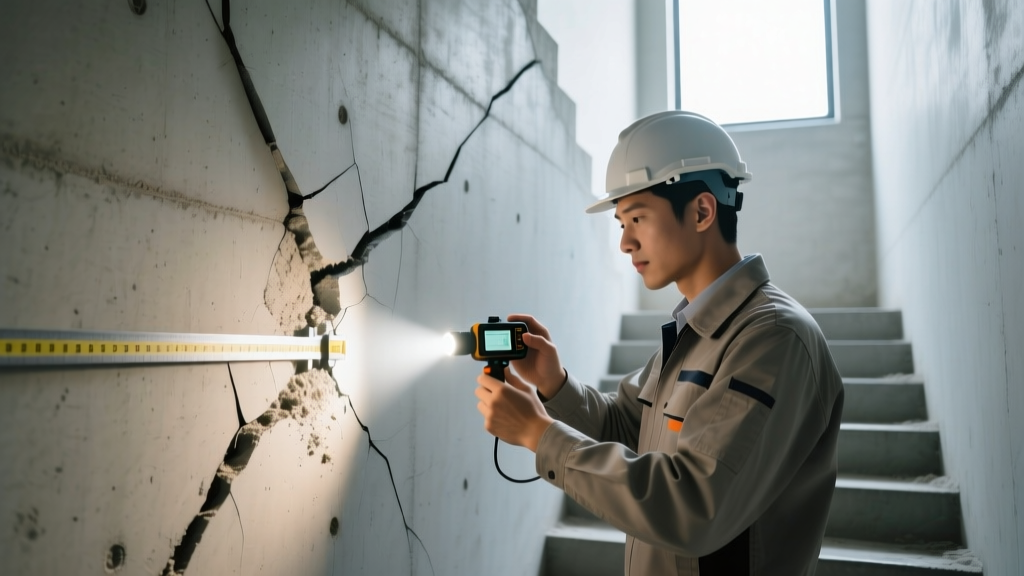
- Document the Kinematics: Use a digital crack monitor (available for under $20 online) to track whether cracks are widening, shearing, or remaining static over a 14-day period. Static cracks rarely require immediate structural intervention.
- Audit the Hydrology: 85% of foundation issues are water-related. Walk the perimeter during a heavy rainstorm. Are gutters overflowing? Is the grading sloping toward the house (negative grade)? Correcting downspout extensions and regrading soil ($500–$1,500) must precede any concrete repair, or the new repairs will fail.
- Hire an Independent Structural Engineer: Pay $500 to $1,500 for a licensed engineer to write a prescriptive repair plan. This document removes the sales pitch from the contractor's proposal and allows you to solicit apples-to-apples bids based on exact specifications (e.g., "Install 14 helical piers to a depth of 25 feet or 4,000 ft-lbs of torque").
- Obtain a Geotechnical Soil Boring Report: For severe settlement, a geotechnical engineer will extract soil cores ($1,200–$2,500) to determine the exact depth of stable bedrock or load-bearing strata. This prevents contractors from underestimating pier depths and hitting you with massive "change orders" mid-project.
Hidden Variables That Inflate Your Quote
When budgeting for foundation repair, the raw cost of materials and labor is only part of the equation. Homeowners frequently overlook the ancillary costs required to facilitate the repair and restore the property to its pre-damage state.
- Municipal Permits & Engineering Stamps: Most jurisdictions require structural permits for underpinning or major wall stabilization. Permit fees range from $150 to $800, and the city may require the engineer's plans to be officially stamped, adding $300 to $500 to your engineering bill.
- Concrete Cutting and Patching: Installing interior piers requires jackhammering through the basement slab or crawl space footer. While contractors include the cutting in their bid, the final concrete patching and floor leveling often cost an additional $1,000 to $3,000 to match the existing floor height.
- Landscaping and Hardscaping Destruction: Exterior excavation for waterproofing, wall anchors, or helical piers will obliterate adjacent flower beds, patios, and HVAC lines. Budget at least $2,000 to $5,000 for post-repair landscaping and concrete walkway restoration.
- Plumbing and Utility Rerouting: If your main sewer line or water main runs directly beneath a settling slab, the foundation cannot be lifted without risking pipe shearing. A master plumber must be hired to excavate and protect these lines prior to the structural lift, adding $1,500 to $4,000 to the project timeline.
Ultimately, understanding how much it costs to repair foundation problems requires shifting your perspective from a simple transactional purchase to a comprehensive geotechnical project. By accurately diagnosing the specific warning signs, securing independent engineering oversight, and budgeting for the hidden site-restoration variables, you can protect your home's structural integrity without falling victim to inflated, symptom-chasing sales tactics.
Written by
Marcus ChenMarcus Chen is a licensed structural engineer (PE) and building materials analyst with over 12 years of experience across residential, commercial, and industrial construction. He holds a Master of Science in Civil Engineering from UC Berkeley and spent six years at Thornton Tomasetti before transitioning to independent consulting and technical writing. Marcus specializes in material selection for seismic-prone regions, concrete reinforcement strategies, and lifecycle cost analysis. His work has been cited by the American Concrete Institute (ACI) and the Structural Engineers Association of California (SEAOC). When he is not on a job site or at his desk, you will find him hiking the Sierra Nevada or restoring a 1920s craftsman bungalow in Oakland, CA.
More from Marcus Chen
View all
Construction Cost
How Much Did the Eiffel Tower Cost to Build?
How much did the Eiffel Tower cost to build in 1889? We adjust for inflation and compare its budget to modern skyscraper construction.
Aug 4, 2026

Fire Resistance
What Is a Fire Resistant Material? Testing & Certification Guide
Discover what is a fire resistant material through ASTM and UL testing. Learn how fire ratings, certifications, and assemblies work in construction.
Aug 4, 2026

Construction Cost
How Much Did the Burj Khalifa Cost to Build?
How much did the Burj Khalifa cost to build? We break down the $1.5B project and extract 5 money-saving strategies for your next build.
Jul 30, 2026