Foundation Erosion Repair Cost: Structural Analysis & Pricing Guide
Analyze foundation erosion repair cost through a structural engineering lens. Compare underpinning, soil stabilization, and drainage pricing.

The Mechanics of Foundation Erosion: A Structural Perspective
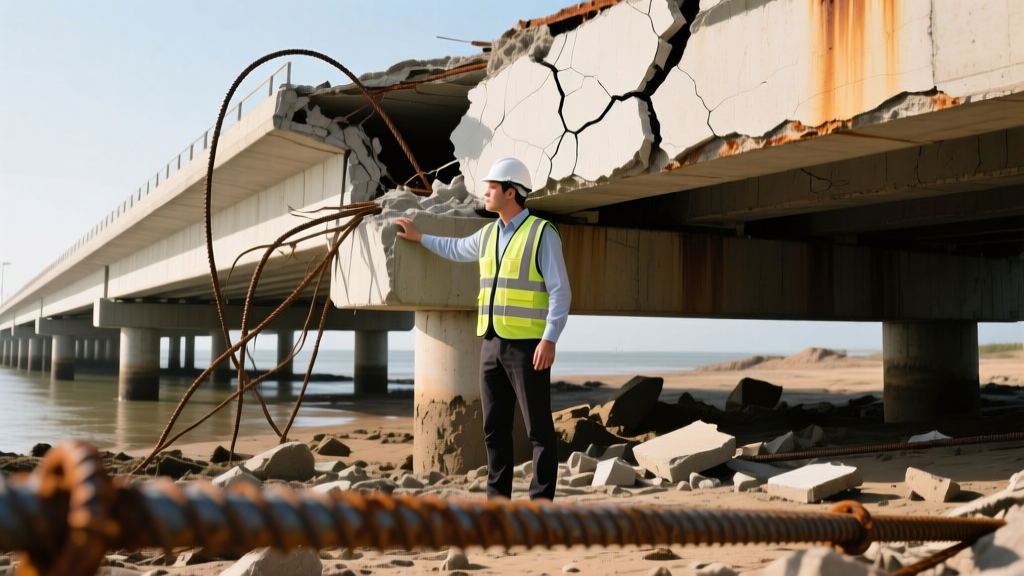
Foundation erosion is not merely a landscaping inconvenience; it is a critical geotechnical failure that compromises the bearing capacity of the soil supporting your structure. From a structural analysis standpoint, erosion involves the physical removal of soil particles by water flow, leading to a reduction in effective stress and a subsequent loss of lateral and vertical support. When the soil's bearing capacity drops below the structural load—typically 1,500 to 3,000 pounds per square foot (psf) for standard residential structures—differential settlement occurs.
This differential settlement induces shear stresses in the foundation concrete and framing members, manifesting as diagonal cracking, racking of door frames, and in severe cases, punching shear failures in slab-on-grade foundations. When evaluating the total foundation erosion repair cost, structural engineers do not simply look at the price of concrete or steel; they calculate the cost of restoring the soil-structure interaction and mitigating the hydrological vector causing the washout.
Diagnostic Framework: Identifying the Erosion Vector
Before estimating repair costs, a structural engineer must identify the hydrological mechanism driving the soil loss. Erosion vectors generally fall into three categories, each requiring a distinct remediation strategy:
- Surface Washout (Sheet Erosion): Caused by negative grading or missing gutter systems. This primarily affects shallow foundations and stem walls, removing the lateral support provided by the topsoil and creating voids beneath grade beams.
- Subsurface Piping (Internal Erosion): Often triggered by leaking pressurized plumbing lines or sanitary sewers beneath the slab. The high-velocity water creates subterranean 'pipes' or caverns in cohesive soils (like CL lean clays), leading to sudden, localized slab collapses.
- Hydrostatic Scour: Occurs when a high water table or poor subsurface drainage forces water laterally through granular soils (like SM silty sands). As the water exits the soil matrix, it carries fine particles with it, gradually reducing the Standard Penetration Test (SPT) N-values and bearing capacity.
According to Penn State Extension, improper surface grading and unmanaged roof runoff are the primary catalysts for residential foundation erosion, accounting for the vast majority of shallow soil washout cases.
Foundation Erosion Repair Cost Matrix (2026 Pricing)
The foundation erosion repair cost varies drastically based on the depth of the affected strata and the structural load that must be transferred. The table below outlines current market rates for structural interventions, moving beyond simple mudjacking to engineered soil stabilization.
| Intervention Method | Structural Application | 2026 Cost Range | Load Capacity / Metric |
|---|---|---|---|
| Polyurethane Deep Injection | Void filling, slab lifting, and shallow soil densification | $15 - $25 per sq. ft. | Lifts up to 12,000 lbs/sq ft; cures in 15 mins |
| Helical Piers (e.g., Chance) | Transferring structural loads past eroded zones to stable bedrock or dense strata | $1,800 - $2,800 per pier | 50,000 - 100,000 lbs ultimate capacity per pier |
| Compaction Grouting | Stabilizing collapsible or highly eroded granular soils at depth | $12 - $18 per cubic foot | Increases SPT blow count by 10-20 N-values |
| Exterior French Drain & Swale | Hydrostatic pressure mitigation and surface water redirection | $45 - $85 per linear foot | Reduces lateral soil pressure by 30-50% |
Deep Dive: Underpinning and Soil Stabilization Techniques
When erosion has created significant voids or reduced the bearing capacity of the load-bearing strata, structural engineers rely on advanced underpinning techniques. The choice between these methods depends on the soil mechanics and the dead load of the structure.
Polyurethane Deep Injection (Compaction Grouting)
For slab-on-grade foundations experiencing localized erosion due to subsurface plumbing leaks, high-density polyurethane foam (such as NCFI or Alchemy Polymers geotechnical resins) is the premier choice. Unlike traditional cementitious mudjacking, which adds significant dead weight (approx. 120 lbs per cubic foot) to already compromised soils, polyurethane weighs only 2 to 4 lbs per cubic foot. The resin is injected through 5/8-inch ports in a grid pattern, expanding to fill voids and compacting the surrounding loose soil. This method is highly effective for voids up to 3 feet deep but is not suitable for transferring heavy continuous foundation wall loads to deeper bearing strata.
Helical Piers for Load Transfer
When erosion affects deep foundational elements, such as drilled concrete piers or continuous footings on sloped lots, helical piers are required. These steel shafts with helical bearing plates are mechanically torqued into the ground until they reach a predetermined torque-to-capacity ratio, bypassing the eroded, unstable soil entirely. The FEMA Building Science division frequently recommends deep foundation systems like helical piers for structures in flood-prone or highly erosive zones, as they anchor the building to stable substrata unaffected by surface scour. Expect to pay between $1,800 and $2,800 per pier, with most residential structural repairs requiring 8 to 15 piers.
"Repairing the concrete without addressing the soil mechanics is a temporary fix. If the SPT N-values in the eroded zone remain below 10, any rigid foundation repair will eventually crack under differential movement. You must either densify the soil or bypass it entirely."
Corrective Drainage: Halting the Erosion Cycle
No structural repair will survive if the hydrological vector is not neutralized. The InterNACHI foundation inspection guidelines emphasize that over 80% of foundation failures are water-related. Halting the erosion cycle requires a multi-tiered drainage approach:
- Subsurface Interception: Installing a 4-inch perforated PVC French drain wrapped in non-woven geotextile fabric at the footing level. This intercepts groundwater before it can build hydrostatic pressure (which exerts 62.4 lbs per cubic foot of lateral force against foundation walls).
- Surface Swales and Grading: Recontouring the top 6 inches of soil to achieve a minimum 5% slope (a 6-inch drop over the first 10 feet) away from the foundation. This prevents sheet erosion from stripping the protective topsoil layer.
- Downspout Extensions: Routing roof runoff at least 10 feet away from the foundation via solid PVC pipes, discharging into dry wells or municipal storm drains.
Structural Risk Assessment and ROI
When calculating the foundation erosion repair cost, property owners must weigh the expense of structural remediation against the risk of catastrophic failure. A comprehensive repair—combining helical underpinning ($20,000 - $35,000), polyurethane void filling ($4,000 - $8,000), and exterior drainage correction ($6,000 - $12,000)—can easily exceed $40,000 for a severely compromised 2,500-square-foot home.
However, from a structural risk perspective, this investment restores the original load path, prevents secondary damage to the superstructure (such as roof truss separation and masonry veneer cracking), and is required to pass municipal occupancy inspections. Ignoring deep-seated erosion inevitably leads to progressive structural racking, where the cost of repairs increases exponentially as the geometry of the building distorts. Always mandate a geotechnical soil report and a licensed structural engineer's design before authorizing any underpinning contract.
Written by
James ThorntonJames Thornton is a construction industry veteran with 25 years of hands-on experience in wood framing, lumber grading, and residential building codes. He started as a framing carpenter in rural Oregon, earned his ICC Residential Building Inspector certification, and eventually became a senior plan reviewer for the City of Portland Bureau of Development Services. James holds a B.S. in Wood Science & Technology from Oregon State University and is a certified lumber grader through the West Coast Lumber Inspection Bureau (WCLIB). He has inspected over 3,000 residential construction sites and authored the city's internal guide on advanced framing techniques (2x6 at 24" O.C.). James lives in Bend, OR, where he builds custom timber-frame cabins and competes in lumberjack sports.
More from James Thornton
View all
Insulation
Best Home Insulation Materials: Complete 2026 Guide
Compare top home insulation materials for 2026. Find R-values, installed costs per square foot, and best uses for fiberglass, spray foam, and mineral wool.
Aug 4, 2026

Sustainable Building
Certify Your Green Building Material for LEED and WELL
Step-by-step guide to certifying a green building material for LEED v5 and WELL v2. Master EPDs, HPDs, and VOC limits for 2026 project specifications.
Aug 4, 2026

Stone & Masonry
Veneer Stacked Stone Panels: Interior Design & Style Showcase
Discover how veneer stacked stone panels transform interiors. Explore modern design profiles, material pairings, and technical installation specs.
Aug 4, 2026