Foundation Vent Covers: Material Taxonomy and Selection Guide
Compare foundation vent covers by material, mesh size, and climate suitability. Expert selection guide for galvanized, PVC, and aluminum options.
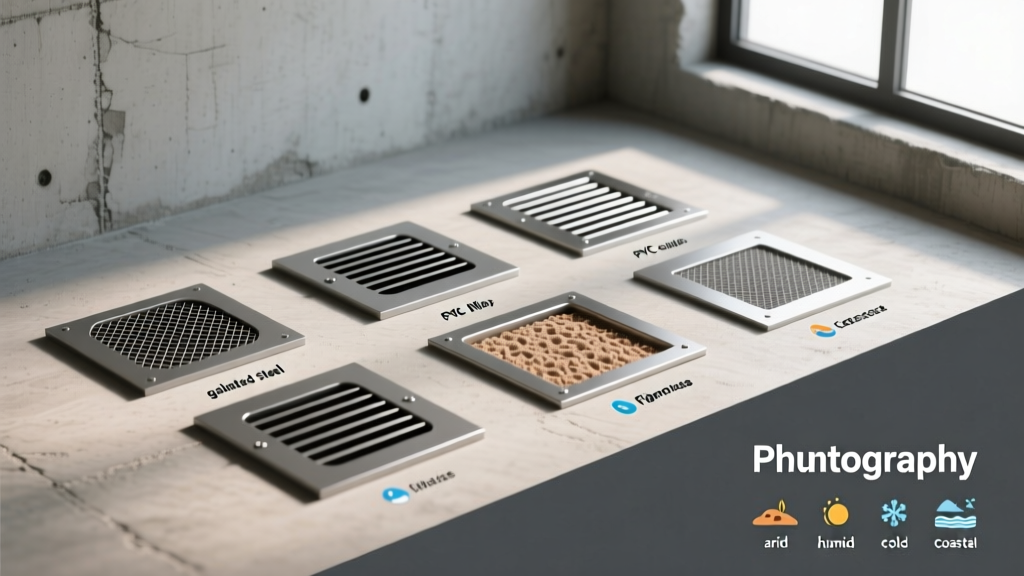
The Metallurgy and Polymer Science of Foundation Vent Covers
Selecting the correct foundation vent covers requires moving beyond basic aesthetic preferences to evaluate material science, environmental degradation vectors, and airflow dynamics. The crawl space vent market is dominated by three primary material categories, each with distinct failure modes and lifecycle costs. Understanding these differences is critical for preventing premature structural decay, pest intrusion, and moisture accumulation.
Galvanized Steel (G60 vs. G90 Coatings)
Steel vent covers remain the industry standard for masonry and concrete block foundations. However, not all galvanized steel is equal. Budget options utilize a G60 zinc coating (0.60 ounces of zinc per square foot), which typically exhibits red rust within 3 to 5 years in high-humidity environments. For lasting performance, specify G90 hot-dipped galvanized steel (0.90 ounces per square foot). The thicker zinc layer provides sacrificial anode protection, extending the functional lifespan to 15–20 years before surface oxidation begins. When installing steel covers on stucco or EIFS (Exterior Insulation and Finish Systems), always use Type 304 stainless steel fasteners to prevent galvanic corrosion and subsequent rust weeping down the facade.
UV-Stabilized Polymers (ABS vs. Extruded PVC)
Plastic vent covers offer total immunity to rust, making them ideal for coastal salt-spray zones. However, material taxonomy is crucial here. Cheap extruded PVC becomes highly brittle under UV exposure and freeze-thaw cycling, often shattering upon impact from landscaping equipment after just two seasons. Professional-grade covers are injection-molded from UV-stabilized ABS (Acrylonitrile Butadiene Styrene) or high-impact polycarbonate blends. These polymers maintain structural integrity across a temperature range of -40°F to 160°F and resist UV embrittlement for up to 25 years.
Extruded Aluminum and Cast Bronze
For premium architectural applications or severe marine environments, extruded aluminum and cast bronze provide superior longevity. Aluminum naturally forms a protective oxide layer, while bronze develops a stable patina. These materials command a premium—typically $45 to $75 per unit—but eliminate the risk of rust stains on high-end masonry veneers.
Material Comparison and Lifecycle Matrix
| Material Class | Avg. Unit Cost | Corrosion Resistance | UV / Impact Stability | Expected Lifespan |
|---|---|---|---|---|
| G60 Galvanized Steel | $10 - $15 | Moderate | High (Impact) / N/A (UV) | 3 - 7 Years |
| G90 Galvanized Steel | $18 - $28 | High | High (Impact) / N/A (UV) | 15 - 20 Years |
| Injection-Molded ABS | $12 - $22 | Immune | High (UV) / Moderate (Impact) | 20 - 25 Years |
| Extruded PVC (Budget) | $6 - $10 | Immune | Low (UV) / Low (Cold Impact) | 2 - 5 Years |
| Cast Bronze / Aluminum | $45 - $75 | Immune / High | High (Both) | 50+ Years |
Mesh Geometry: Pest Exclusion vs. Airflow Penalties
The wire mesh integrated into foundation vent covers dictates both pest exclusion efficacy and aerodynamic performance. Building codes and entomological standards require specific mesh geometries depending on regional biological threats.
- 1/4-Inch Hardware Cloth (Standard): Meets basic International Residential Code (IRC) requirements for excluding rodents, birds, and large debris. Offers minimal airflow restriction (approx. 85% Net Free Area).
- 1/16-Inch Mesh (Termite Grade): Required in high-risk subterranean termite zones (e.g., the Southeastern US). According to university extension guidelines, fine mesh prevents termite swarmer ingress and blocks mud tube construction through the vent aperture.
- 1/8-Inch Woven Wire: A compromise mesh that excludes larger insects and small reptiles while maintaining better airflow than 1/16-inch screens.
Climate and Environmental Selection Framework
Material selection must align with the specific microclimate and macro-environment of the build site. Applying the wrong material taxonomy to a specific climate zone accelerates failure and compromises the crawl space ventilation strategy.
Coastal and Salt-Spray Zones
Selection: Injection-molded ABS or Cast Bronze.
Rationale: Chloride ions in marine air rapidly penetrate the zinc layer of galvanized steel, causing catastrophic white rust and structural failure within 24 months. Polymers and bronze are entirely immune to salt-induced oxidation.
Heavy Termite Zones (USDA Zones 4 and 5)
Selection: G90 Steel or ABS frames with bonded Type 304 Stainless Steel 1/16-inch mesh.
Rationale: Subterranean termites can exploit gaps between plastic frames and masonry. Steel frames allow for tighter mechanical fastening into mortar joints, while stainless mesh resists the acidic environments created by termite mud tubes.
Freeze-Thaw and Snow Load Regions
Selection: Heavy-gauge ABS Polymer with manual sliding shutters.
Rationale: Steel vent covers can trap melting snow and ice. When water freezes inside the louvers, the expansion (ice-jacking) permanently bends the steel louvers, rendering them inoperable. High-impact ABS flexes under ice expansion without permanent deformation.
Thermomatic vs. Manual Operation Mechanisms
Modern foundation vent covers are available in manual and automatic (thermostatic) configurations. Understanding the mechanical limitations of automatic vents is vital for long-term reliability.
Automatic (Thermostatic) Vents: These utilize a bi-metallic coil that expands and contracts with temperature changes, automatically opening the louvers at approximately 72°F and closing them at 40°F. While they reduce manual labor, the bi-metallic coils are prone to seizing due to dust accumulation, spider webs, and oxidation. In environments with high particulate matter or heavy pollen, automatic vents frequently fail in the closed position during summer, trapping moisture and violating ventilation codes.
Manual Sliding Vents: Featuring a simple friction-fit polymer or steel slide gate, manual covers require bi-annual adjustment (opening in spring, closing in late autumn). Though labor-intensive, they offer 100% reliability, positive mechanical closure against winter drafts, and zero risk of mechanical seizure.
Installation Specifications and Code Compliance
Proper installation dictates the functional success of the venting system. The IRC mandates that foundation vents be placed within 3 feet of building corners to ensure cross-ventilation of dead-air spaces. When cutting into concrete block or poured concrete foundations, the rough opening must be precisely 16 inches wide by 8 inches high for standard masonry vents, or matched to the specific flange dimensions of surface-mount polymer models.
Always seal the perimeter of the vent flange to the masonry using a high-quality, paintable polyurethane sealant (such as Sikaflex-1a). Avoid silicone-based caulks, which do not adhere well to porous concrete block and will detach during freeze-thaw cycling, allowing bulk water intrusion into the crawl space cavity. For wood-framed foundations, ensure the vent flange is integrated behind the weather-resistant barrier (WRB) to maintain the continuous drainage plane.