Push Pier Foundation Repair Cost vs. Alternatives (2026)
Analyze the 2026 push pier foundation repair cost against helical and concrete piers. Includes hardware specs, failure modes, and pricing matrices.

The True Push Pier Foundation Repair Cost Breakdown
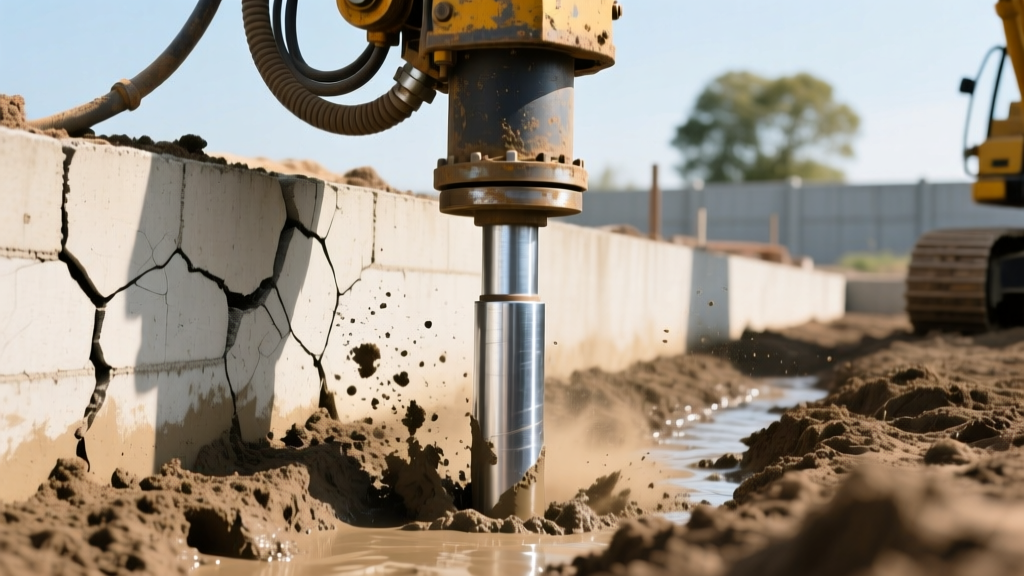
When evaluating underpinning solutions for settling structures, the push pier foundation repair cost is often the primary deciding factor for property owners. Push piers (also known as resistance piers) utilize the weight of the structure itself to drive high-strength steel pipe sections deep into the ground until they reach load-bearing strata or bedrock. In 2026, the national average cost for push pier installation ranges from $1,500 to $2,800 per pier, with total project costs typically falling between $12,000 and $35,000 depending on the linear footage of the affected foundation.
Unlike shallow repair methods, push piers offer a permanent, engineered solution to deep-seated soil consolidation and subsidence. However, comparing this system against alternatives like helical piers or concrete pressed piers requires looking beyond the initial quote. You must evaluate the cost per linear foot, the load-bearing capacity of the specific steel tubing used, and the long-term warranty implications.
• Cost Per Pier: $1,500 – $2,800
• Cost Per Linear Foot: $180 – $260
• Average Total Project (10-15 piers): $18,000 – $32,000
• Engineering/Permit Fees: $500 – $1,200
System Comparison: Push Piers vs. Helical vs. Concrete Pressed
To understand the value proposition of push piers, we must compare them directly to the other dominant underpinning technologies on the market. Each system interacts with soil mechanics differently, making them suitable for distinct structural and geological scenarios.
| System Type | Avg. Cost Per Pier | Max Load Capacity | Ideal Soil / Application | Installation Noise |
|---|---|---|---|---|
| Push Piers | $1,500 - $2,800 | 40,000 - 70,000 lbs | Heavy structures, deep bedrock, expansive clays | Low (Hydraulic) |
| Helical Piers | $1,800 - $3,200 | 20,000 - 50,000 lbs | Light loads, new construction, sandy/loose soils | Low (Torque Motor) |
| Concrete Pressed | $800 - $1,300 | 15,000 - 25,000 lbs | Shallow bedrock, budget repairs, slab-on-grade | High (Pounding) |
| Drilled Bell Piers | $2,500 - $4,000 | 80,000+ lbs | Commercial, extreme loads, karst topography | Very High (Auger) |
According to industry data aggregated by HomeGuide, steel push piers remain the most cost-effective solution for heavy, multi-story residential and light commercial structures experiencing deep settlement. While concrete pressed piers offer a lower upfront cost, their susceptibility to lateral soil friction and shifting makes them a less reliable long-term investment in regions with highly expansive clays.
Critical Variables That Inflate Your Quote
The baseline push pier foundation repair cost is rarely the final invoice price. Several site-specific engineering and logistical variables will dictate the final scope of work.
1. Depth to Refusal and Strata Composition
Push piers are driven using hydraulic pressure until they reach “refusal”—the point where the pier can no longer be advanced without exceeding the safe hydraulic pressure limits (typically 8,000 to 10,000 PSI on the manifold gauge) or the structural lifting capacity. If bedrock is located 25 feet below grade, your cost per pier will be significantly lower than if the load-bearing strata is situated 60 feet deep. Every additional 3-foot pipe section adds material and labor costs.
2. Interior vs. Exterior Access
Exterior installations require trenching, landscaping removal, and backfilling, which adds $150 to $300 per pier in site restoration costs. Interior installations (beneath slab-on-grade foundations or crawl spaces) require concrete saw-cutting, jackhammering, and manual soil removal in confined spaces. Interior access can increase the labor burden by 30% to 40%, driving up the overall project cost.
3. Hardware Specifications and Bracketry
Not all push pier systems are engineered equally. Top-tier manufacturers like Earth Contact Products (ECP) and Hubbell/Chance utilize high-strength, hot-dipped galvanized steel tubing. The industry standard is a 2-7/8″ Outside Diameter (OD) pipe with a minimum yield strength of 65,000 PSI. For heavier commercial loads, 3-1/2″ OD or 4-1/2″ OD pipes are required. Upgrading to heavier OD pipes or utilizing specialized heavy-duty corner brackets can add $200 to $400 per installation point.
In soils with high lateral expansion potential, the friction against the steel pier shaft can actually lift the foundation during wet seasons (upheaval). Ensure your contractor includes friction reduction collars or guide sleeves over the upper sections of the pier. If a contractor omits these sleeves to lower the push pier foundation repair cost, your foundation remains vulnerable to seasonal clay heave.
Failure Modes: When Push Piers Are the Wrong Choice
While push piers are highly effective for vertical settlement, they are not a universal cure-all. Understanding their failure modes is critical for protecting your investment.
- False Refusal: If the hydraulic ram hits a glacial boulder, a dense clay pan, or debris rather than true bedrock or load-bearing strata, the gauge will show refusal prematurely. If the contractor fails to verify depth against geotechnical soil borings, the pier may settle further under load.
- Horizontal Shear and Lateral Movement: Push piers resist vertical gravity loads; they do not stabilize bowing basement walls or horizontal soil pressure. If your foundation is failing due to lateral hydrostatic pressure, you require carbon fiber straps, steel I-beams, or tieback anchors, not just vertical underpinning.
- Lightweight Structures: Push piers rely on the weight of the building to provide the resistance needed to drive the pipe downward. For lightweight structures (e.g., single-story wood-frame additions, sunrooms, or porches), there is insufficient mass to drive the pier. In these cases, helical piers, which are screwed into the ground using torque rather than structural weight, are the mandatory alternative.
For a comprehensive look at how structural engineers evaluate these varying soil conditions and repair methodologies, the Angi Foundation Repair Guide provides excellent baseline metrics on how regional soil types impact national repair averages.
Decision Framework: Is Push Piering Right for Your Structure?
Use this practical decision matrix to determine if push piers align with your structural needs and budget constraints.
Choose Push Piers If:
- Your structure is heavy (brick, stone, multi-story, or commercial masonry).
- The settlement is caused by deep soil consolidation, drought-induced clay shrinkage, or poorly compacted fill dirt far below grade.
- You have verified that bedrock or a highly dense, load-bearing strata exists within 20 to 50 feet of the surface.
- You require a synchronized hydraulic lift to bring the foundation back to maximum practical recovery (leveling).
Choose Helical Piers Instead If:
- The structure is lightweight (wood framing, aluminum siding, single-story additions).
- You are performing new construction pre-emptive underpinning (push piers cannot be used for new builds as there is no structure to push against).
- The soil profile consists of loose, sandy, or water-logged soils where driving a smooth steel pipe offers no friction or end-bearing capacity.
Frequently Asked Questions
Does insurance cover push pier foundation repair?
Standard homeowners insurance policies almost universally exclude foundation settlement caused by soil expansion, contraction, or poor drainage. Insurance will only cover foundation repairs if the damage was the direct result of a covered peril, such as a sudden plumbing leak beneath the slab or a localized sinkhole event (if sinkhole coverage is endorsed on your policy).
How long does a push pier installation take?
A standard residential project requiring 10 to 15 piers typically takes 3 to 5 days from initial trenching to final backfilling. The actual hydraulic driving and synchronized lifting phase usually occurs on day two or three, taking approximately 4 to 8 hours depending on the depth to refusal.
What warranty should I expect?
Reputable foundation repair networks (such as Foundation Supportworks or authorized ECP dealers) offer fully transferable, lifetime warranties on the steel push pier hardware and a performance warranty against future settlement exceeding 1/4 inch. Always ensure the warranty is backed by a third-party trust or national manufacturer, rather than solely relying on the local contractor’s promise, which is void if they go out of business.
Written by
Elena RodriguezElena Rodriguez is a civil engineer and technical writer specializing in concrete technology, masonry systems, and ASTM/ACI compliance. She earned her B.S. in Civil Engineering from Texas A&M University and spent a decade at a materials testing laboratory, performing over 2,000 concrete compressive strength tests and masonry prism evaluations. Elena is an ACI-certified Field Testing Technician (Grade I) and a member of ASTM Committee C12 on Natural Building Stone. She currently consults on forensic engineering cases involving concrete failures and moisture intrusion. Based in San Antonio, TX, Elena is a proud member of the Society of Women Engineers (SWE) and coaches her daughter's FIRST Robotics team.
More from Elena Rodriguez
View all
Walls & Panels
Cost Analysis: Light Gauge Steel Framing Advantages and Disadvantages
Evaluate light gauge steel framing advantages and disadvantages through a strict cost analysis lens, comparing material, labor, and lifecycle expenses.
Aug 4, 2026

Walls & Panels
Gypsum Board Types: Exact Specifications, Thickness & Dimensions
Compare standard, Type X, and moisture-resistant gypsum board types. Get exact specifications, thicknesses, dimensions, and ASTM standards for your project.
Aug 4, 2026

Fire Resistance
Best Fire-Resistant Outdoor Decking Materials: 2026 Buyer Guide
Discover the best fire-resistant outdoor decking materials for 2026. Compare Class A PVC, aluminum, and hardwood options for WUI compliance and safety.
Aug 4, 2026