How Much Does It Cost for Foundation Repair? 2026 Guide
Discover how much it costs for foundation repair in 2026. Get detailed pricing for slab, pier, and basement fixes, plus hidden cost factors.

The Real Cost of Foundation Repair in 2026
When homeowners ask how much does it cost for foundation repair, the answer depends entirely on the failure mechanism, the foundation type, and the soil composition beneath the structure. In 2026, the national average for foundation stabilization ranges from $4,500 to $12,000, but severe structural remediation involving deep piers or basement wall reconstruction can easily exceed $35,000. Minor cosmetic crack sealing, conversely, may cost as little as $500.
2026 Quick Cost Snapshot
- National Average: $6,850
- Minor Crack Repair: $400 – $1,200
- Slabjacking / Mudjacking: $800 – $2,500
- Steel Push Piers: $1,400 – $2,200 per pier
- Helical Piers: $1,800 – $2,800 per pier
- Major Structural Rebuild: $25,000 – $45,000+
Understanding these costs requires looking past the contractor's headline bid. The pricing matrix below breaks down the actual unit costs and best-use scenarios for the most common stabilization methods deployed by structural engineers today.
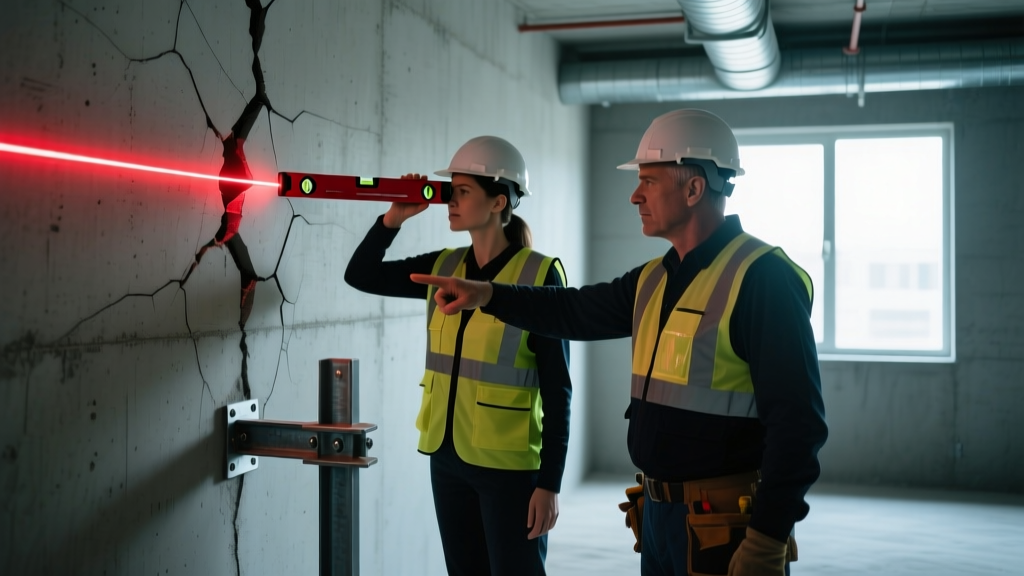
Cost Breakdown by Repair Method & Application
| Repair Method | 2026 Unit Cost | Primary Application | Longevity |
|---|---|---|---|
| Epoxy / Polyurethane Crack Injection | $250 – $800 per crack | Non-structural hairline to 1/4-inch cracks in poured concrete | 10 – 15 years |
| Carbon Fiber Straps (e.g., Fortress) | $400 – $650 per strap | Bowing basement walls (minor deflection < 2 inches) | Lifetime (if structurally bonded) |
| Wall Plate Anchors | $500 – $900 per anchor | Moderate basement wall bowing requiring active straightening | 50+ years |
| Cementitious Mudjacking | $4 – $8 per sq. ft. | Lifting sunken exterior slabs, patios, and driveways | 5 – 10 years |
| Polyurethane Foam Lifting | $10 – $18 per sq. ft. | Precision lifting of interior slab-on-grade foundations | 20+ years |
| Steel Push Piers | $1,400 – $2,200 per pier | Heavy structures, deep bedrock stabilization (up to 100ft) | Lifetime |
| Helical Piers | $1,800 – $2,800 per pier | Lighter loads, new construction, or soils lacking deep bedrock | Lifetime |
Severity-Based Pricing: From Hairline Cracks to Structural Failure
The cost to repair a foundation scales exponentially with the severity of the structural compromise. Identifying the failure stage early is the most effective way to control expenses.
Stage 1: Cosmetic and Minor Settlement ($500 – $2,000)
At this stage, you will notice vertical hairline cracks in drywall, doors that occasionally stick during seasonal humidity shifts, and minor separation between baseboards and flooring. The foundation has experienced uniform or minor differential settlement. Remediation typically involves routing and sealing concrete cracks with high-modulus epoxy or applying polyurethane foam to prevent water intrusion. No structural underpinning is required.
Stage 2: Moderate Differential Settlement ($4,000 – $12,000)
Diagonal or stair-step cracks appear in masonry and drywall. Windows begin to bind, and visible slopes in the floor exceed 1 inch per 20 feet. This indicates that one section of the foundation is sinking faster than the rest due to soil consolidation or moisture variance. According to research on expansive soils by Texas A&M AgriLife Extension, maintaining consistent soil moisture around the perimeter is critical here, but active lifting via polyurethane foam or a limited number of push piers (typically 4 to 8) is usually necessary to re-level the structure.
Stage 3: Severe Structural Failure ($15,000 – $40,000+)
Horizontal cracks in basement walls, severe bowing, massive stair-step cracking, and floor slopes exceeding 2 inches per 10 feet characterize this stage. The structural integrity of the load-bearing envelope is compromised. Repair requires extensive underpinning (15+ piers), potential excavation of exterior perimeter soils, installation of French drains to manage hydrostatic pressure, and occasionally the rebuilding of foundation stem walls. Data aggregated by Angi's 2026 home repair cost center confirms that major structural interventions frequently push past the $30,000 threshold when accounting for necessary landscaping and concrete restoration.
Hidden Cost Drivers That Inflate Your Final Bill
The quoted price for piers or wall anchors rarely represents the final invoice. When calculating how much it costs for foundation repair, you must budget for these ancillary expenses:
- Structural Engineering Report ($400 – $1,000): Mandatory for permitting in most municipalities and essential for verifying the contractor's proposed repair plan.
- Geotechnical Soil Boring ($1,200 – $2,500): Required for deep pier installations to locate the exact depth of load-bearing strata or bedrock.
- Plumbing Leak Testing ($250 – $600): Before lifting a slab, a hydrostatic pressure test must be performed. Lifting a slab with an active plumbing leak will sever the pipes, leading to catastrophic water damage.
- Landscaping and Hardscape Restoration ($1,500 – $5,000): Excavating for exterior wall anchors or digging access trenches for interior piers destroys concrete walkways, decks, and mature landscaping. Most repair warranties explicitly exclude damage to landscaping.
- Municipal Permits ($150 – $600): Required for any structural modification. Unpermitted work can void your home insurance and derail future real estate transactions.
Underpinning Matrix: Push Piers vs. Helical Piers
When deep foundation stabilization is required, contractors will typically propose either steel push piers or helical piers. Choosing the wrong system for your soil type can lead to premature failure.
| Feature | Steel Push Piers | Helical Piers |
|---|---|---|
| Installation Mechanism | Hydraulically driven into the ground using the weight of the structure as resistance. | Hydraulically torqued into the ground like a giant screw, independent of the structure's weight. |
| Ideal Soil Condition | Dense soils with deep, load-bearing bedrock. | Expansive clays, loose fill, or areas where bedrock is too deep to reach economically. |
| Structural Weight Requirement | Requires a heavy structure to provide driving resistance. Not suitable for light structures. | Can be installed under light structures, porches, or new construction before the building is framed. |
| Average Depth | 20 to 70+ feet. | 15 to 40 feet. |
| 2026 Installed Cost | $1,400 – $2,200 per pier. | $1,800 – $2,800 per pier. |
Warranty Structures: Decoding the Fine Print
A foundation repair is only as valuable as the warranty backing it. In 2026, the industry standard is a 'Lifetime Warranty,' but the definition of 'lifetime' and the transferability clauses vary wildly.
Transferable vs. Non-Transferable
If you plan to sell the home within the next decade, a non-transferable warranty is virtually worthless to the buyer. Ensure the contract explicitly states the warranty transfers to subsequent owners, usually for a one-time administrative fee of $100 to $300.
Prorated vs. Full Coverage
Read the performance guarantees carefully. Many contractors guarantee the repaired area will not settle more than 1/4 inch over 10 years. If it settles 3/8 inch, they will adjust it, but they may charge a 'service call' fee or prorate the labor cost based on the years you owned the home. Demand a warranty that covers both parts and labor for adjustments without prorating.
Decision Framework: Repair vs. Walk Away
For real estate investors or homebuyers discovering foundation issues during an inspection, use this financial framework to determine if the property is viable:
- Obtain the Engineer's Repair Scope: Get the exact dollar amount required to stabilize the structure (e.g., $18,000).
- Calculate the Cosmetic Multiplier: Foundation repair fixes the slab, but it does not fix the drywall, flooring, or masonry that cracked during the settlement. Multiply the structural repair cost by 1.5x to estimate the total cosmetic and structural rehabilitation cost ($18,000 x 1.5 = $27,000).
- Apply the 10% Rule: If the total estimated rehabilitation cost exceeds 10% of the home's After Repair Value (ARV), the deal carries excessive risk. Negotiate a seller credit equal to 125% of the engineer's estimated repair cost to account for contractor overruns and hidden plumbing damage.
Frequently Asked Questions
Does homeowners insurance cover foundation repair?
Standard HO-3 policies exclude foundation damage caused by settling, earth movement, or expansive soils. Insurance will only cover foundation repair if the damage is the direct result of a covered peril, such as a sudden plumbing leak beneath the slab or structural damage from a fallen tree. Water damage from poor exterior grading is universally excluded.
Can I finance foundation repair?
Yes. Most major foundation repair companies partner with specialized lending institutions offering unsecured home improvement loans. In 2026, interest rates for these specialized loans typically range from 8.5% to 16% APR depending on creditworthiness. Alternatively, a Home Equity Line of Credit (HELOC) remains the most cost-effective financing method if you have sufficient equity built up in the property.
How long does a typical underpinning project take?
A standard 8-to-12 pier installation for a single-family home takes 2 to 4 days of active excavation and driving. However, the total project timeline often stretches to 2 to 3 weeks when factoring in municipal permitting, concrete curing times for new pile caps, and post-repair plumbing testing.
Written by
David NakamuraDavid Nakamura is a licensed architect (AIA) and construction technology writer focused on sustainable building methods, mass timber engineering, and high-performance building envelopes. He holds a Master of Architecture from the University of Washington and is a certified Passive House Consultant (CPHC). David spent eight years at the Seattle firm Mithun, where he led the design of three LEED Platinum projects, before founding his own practice specializing in net-zero residential design. He serves on the editorial advisory board of GreenBuilder Magazine and has authored peer-reviewed papers on cross-laminated timber (CLT) connections for the Journal of Structural Engineering. In his spare time, David teaches woodworking at Pratt Fine Arts Center and kayaks the Puget Sound.
More from David Nakamura
View all
Construction Cost
Labor Cost to Build a Deck Per Sq Ft: 2026 Installation Guide
Discover the exact labor cost to build a deck per sq ft in 2026. This installation guide breaks down contractor rates, complexity factors, and hidden fees.
Aug 4, 2026

Construction Cost
How Much Does It Cost to Build a 3 Bedroom House? Financing Guide
Learn exactly how much it costs to build a 3 bedroom house and explore 2026 financing options, construction loan types, and budget frameworks for your build.
Aug 4, 2026

Construction Cost
Cost to Build a Tennis Court: 2026 Guide
How much does it cost to build a tennis court in 2026? Breakdowns for asphalt, concrete, and synthetic surfaces plus fencing and lighting.
Jul 30, 2026