How to Get an Accurate Foundation Repair Cost Estimate in 2026
Learn how to evaluate a foundation repair cost estimate in 2026. Compare piering, polyjacking, and crack repair pricing, plus hidden fees to avoid.
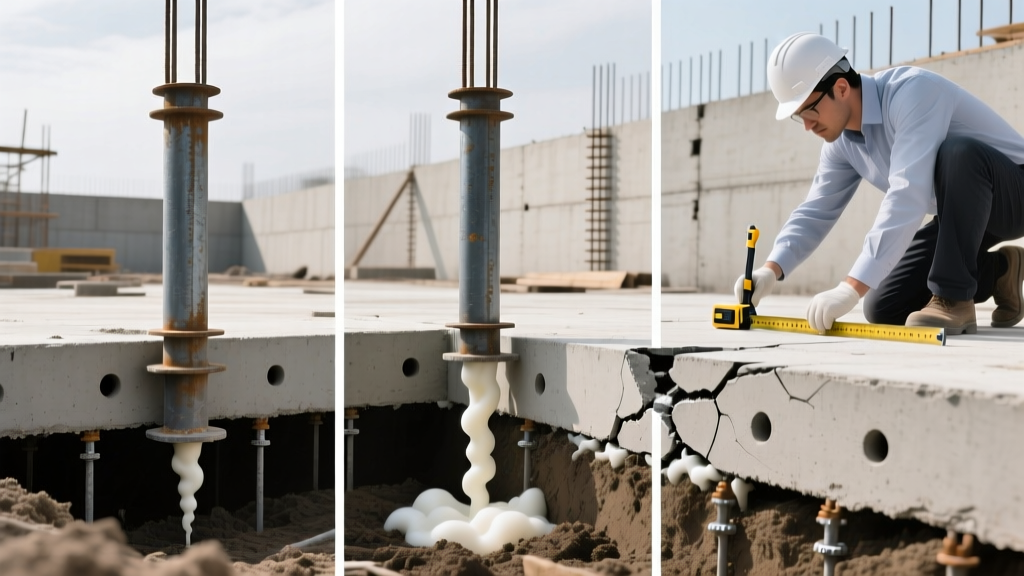
When a structural engineer flags differential settlement or hydrostatic pressure damage, the immediate next step is securing a foundation repair cost estimate. However, quotes for the exact same structural issue can vary by tens of thousands of dollars depending on the contractor's methodology, material grades, and overhead. Understanding the anatomy of these estimates is critical to avoiding catastrophic financial mistakes and substandard repairs that fail within five years.
Decoding the Line Items: What You Are Actually Paying For
A legitimate foundation repair estimate is never a single lump-sum figure. It must be itemized to reflect the distinct phases of structural remediation. Before any concrete is poured or steel is driven, contractors must account for site preparation, engineering oversight, and material mobilization.
Pre-Repair Engineering and Permitting
In most jurisdictions, municipal building codes require a licensed Professional Engineer (PE) to stamp the repair design. Expect to pay between $400 and $900 for an independent structural engineering report. This report dictates the exact depth, spacing, and load-bearing capacity of the piers required to stabilize your specific soil profile. If a contractor offers to bypass the engineering report to 'save you money,' walk away immediately; this violates the International Existing Building Code (IEBC) and voids most manufacturer warranties.
Mobilization and Site Access
Moving hydraulic driving rigs, excavators, and pallets of steel piers to a residential site incurs heavy logistics costs. Mobilization fees typically range from $1,500 to $3,500. If your property has narrow side yards, steep grading, or overhead obstructions that prevent heavy machinery access, contractors will charge a premium for manual excavation or specialized mini-rig deployment.

2026 Pricing Matrix: Repair Methods vs. Damage Severity
The core of your foundation repair cost estimate will be dictated by the remediation technology required. Below is the current market pricing for the most common structural repair methods, updated for 2026 material and labor rates.
| Repair Method | Best Application | Cost Metric | Average Total Range |
|---|---|---|---|
| Polyurethane Foam Jacking | Slab void filling, minor settlement (under 2 inches) | $15 - $28 per sq. ft. | $2,500 - $8,000 |
| Steel Push Piers | Heavy load-bearing structures, deep bedrock stabilization | $1,600 - $2,400 per pier | $12,000 - $35,000 |
| Helical Piers | Lighter loads, new construction, unstable clay soils | $1,800 - $2,800 per pier | $14,000 - $40,000 |
| Carbon Fiber Straps | Bowing basement walls, horizontal shear cracks | $450 - $850 per strap | $4,000 - $12,000 |
| Epoxy / Polyurethane Injection | Seeping non-structural cracks, waterproofing | $350 - $600 per linear ft. | $800 - $2,500 |
The 'Gotcha' Fees: Hidden Costs That Bloat Your Estimate
The initial quote rarely includes the collateral damage associated with lifting a settled foundation. When a house is jacked back to level, rigid connections within the home are subjected to immense stress. Smart homeowners budget for the following secondary expenses.
Lifting a slab foundation can snap cast-iron drain lines or rigid copper supply pipes buried beneath the concrete. According to Angi's structural repair data, plumbing rerouting and leak testing can add $3,000 to $7,500 to your final bill. Always require a pre-lift and post-lift hydrostatic plumbing test, and ensure the estimate specifies who is liable if a pipe breaks during the hydraulic jacking process.
- Hardscape Demolition: Removing and replacing concrete patios, sidewalks, or AC pads that obstruct pier installation typically adds $1,500 to $4,000.
- Interior Flooring Removal: Tile and hardwood must be removed along the perimeter walls to prevent buckling during the lift. Budget $2 to $5 per square foot for safe removal and storage.
- Landscaping Restoration: Heavy equipment will destroy root systems and irrigation lines adjacent to the foundation. Factor in at least $2,000 for post-repair grading and replanting.
Evaluating Competing Bids: A Decision Framework
When you receive three different foundation repair cost estimates, the lowest bid is rarely the most economical choice over a 20-year horizon. Use this framework to evaluate the technical merit of competing proposals.
Red Flags in Low-Bid Estimates
- Friction Piers vs. End-Bearing Piers: A low bid may specify friction piers that rely on soil density for support. In expansive clay regions, these will fail during drought cycles. Always insist on end-bearing piers driven to verified bedrock or load-bearing strata.
- Missing ICC-ES Evaluation Reports: Legitimate piering systems (like those from Chance or Foundation Supportworks) carry International Code Council Evaluation Service (ICC-ES) reports. If the contractor uses unbranded, locally welded steel, the system has no verified load-testing data.
- Shimming Instead of Lifting: Some budget contractors will simply stack steel shims on top of existing failing piers rather than extracting and replacing the compromised steel.
Green Lights in Premium Estimates
- Manifold Hydraulic Systems: High-end contractors use synchronized manifold systems to lift multiple piers simultaneously, preventing torsional stress and drywall tearing.
- Pre-Load Testing: The estimate should include a hydraulic load test on the first installed pier to verify the soil's actual bearing capacity before driving the remaining piers.
Warranty Fine Print and Insurance Realities
The true value of a foundation repair estimate is anchored by the warranty backing it. However, the terminology used in these contracts is heavily skewed to protect the contractor.
'Standard homeowners insurance policies categorically exclude foundation damage caused by earth movement, expansive soils, or gradual settlement. Coverage is generally limited to sudden, accidental events, such as a sub-slab plumbing leak that washes away the supporting soil.'
— Insurance Information Institute (III)
Because homeowners insurance rarely covers foundation settlement, you must rely entirely on the contractor's warranty. Scrutinize the following clauses:
- Lifetime vs. Prorated: A 'Lifetime Warranty' often transitions to a prorated schedule after year 10. By year 20, the warranty may only cover 20% of the labor costs for a failing pier.
- Transferability Fees: If you plan to sell the home, the warranty must be transferable to the new buyer. Many contractors charge $500 to $1,000 to process this transfer, which must be done within 60 days of the property sale.
- The 'Act of God' Exemption: Ensure the warranty explicitly covers future soil moisture fluctuations. Some contractors void the warranty if a tree is planted within 20 feet of the repair zone or if a severe drought occurs.
Financing the Repair: Beyond the Contractor's Loan
Most large foundation repair companies offer in-house financing through third-party lenders. While convenient, these loans often carry interest rates between 12% and 24% for borrowers with average credit. Before signing a contractor's financing agreement, explore federal and municipal alternatives.
For instance, the FHA Title 1 Property Improvement Loan program allows homeowners to borrow up to $25,000 for structural repairs, backed by the federal government, which forces lenders to offer significantly lower, fixed interest rates. Additionally, many municipalities in regions prone to expansive soils (such as Texas and Colorado) offer low-interest structural rehabilitation grants for primary residences. Securing independent financing before requesting your final estimate also removes the contractor's ability to inflate the total price by embedding hidden financing origination fees into the labor line items.
Ultimately, an accurate foundation repair cost estimate is a highly technical document. By demanding itemized engineering fees, verifying ICC-ES material certifications, and anticipating hidden plumbing and hardscape costs, you can secure a structural repair that permanently stabilizes your home without exposing you to predatory contract terms.
Written by
James ThorntonJames Thornton is a construction industry veteran with 25 years of hands-on experience in wood framing, lumber grading, and residential building codes. He started as a framing carpenter in rural Oregon, earned his ICC Residential Building Inspector certification, and eventually became a senior plan reviewer for the City of Portland Bureau of Development Services. James holds a B.S. in Wood Science & Technology from Oregon State University and is a certified lumber grader through the West Coast Lumber Inspection Bureau (WCLIB). He has inspected over 3,000 residential construction sites and authored the city's internal guide on advanced framing techniques (2x6 at 24" O.C.). James lives in Bend, OR, where he builds custom timber-frame cabins and competes in lumberjack sports.
More from James Thornton
View all
Insulation
Best Home Insulation Materials: Complete 2026 Guide
Compare top home insulation materials for 2026. Find R-values, installed costs per square foot, and best uses for fiberglass, spray foam, and mineral wool.
Aug 4, 2026

Sustainable Building
Certify Your Green Building Material for LEED and WELL
Step-by-step guide to certifying a green building material for LEED v5 and WELL v2. Master EPDs, HPDs, and VOC limits for 2026 project specifications.
Aug 4, 2026

Stone & Masonry
Veneer Stacked Stone Panels: Interior Design & Style Showcase
Discover how veneer stacked stone panels transform interiors. Explore modern design profiles, material pairings, and technical installation specs.
Aug 4, 2026