Perimeter Foundation Lifespan: Durability Analysis & Failure Modes
Evaluate the durability and expected lifespan of perimeter foundations. Discover key failure modes, soil impacts, and repair strategies for long-term stability.
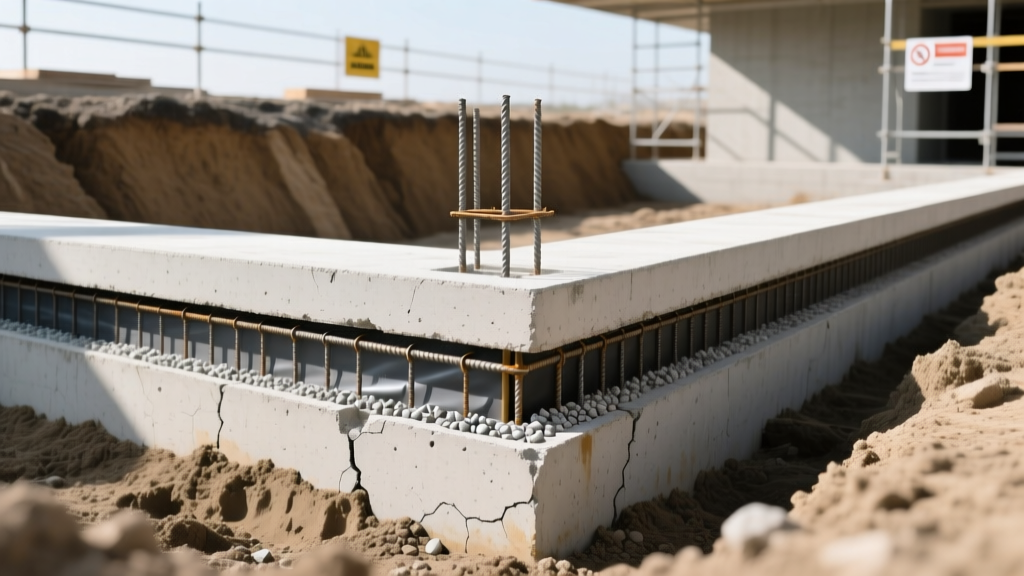
Core Lifespan Expectations and Material Baselines
A properly engineered perimeter foundation—typically configured as a continuous stem wall, grade beam, or deep continuous footing supporting exterior load-bearing walls—has a functional baseline lifespan of 80 to 120 years. This projection assumes strict adherence to modern building codes, specifically ACI 318 (Building Code Requirements for Structural Concrete), and optimal site drainage. Unlike interior post-and-pier systems or monolithic slab-on-grade foundations, perimeter foundations bear the brunt of lateral earth pressures, exterior moisture gradients, and thermal bridging, making their material composition the primary determinant of longevity.
The baseline material requirement for a durable perimeter stem wall is a minimum compressive strength (f'c) of 4,000 PSI, achieved through a strict water-to-cement (w/c) ratio of 0.45 or lower. Lowering the w/c ratio reduces the capillary pore network within the concrete matrix, directly limiting the ingress of moisture and dissolved salts. When constructed with ASTM C150 Type II cement (which offers moderate sulfate resistance), the concrete resists chemical attack from sulfate-rich soils commonly found in the American West and coastal regions.
Chemical Degradation: Carbonation and Chloride Intrusion
The most insidious threat to perimeter foundation durability is not structural overloading, but chemical degradation. Concrete is naturally highly alkaline, with a pH of roughly 12.5 to 13.5. This alkalinity creates a passive oxide layer around ASTM A615 Grade 60 steel rebar, protecting it from corrosion. Over decades, atmospheric carbon dioxide penetrates the concrete pores and reacts with calcium hydroxide to form calcium carbonate. This process, known as carbonation, steadily lowers the concrete's pH.
Once the carbonation front reaches the depth of the reinforcing steel and drops the local pH below 9.0, the passive oxide layer breaks down. If moisture and oxygen are present, the rebar begins to corrode. Rust occupies up to six times the volume of the original steel, generating immense internal tensile stresses that cause the concrete cover to crack, spall, and delaminate.
In coastal environments or regions where de-icing salts are used near foundation perimeters, chloride ions penetrate the concrete much faster than carbonation. The critical chloride threshold for uncoated black rebar is approximately 1.2 to 2.0 lbs per cubic yard of concrete. Once exceeded, pitting corrosion initiates rapidly. For perimeter foundations within 5 miles of a coastline, specifying epoxy-coated rebar (ASTM A775) or stainless-steel cladding is mandatory to achieve a 100-year lifespan.
Geotechnical Stressors: Expansive Soils and Differential Settlement
While chemical degradation attacks the material, geotechnical forces attack the geometry of the perimeter foundation. Expansive soils, particularly those rich in montmorillonite clay minerals, absorb water and swell, exerting uplift pressures that can exceed 10,000 pounds per square foot (psf). This differential movement causes the perimeter stem wall to experience severe shear and bending stresses, leading to diagonal tension cracking at the corners and mid-span deflection.
According to Colorado State University Extension research on expansive soils, structural damage is highly correlated with the soil's Plasticity Index (PI). The PI measures the range of moisture content over which the soil remains plastic. Understanding the site's PI is critical for determining the required depth and reinforcement of the perimeter footing.
| Plasticity Index (PI) | Expansion Potential | Perimeter Foundation Design Requirement |
|---|---|---|
| 0 - 15 | Low | Standard continuous footing (12" deep x 24" wide); #4 rebar top and bottom. |
| 16 - 25 | Medium | Deepened grade beam (24"+ deep); increased longitudinal steel; perimeter French drain. |
| 26 - 40 | High | Stiffened grade beam with void form (carton voids) beneath; drilled concrete piers to bedrock. |
| 40+ | Very High | Deep foundation system (helical piles or drilled shafts) bypassing active soil zone entirely. |
Moisture Intrusion and Frost Heave Dynamics
In freezing climates, perimeter foundations are highly susceptible to frost heave if the footing is not placed below the local frost line. When water in the soil freezes, it forms ice lenses that expand upward, lifting the foundation. During the spring thaw, the ice melts, leaving voids that cause the foundation to settle. This annual freeze-thaw cycling fatigues the concrete and progressively widens micro-fractures.
As detailed in Building Science Corporation's guidelines on concrete and moisture, managing the capillary break between the soil and the concrete is non-negotiable. Concrete is essentially a hard sponge; without a physical barrier, it will wick ground moisture upward into the wooden sill plates and wall cavities, causing rot and mold long before the concrete itself fails structurally.
"The use of 6-mil polyethylene as a capillary break under or against foundation walls is an outdated practice that routinely fails during construction due to punctures. Modern durability standards require a minimum 15-mil cross-laminated polyethylene barrier (such as Stego Wrap) or a fluid-applied bituminous membrane to ensure long-term moisture isolation."
Design Modifications for High-Risk Zones
To extend the lifespan of a perimeter foundation in high-risk environments, structural engineers utilize specific design modifications that isolate the concrete from destructive forces:
- Carton Void Forms: In expansive clay regions, biodegradable cardboard void forms are placed beneath the perimeter grade beam. When the soil swells, it crushes the cardboard rather than lifting the concrete, creating a physical gap that accommodates soil expansion.
- Frost-Protected Shallow Foundations (FPSF): Instead of digging footings 4 to 6 feet deep, rigid extruded polystyrene (XPS) insulation is placed horizontally and vertically around the perimeter. This traps geothermal heat, preventing the soil directly beneath the footing from freezing, thereby eliminating frost heave while reducing excavation costs.
- Post-Tensioning: For exceptionally long perimeter runs on poor soils, post-tensioned concrete grade beams are used. Steel tendons are tensioned after the concrete cures, placing the beam in a state of permanent compression that actively resists tensile cracking from differential settlement.
2026 Repair Interventions and Lifecycle Cost Matrix
When a perimeter foundation exhibits structural failure modes—such as horizontal bowing from hydrostatic pressure or severe differential settlement—complete replacement is rarely necessary. Modern structural repair techniques can restore and even enhance the original load-bearing capacity. According to data tracked by the Portland Cement Association regarding concrete durability and repair, timely intervention prevents exponential degradation.
| Repair Method | Target Failure Mode | 2026 Estimated Cost | Expected Added Lifespan |
|---|---|---|---|
| High-Pressure Epoxy Injection | Non-moving vertical tension cracks | $350 - $550 per linear foot | 50+ years (restores monolithic strength) |
| Carbon Fiber Strap Reinforcement | Horizontal bowing / shear failure | $800 - $1,200 per strap | Permanent (will not corrode or degrade) |
| Helical Pier Underpinning | Differential settlement / subsidence | $1,800 - $2,800 per pier | 75+ years (transfers load to stable strata) |
| Polyurethane Deep Injection | Minor slab/perimeter edge settlement | $15 - $25 per square foot | 20 - 30 years (soil stabilization) |
Proactive Maintenance Protocol
The lifespan of a perimeter foundation is ultimately dictated by the management of the immediate exterior environment. Implementing a strict maintenance protocol mitigates the primary catalysts for premature failure.
- Gradient Management: Maintain a minimum 5% slope (6 inches of fall over the first 10 feet) away from the perimeter foundation. Negative grading allows surface water to pool against the stem wall, accelerating carbonation and increasing hydrostatic pressure.
- Gutter and Downspout Routing: Ensure all roof runoff is captured and discharged via solid PVC piping at least 10 feet away from the foundation perimeter. Concentrated water discharge from downspouts is the leading cause of localized soil erosion and corner settlement.
- Vegetation Buffer Zones: Keep large shrubs and trees at least 15 feet away from the perimeter foundation. Tree roots extract massive amounts of moisture from the soil, causing localized clay shrinkage and subsequent foundation drop-off, while root growth can physically fracture shallow grade beams.
- Annual Crack Monitoring: Install rigid, graduated crack monitors (tell-tales) over any existing hairline fractures. If a monitor indicates lateral movement exceeding 1/8 inch or vertical differential movement exceeding 1/4 inch over a 12-month period, immediate geotechnical evaluation is required before the structural integrity of the rebar is compromised.