Cost for Pier and Beam Foundation Repair: 2026 Pricing Guide
Analyze the cost for pier and beam foundation repair in 2026. Get exact pricing for shimming, pier replacement, and wood joist sistering.

The Real Cost for Pier and Beam Foundation Repair: 2026 Breakdown
Pier and beam foundations elevate structures above grade, providing vital crawl space access for plumbing and electrical systems. However, this elevation exposes the structural skeleton to moisture, wood-destroying organisms, and soil volatility. When leveling issues arise, homeowners face a complex pricing landscape. In 2026, the national average cost for pier and beam foundation repair ranges from $4,500 to $12,000, with extensive structural overhauls exceeding $25,000. According to Angi, foundation repair costs have risen steadily due to increased material costs for steel and engineered lumber, making precise unit-cost knowledge essential for avoiding contractor upcharging.
| Repair Component | 2026 Unit Cost Range | Typical Quantity Needed | Estimated Total |
|---|---|---|---|
| Shimming / Re-leveling | $150 - $350 per pier | 15 - 30 piers | $2,250 - $10,500 |
| Concrete Pressed Pilings | $800 - $1,500 per pier | 10 - 20 piers | $8,000 - $30,000 |
| Steel Push Piers | $1,800 - $2,500 per pier | 8 - 15 piers | $14,400 - $37,500 |
| Helical Piers | $2,000 - $3,000 per pier | 8 - 15 piers | $16,000 - $45,000 |
| Wood Beam Replacement (LVL) | $18 - $35 per linear ft. | 40 - 100 ft. | $720 - $3,500 |
| Joist Sistering (PT Wood) | $12 - $22 per linear ft. | 100 - 300 ft. | $1,200 - $6,600 |
Repair Methods and Specific Price Tags
The total invoice depends entirely on the failure mode of your specific foundation. A sagging floor might require a $200 shim, or it might require a $2,500 steel pier. Understanding the mechanical difference dictates your budget.
Shimming and Re-leveling (Minor Settlement)
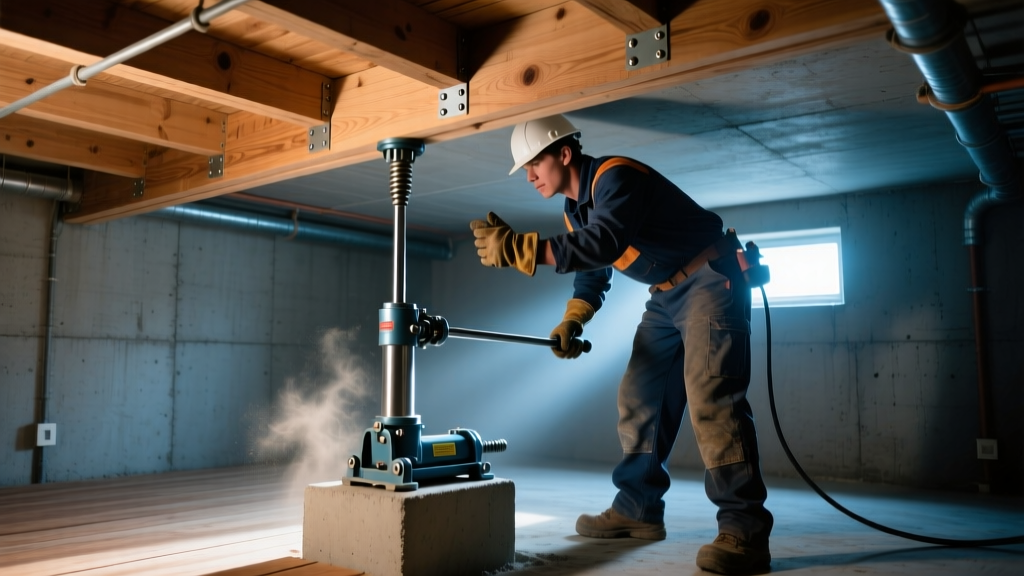
When concrete block piers settle slightly or wooden beams compress over decades, contractors use shims to close the gap between the pier cap and the main support beam. In 2026, professional foundation crews use galvanized steel shims or high-density composite polymer shims. Never accept wooden shims for permanent repair; wood compresses under point-loads and rots in crawl space environments. Steel shimming costs between $150 and $350 per pier, which includes the hydraulic jacking process, laser leveling, and material. If your home requires 20 piers to be shimmed, expect a bill around $4,000 to $7,000.
Underpinning and Pier Replacement (Severe Settlement)
If the soil beneath your existing concrete piers has washed out, or if expansive clay soils are causing seasonal heaving that exceeds the capacity of surface-level blocks, the piers must be replaced or underpinned. This involves driving steel pipes or helical plates deep into the ground until they reach load-bearing strata or bedrock. According to Forbes Home Improvement, underpinning is the most expensive foundation repair method, but it is the only permanent solution for active soil failure. The existing wooden beam is then bracketed to the new steel pier, bypassing the unstable topsoil entirely.
Timber Beam and Joist Replacement (Rot and Deflection)
Pier and beam systems frequently suffer from biological degradation. If crawl space humidity exceeds 60%, or if there is a plumbing leak, the main support beams and floor joists will rot or succumb to termite damage. Replacing a main beam with a Pressure-Treated (PT) timber costs $12 to $18 per linear foot, while upgrading to an engineered Laminated Veneer Lumber (LVL) beam costs $18 to $35 per linear foot. LVL is highly recommended for 2026 repairs because it resists warping, twisting, and shrinking far better than solid sawn lumber. Joist sistering—bolting a new joist alongside a compromised one—costs $12 to $22 per linear foot.
Standard foundation repair pricing assumes a minimum crawl space clearance of 18 to 24 inches. If your home sits lower to the ground, contractors must hand-dig access trenches or remove sections of the exterior skirting to maneuver hydraulic equipment and steel beams. This 'access prep' can add $1,500 to $4,000 to your final bill. Always verify your crawl space clearance before accepting a baseline quote.
Symptom-to-Solution Decision Matrix
Homeowners often misdiagnose foundation issues based on interior symptoms. Use this matrix to correlate the physical signs in your living space with the likely structural repair required in the crawl space.
| Interior Symptom | Probable Crawl Space Cause | Required Repair Method | Estimated Cost Tier |
|---|---|---|---|
| Floors bounce or vibrate when walking | Undersized joists, excessive joist span, or rotting joists | Joist sistering or adding intermediate piers | Low to Medium ($2k - $6k) |
| Doors stick at the top corner | Differential settlement at a specific perimeter pier | Steel shimming or single helical pier install | Low ($500 - $2,500) |
| Diagonal drywall cracks from door frames | Main support beam sagging or central pier failure | Beam replacement (LVL) and central re-leveling | Medium ($4,000 - $9,000) |
| Gaps between baseboards and flooring | Perimeter grade beam sinking or soil washout | Perimeter underpinning (push or helical piers) | High ($15,000 - $35,000+) |
Steel Push Piers vs. Helical Piers: A Structural Comparison
When soil conditions demand deep underpinning, contractors will propose either steel push piers or helical piers. While both bypass bad soil, their installation mechanics and ideal use cases differ significantly.
- Steel Push Piers ($1,800 - $2,500 each): These are hydraulically driven into the ground using the actual weight of your house as resistance. They are ideal for heavy, multi-story pier and beam homes where the structure's mass provides enough downforce to drive the steel tube to bedrock. Limitation: They cannot be installed on lightweight, single-story structures or detached additions because the building lacks the mass required to push the steel downward.
- Helical Piers ($2,000 - $3,000 each): These feature large steel helical plates (resembling giant screws) and are mechanically torqued into the soil. They do not rely on the weight of the house for installation. Ideal Use: Lightweight structures, porches, room additions, or homes with highly expansive clay soils where lifting the structure during installation is required. They can be load-tested immediately upon installation.
Moisture Control: The Unquoted Repair Prerequisite
A critical mistake homeowners make is paying for structural repairs without addressing the moisture that caused the wood rot or soil expansion in the first place. If you replace a rotted LVL beam but leave the crawl space vented and the dirt floor exposed, the new beam will begin degrading within five years. Budget for these moisture mitigation prerequisites:
- 6-Mil Polyethylene Vapor Barrier: $1.50 - $2.50 per square foot to cover the crawl space dirt floor, preventing soil moisture from evaporating into the wood skeleton.
- French Drains and Sump Pumps: $3,000 - $6,000 to intercept subterranean water before it pools beneath the home.
- Commercial Dehumidification: $1,500 - $2,500 for a crawl space-rated dehumidifier (e.g., AprilAire or AlorAir) to maintain humidity below 50%.
Insurance Realities and Financing
Standard homeowners insurance policies explicitly exclude foundation repair caused by 'earth movement,' 'settling,' or 'wear and tear.' If your pier and beam foundation fails due to gradual soil consolidation or decades of wood rot, you will pay out of pocket. However, if the structural damage is the direct, sudden result of a covered peril—such as a burst plumbing line beneath the home washing away the soil from under a concrete pier—the resulting foundation repair may be covered under your water damage clause. Always demand that the structural engineer's report explicitly states the root cause of the failure before filing a claim, as insurance adjusters will deny claims if the engineer cites 'long-term settlement' rather than 'sudden water erosion.'
Written by
Priya KapoorPriya Kapoor is a real estate market analyst and construction economics researcher with expertise in housing affordability, development feasibility, and infrastructure investment. She holds a Master of Regional Planning from Cornell University and previously worked as a senior analyst at CBRE's Investment Properties group, where she modeled returns for $4B in mixed-use development pipelines. Priya now runs an independent research practice advising developers, municipalities, and REITs on construction cost forecasting and market timing. She publishes the quarterly "BuildMat Market Pulse" report tracking material price indices across 12 commodity categories. Based in Austin, TX, Priya serves on the board of Habitat for Humanity Austin and is a marathon runner.
More from Priya Kapoor
View all
Construction Cost
Cost to Build a 1600 Sq Ft Home in 2026: Full Breakdown
Accurate 2026 cost to build a 1600 sq ft home—material, labor, and regional pricing breakdowns included. Plan your budget with real-time estimates.
Aug 11, 2026

Wood & Lumber
Name the Types of Wood for Pressure Treatment and Preservation
Learn how to name the types of wood best suited for pressure treatment. Compare species treatability, chemical retention levels, and 2026 preservation costs.
Aug 4, 2026

Stone & Masonry
Stone Veneer Suppliers Lindenhurst: 2026 Cost Analysis
Analyze 2026 stone veneer costs in Lindenhurst, NY. Compare local supplier pricing, delivery fees, and Suffolk County installation labor rates.
Aug 4, 2026