Roll Roofing Applications: When to Choose Asphalt Rolls Over Shingles
Discover the ideal applications for roll roofing. Compare mineral-surfaced asphalt rolls against shingles for sheds, low-pitch roofs, and utility buildings.
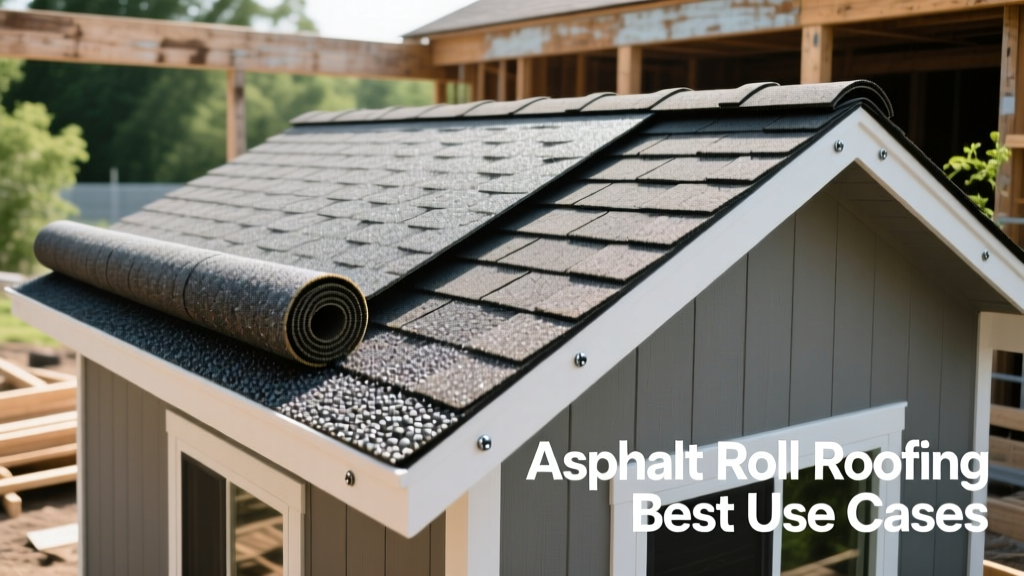
The Technical Baseline: Mineral-Surfaced Roll Roofing (MSR)
Mineral-surfaced roll roofing (MSR) is frequently mischaracterized as merely a budget alternative to asphalt shingles. In professional roofing applications, it is a highly specialized material engineered for specific architectural profiles, low-slope transitions, and strict economic parameters. Manufactured under ASTM D224 standards, MSR consists of a fiberglass or organic felt mat saturated and coated with weather-grade asphalt, then surfaced with ceramic mineral granules to provide UV protection and fire resistance.
A standard roll measures 36 inches wide and 33.3 feet long, covering exactly one roofing square (100 square feet) including standard laps. The material typically weighs between 70 and 90 pounds per square, making it significantly lighter and easier to hoist onto secondary structures than bundled architectural shingles or heavy modified bitumen membranes.
The Pitch Imperative: Where MSR Succeeds and Fails
The single most critical factor in application-fit for roll roofing is the roof pitch. Asphalt shingles rely on gravity and overlapping layers to shed water; on low slopes, capillary action can draw water upward under the shingle tabs. MSR, installed with continuous horizontal laps and sealed with asphalt roof cement, provides a superior water barrier for low-pitch applications where shingles would fail.
Scenario Matching Matrix: MSR vs. Alternative Systems
Selecting the right material requires matching the building's lifecycle, budget, and architectural constraints. The following matrix outlines when roll roofing outperforms common alternatives.
| Material System | Ideal Pitch Range | Expected Lifespan | Best Application Scenario |
|---|---|---|---|
| MSR Roll Roofing | 1:12 to 3:12 | 5 - 10 Years | Sheds, workshops, low-pitch porch additions, utility buildings. |
| 3-Tab Asphalt Shingles | 4:12 and above | 15 - 20 Years | Primary residences, steep-slope garages, visible rooflines. |
| SBS Modified Bitumen (Peel-and-Stick) | 1:12 to 3:12 | 15 - 25 Years | High-value low-slope additions, residential flat roofs over living spaces. |
| EPDM Rubber Membrane | 0:12 to 1:12 | 25 - 30+ Years | True flat roofs, commercial buildings, wide-span agricultural structures. |
Ideal Use Cases for Roll Roofing
1. Utility Buildings and Agricultural Sheds
For structures where interior climate control and long-term aesthetic appeal are secondary to basic weatherproofing, MSR is the undisputed cost-leader. Tractor barns, equipment sheds, and detached workshops benefit from the rapid installation timeline. A 1,000-square-foot shed roof can be dried in (made watertight) by a two-person crew in under three hours using roll roofing, compared to a full day for architectural shingles.
2. Low-Pitch Porch and Patio Covers
Residential additions like covered porches often feature low-slope roofs (2:12 or 3:12) to clear second-story windows. Installing standard shingles on these pitches voids manufacturer warranties and invites leaks. MSR provides a code-compliant, warrantied solution for these specific low-pitch transitional zones without requiring the expensive framing modifications needed to steepen the pitch.
3. Temporary or Short-Lifecycle Structures
For site offices, temporary storage units, or structures slated for demolition or major renovation within a decade, the 5-to-10-year lifespan of MSR aligns perfectly with the building's functional horizon, preventing capital waste on 30-year roofing systems.
Installation Realities: Nailing Patterns and Adhesives
Proper installation of roll roofing requires strict adherence to lap dimensions and cement application. The Asphalt Roofing Manufacturers Association (ARMA) outlines two primary installation methods:
- Exposed Nail Method: The most common and economical approach. Rolls are unrolled horizontally with a 2-inch edge lap and a 4-inch end lap. Galvanized roofing nails (minimum 11-gauge, 3/4-inch head) are driven 1 inch from the exposed edge, spaced 10 inches apart. The lap is then sealed with a 2-inch wide continuous bead of ASTM D4586 compliant asphalt roof cement.
- Concealed Nail Method: Nails are driven in the top edge of the roll, which is subsequently covered by the overlapping roll's lap cement. This method requires a 4-inch lap cement application and offers superior wind uplift resistance and a cleaner aesthetic, though it consumes more material and labor.
Cost Analysis: 2026 Market Estimates
Understanding the financial footprint of MSR requires separating material costs from labor and ancillary supplies.
- Material Cost: $40 to $65 per square (100 sq. ft.), depending on granule color and brand (e.g., GAF Multi-Purpose vs. Owens Corning Multi-Purpose).
- Ancillary Supplies: Asphalt roof cement ($35 per 5-gallon pail), galvanized nails, and drip edge flashing add approximately $0.15 to $0.25 per square foot.
- Professional Installation: Fully installed, roll roofing typically ranges from $2.25 to $4.50 per square foot. This is roughly 40% to 50% less expensive than a standard 3-tab shingle installation, primarily due to reduced labor time and lower disposal weight.
Common Failure Modes and Mitigation Strategies
When roll roofing fails prematurely, it is almost always due to installation errors rather than material defects. Recognizing these failure modes is critical for quality assurance.
Thermal Splitting and Fishmouthing
MSR expands and contracts with temperature fluctuations. If the material is unrolled and nailed tightly while cold, the subsequent thermal expansion has nowhere to go, resulting in 'fishmouth' bubbles or lateral tearing. Mitigation: Always allow rolls to relax and acclimate to the ambient roof temperature for at least 30 minutes before nailing. Unroll the material loosely and avoid pulling it taut during installation.
Lap Adhesion Failure
Relying on the self-sealing properties of the asphalt without adequate cement application leads to wind-driven rain infiltration at the seams. Mitigation: Ensure the substrate is completely free of dust and moisture before applying lap cement. Apply cement evenly using a trowel, avoiding starved spots, and immediately embed the overlapping roll to ensure a continuous chemical weld.
Ponding Water Degradation
Unlike modified bitumen or EPDM, standard MSR is not designed to withstand continuous water immersion. If roof deflection causes ponding water, the mineral granules will eventually dislodge, exposing the asphalt matrix to rapid UV degradation. Mitigation: Ensure roof decking is structurally sound and meets L/240 deflection limits before installing MSR.
Decision Framework: Should You Specify Roll Roofing?
Use this logical sequence to determine if MSR is the correct specification for your project:
- Is the roof slope 1:12 or greater? If no, specify EPDM or TPO. If yes, proceed.
- Is the roof slope between 1:12 and 2:12? If yes, you must use the 19-inch double-coverage MSR method or upgrade to SBS modified bitumen. If slope is 2:12 or greater, proceed.
- Is the structure a primary residence with high aesthetic requirements? If yes, specify architectural shingles or metal roofing. If no (e.g., shed, utility building, low-pitch porch), proceed.
- Is the project budget constrained or is the building lifecycle under 15 years? If yes, Mineral-Surfaced Roll Roofing is the optimal, code-compliant application fit.