Plastic Roofing Material Selection Framework for Any Build
Master our plastic roofing material selection framework. Compare polycarbonate, PVC, and acrylic panels for light transmission, impact, and cost.
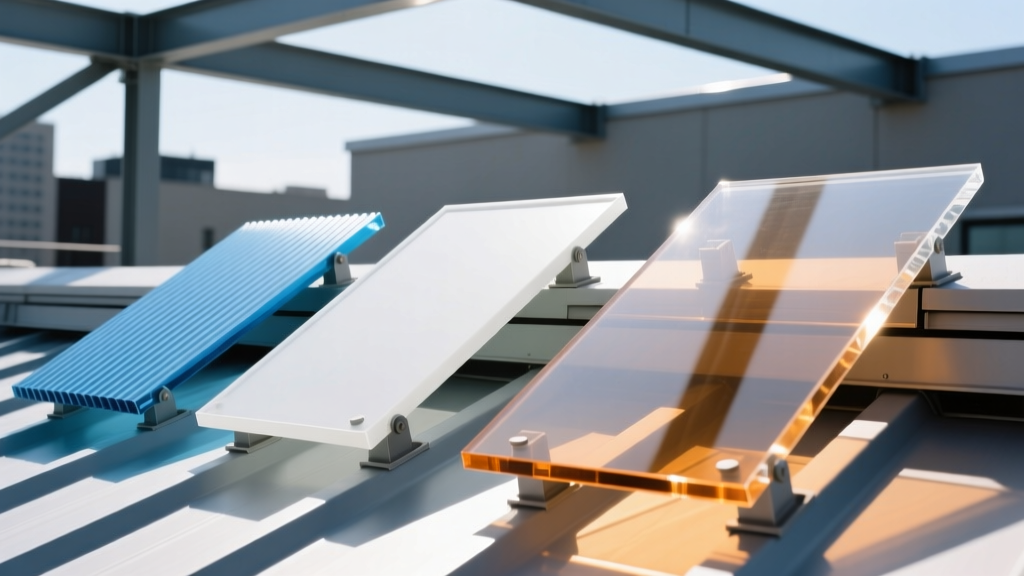
The Polymer Matrix: Core Material Specifications
Selecting the correct plastic roofing material requires moving beyond the assumption that all polymer sheets are identical. The commercial and residential market spans from brittle, low-cost PET to high-impact, UV-stabilized multiwall polycarbonate. Each polymer chain structure dictates its light transmission, thermal expansion coefficient, and ultimate failure mode. According to the British Plastics Federation, understanding the baseline chemical properties of these thermoplastics is the first step in preventing premature structural failure.
| Material Type | Light Transmission (Clear) | Impact Resistance (Izod) | UV Degradation Timeline | Avg. Cost per Sq. Ft. |
|---|---|---|---|---|
| Multiwall Polycarbonate | 80% - 90% | 600 - 800 J/m | 10-15 years (with co-extruded UV layer) | $2.50 - $5.50 |
| Corrugated PVC | 75% - 85% | 40 - 100 J/m | 3-5 years (plasticizer migration) | $1.20 - $2.50 |
| Acrylic (PMMA) | 92% - 94% | 15 - 25 J/m | 15-20+ years (inherent UV stability) | $4.00 - $7.50 |
| PET (Polyester) | 85% - 90% | 30 - 50 J/m | 1-3 years (rapid yellowing) | $0.80 - $1.50 |
Climate and Use-Case Decision Tree
Do not select a plastic roofing material based solely on initial budget. The local climate and specific structural application must drive the polymer choice. Use this framework to isolate the optimal material for your project.
Scenario A: High Hail and Severe Wind Zones
In regions experiencing frequent hail (1.5 inches or larger) or debris impact, multiwall polycarbonate is the only viable plastic option. Its molecular structure allows it to deform under stress and return to its original shape, absorbing kinetic energy that would shatter acrylic or crack rigid PVC. Specify a minimum 16mm triple-wall polycarbonate panel with an internal X-structure for spans exceeding 4 feet between purlins. Ensure the product carries an ASTM D638 tensile yield rating of at least 9,000 psi.
Scenario B: High UV Exposure and Coastal Salt Air
Acrylic (PMMA) excels in extreme UV environments because it does not rely on a topical UV coating; the material is inherently resistant to photodegradation. While it lacks the impact resistance of polycarbonate, it will not yellow or lose light transmission over a 20-year lifespan. For coastal builds, acrylic resists salt spray etching far better than polycarbonate, which can suffer micro-abrasions from wind-blown sand that eventually compromise its UV co-extrusion layer.
Scenario C: Agricultural and Greenhouse Applications
For controlled environments, light diffusion is more critical than raw impact resistance. Penn State Extension's research on greenhouse glazing highlights that structured polycarbonate with an anti-condensate (anti-drip) coating reduces internal light loss caused by water droplet refraction. Avoid standard clear PVC for greenhouses, as the plasticizers off-gas and create a film that blocks photosynthetically active radiation (PAR) within 18 months.
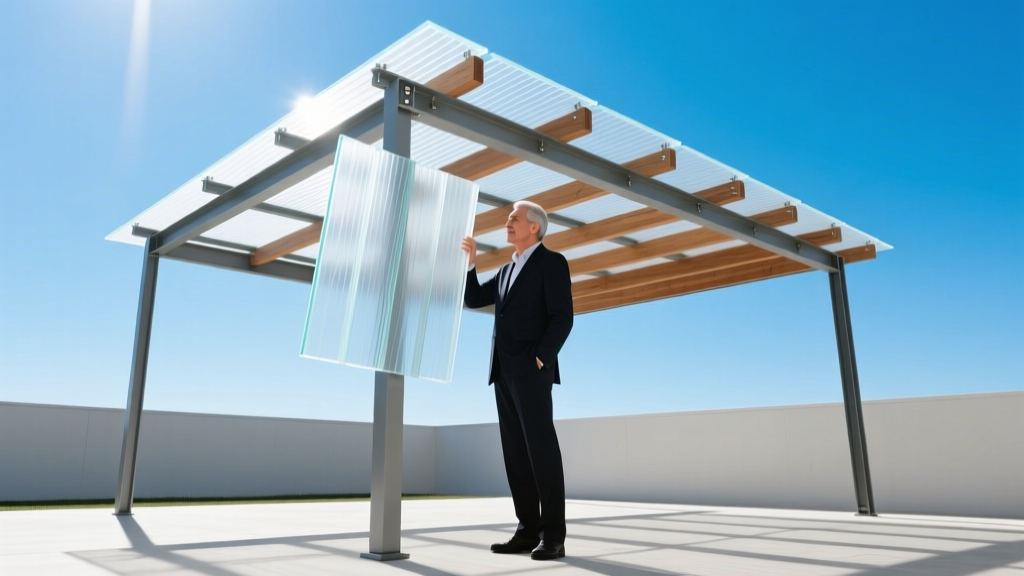
Thermal Expansion and Structural Framing
The most common cause of failure in plastic roofing systems is not weather, but improper framing that ignores the coefficient of linear thermal expansion (CLTE). Plastics expand and contract at rates significantly higher than wood or metal framing.
- Polycarbonate CLTE: 0.065 mm/m°C (approx. 1/8 inch expansion per 3 feet of panel for a 30°F temperature swing).
- PVC CLTE: 0.080 mm/m°C.
- Acrylic CLTE: 0.070 mm/m°C.
Framing Adjustments: When designing the substructure, purlin spacing must be calculated based on the specific material's span-to-thickness ratio. For 10mm double-wall polycarbonate, maximum purlin spacing is typically 4 feet on center. For corrugated PVC, spacing must be reduced to 2 feet on center to prevent sagging under snow loads, as PVC loses rigidity rapidly when temperatures exceed 120°F.
Fastener and Sealant Chemistry
Chemical incompatibility between fasteners, sealants, and the plastic roofing material causes stress cracking and crazing. Follow these strict chemical boundaries:
- Fastener Selection: Use only #12 or #14 stainless steel hex-washer head screws. Galvanized screws will eventually rust, and the zinc coating can react with certain polymers. The screws must feature a 1-inch bonded EPDM washer to distribute the clamping load across a wider surface area.
- Pre-Drilling Protocol: You must pre-drill every fastener hole. The hole diameter must be 1/4 inch larger than the screw shank to allow for thermal expansion. Driving screws directly through plastic without oversized pre-drilled holes will cause radial micro-cracks that propagate under wind uplift.
- Sealant Compatibility: Use only neutral-cure silicone (such as GE Silicone II) or specialized polyurethane sealants. Never use acetoxy-cure silicone (which smells like vinegar) or solvent-based adhesives. The acetic acid and solvents will chemically attack the polymer chains, causing immediate crazing and voiding the manufacturer's warranty.
Real-World Cost and Lifecycle Analysis
When budgeting a plastic roofing material installation, the raw sheet cost is only one variable. The total installed cost must account for specialized aluminum H-profiles, U-channels, and thermal break tapes required for multiwall systems.
Expert Insight: While corrugated PVC costs roughly $1.50 per square foot compared to $4.00 for multiwall polycarbonate, the PVC system requires 40% more purlin framing and will require full replacement in 5 to 7 years in high-UV climates. Over a 15-year lifecycle, polycarbonate delivers a 35% lower total cost of ownership.
Furthermore, building codes increasingly reference solar reflectance and thermal emittance. While traditional clear plastics transmit heat, modern polycarbonate panels are available with specialized solar-control tinting that blocks near-infrared radiation while maintaining visible light transmission. As noted in the Department of Energy's guidelines on cool roof technologies, managing solar heat gain through advanced glazing can reduce cooling loads in underlying conditioned spaces by up to 15%, partially offsetting the higher initial material cost of premium polymer sheets.
By applying this framework—matching the polymer chemistry to the specific climatic stressors, engineering the framing for thermal movement, and strictly controlling fastener compatibility—you ensure the plastic roofing system performs to its maximum engineered lifecycle.
Written by
James ThorntonJames Thornton is a construction industry veteran with 25 years of hands-on experience in wood framing, lumber grading, and residential building codes. He started as a framing carpenter in rural Oregon, earned his ICC Residential Building Inspector certification, and eventually became a senior plan reviewer for the City of Portland Bureau of Development Services. James holds a B.S. in Wood Science & Technology from Oregon State University and is a certified lumber grader through the West Coast Lumber Inspection Bureau (WCLIB). He has inspected over 3,000 residential construction sites and authored the city's internal guide on advanced framing techniques (2x6 at 24" O.C.). James lives in Bend, OR, where he builds custom timber-frame cabins and competes in lumberjack sports.
More from James Thornton
View all
Insulation
Best Home Insulation Materials: Complete 2026 Guide
Compare top home insulation materials for 2026. Find R-values, installed costs per square foot, and best uses for fiberglass, spray foam, and mineral wool.
Aug 4, 2026

Sustainable Building
Certify Your Green Building Material for LEED and WELL
Step-by-step guide to certifying a green building material for LEED v5 and WELL v2. Master EPDs, HPDs, and VOC limits for 2026 project specifications.
Aug 4, 2026

Stone & Masonry
Veneer Stacked Stone Panels: Interior Design & Style Showcase
Discover how veneer stacked stone panels transform interiors. Explore modern design profiles, material pairings, and technical installation specs.
Aug 4, 2026