Most Durable Roofing Materials for Extreme Climates
Discover the most durable roofing materials for specific extreme climates, from hurricane zones to wildfire areas, with 2026 cost data and expert specs.

The Climate-Material Mismatch: Why Durability is Relative
When homeowners and builders search for durable roofing materials, they often default to universal metrics like lifespan or impact resistance. However, material durability is entirely climate-dependent. A Spanish clay tile that effortlessly survives a century in the arid heat of Phoenix will suffer catastrophic freeze-thaw spalling if installed in Minneapolis. Similarly, an impact-resistant asphalt shingle designed for hail-prone Oklahoma may degrade prematurely under the relentless UV radiation of the Sonoran Desert.
True roofing longevity requires matching the material's physical properties to the specific atmospheric stressors of your ZIP code. This guide breaks down the most durable roofing materials for the four most punishing North American climate zones, detailing the exact product specifications, installation nuances, and 2026 cost premiums required for survival.
High-Wind and Hurricane Zones: Engineering for Uplift
In coastal and hurricane-prone regions (Gulf Coast, Southeastern seaboard), the primary threat is not just horizontal wind, but aerodynamic uplift. When wind hits a roof edge, it creates negative pressure that peels roofing materials upward.
Top Material: 24-Gauge Standing Seam Metal
For extreme wind zones, 24-gauge steel standing seam panels with concealed clips are the gold standard. Unlike screw-down panels, concealed clips allow the metal to expand and contract thermally without elongating fastener holes, which prevents water intrusion and pull-through during Category 4+ storms.
Alternative: Class H Asphalt Shingles
If metal is outside the budget, specify ASTM D7158 Class H shingles, which are tested to withstand 150 mph winds. Brands like CertainTeed Landmark PRO require a strict 6-nail fastening pattern (rather than the standard 4-nail) placed precisely on the nail line to achieve this rating. Expect to pay $7.50 to $11.00 per square foot installed in 2026.
Heavy Snow and Freeze-Thaw Regions: Combating Ice Dams
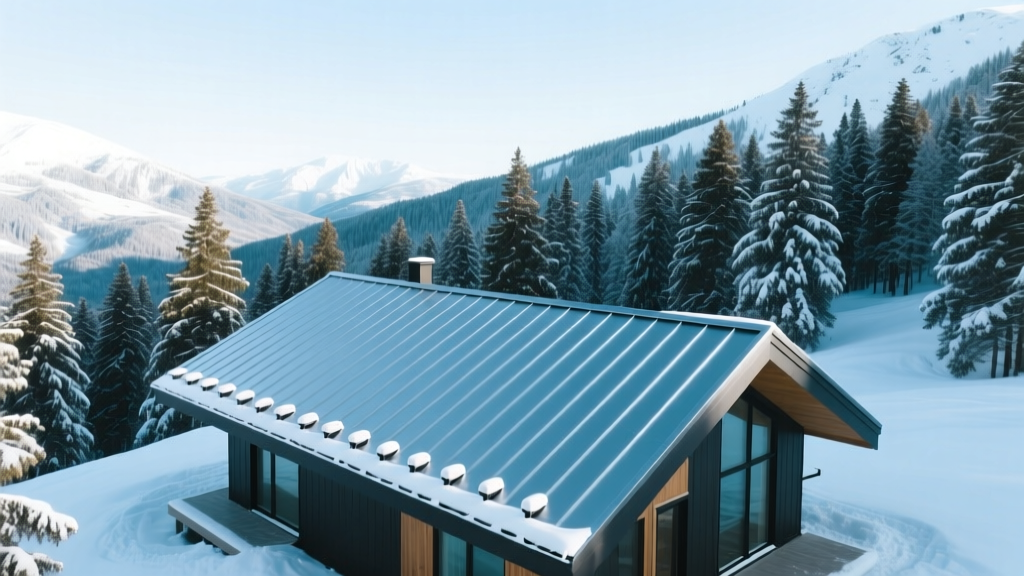
In the Northeast, Great Lakes, and Mountain West, roofs face dual threats: massive structural snow loads and the insidious water backup caused by ice dams. Porous materials that absorb moisture will crack when that water freezes and expands.
Top Material: Synthetic Slate (Polymer Composites)
Natural slate is incredibly durable but prohibitively heavy for many modern timber frames, often requiring expensive structural reinforcement. Synthetic slate, such as DaVinci Roofscapes Bellaforte, offers a superior alternative for snow country. These polymer tiles boast a 0% water absorption rate (ASTM C97), meaning water cannot penetrate the material to freeze and cause micro-fractures.
Mandatory Underlayment Upgrades
In freeze-thaw climates, the durable roofing material is only half the battle. You must install a self-adhering SBS-modified bitumen membrane (commonly known as ice and water shield, like Grace Ice & Water Shield HT) extending at least 24 inches past the interior heated wall line of the eaves. This prevents meltwater from ice dams from wicking under the shingles and rotting the decking. Budget an additional $2.50 to $3.50 per square foot for this critical underlayment upgrade.
Extreme Heat and UV Degradation: Thermal Shock Resistance
Desert climates in the Southwest subject roofs to extreme daytime heat followed by rapid nighttime cooling. This daily cycle causes thermal shock, leading to the blistering, cracking, and granule loss of standard asphalt shingles.
Top Material: Concrete and Clay Tile
Clay and concrete tiles possess high thermal mass, meaning they absorb and release heat slowly, buffering the underlying decking from rapid temperature swings. Furthermore, their inherent air gap (created by battens) allows passive ventilation beneath the tiles, drastically reducing attic heat gain.
Cool Roof Coatings for Low-Slope Systems
For flat or low-slope commercial and residential roofs in high-heat zones, TPO (Thermoplastic Polyolefin) membranes with high Solar Reflectance Index (SRI) values are mandatory. According to the U.S. Department of Energy, a cool roof with an SRI of 78 or higher can reduce peak cooling demand by 10-15%, extending the membrane's lifespan by preventing the plasticizers from baking out of the material prematurely.
Wildfire Interface Zones: Class A Fire and Ember Defense
In the WUI (Wildland-Urban Interface) of California and the Pacific Northwest, the primary roofing threat is not direct flame contact, but wind-blown embers that can travel up to a mile ahead of a fire front.
Top Material: Stone-Coated Steel and Metal
Any material selected for a WUI zone must carry a Class A fire rating (ASTM E108). While clay and concrete tiles are Class A, their curved profile creates open channels where wind-blown embers and dry pine needles accumulate, creating a severe ignition risk. Stone-coated steel (like DECRA or Boral Steel) mimics the look of traditional profiles but lays completely flat, eliminating ember traps.
Even with a Class A roof, embers can be sucked into attic vents by the pressure differentials created by a passing firestorm. Upgrading to 1/8-inch ember-resistant mesh vents (such as Brandguard Vents) is a non-negotiable requirement for true wildfire durability. Standard 1/4-inch screens will not stop burning bark or pine needles.
2026 Climate-Specific Durability Matrix
The following matrix synthesizes the optimal material choices, critical testing standards, and estimated installed costs for the current market.
| Climate Zone | Primary Threat | Top Material Pick | Critical Spec / Standard | 2026 Installed Cost (sq ft) |
|---|---|---|---|---|
| Hurricane / High Wind | Aerodynamic Uplift | 24-Ga Standing Seam Metal | UL 1897 / Concealed Clips | $14.00 - $22.00 |
| Heavy Snow / Ice | Ice Dams, Freeze-Thaw | Synthetic Polymer Slate | 0% Water Absorption / Ice Shield | $16.00 - $25.00 |
| Extreme Heat / UV | Thermal Shock, Blistering | Clay Tile / High-SRI TPO | CRRC Rated / Batten Ventilation | $18.00 - $30.00 |
| Wildfire (WUI) | Wind-Blown Embers | Stone-Coated Steel | Class A (ASTM E108) / Ember Vents | $12.00 - $18.00 |
Decoding Material Testing Standards
Marketing brochures frequently use the term 'durable' without context. To verify claims, always cross-reference the manufacturer's spec sheet with the following independent testing standards:
- ASTM D3161 (Wind): Tests steep-slope roof coverings for wind resistance. Look for Class F (110 mph) or Class H (150 mph).
- UL 2218 (Impact): Drops steel balls from varying heights to simulate hail. Class 4 (a 2-inch steel ball dropped from 20 feet) is mandatory for insurance discounts in hail-prone states like Texas and Colorado.
- ASTM C1167 (Freeze-Thaw): Specifically tests clay and concrete tiles for structural degradation after repeated cycles of freezing and thawing. Grade 1 tiles are required for northern climates.
The Hidden Costs of Climate-Optimized Roofing
Upgrading to durable roofing materials tailored for your specific climate carries a 'climate premium.' According to FEMA Building Science data, fortifying a home beyond standard building codes typically increases initial roofing costs by 10% to 18%. However, this premium is rapidly offset by secondary financial benefits:
- Insurance Premium Reductions: Achieving a FORTIFIED Home designation or installing UL 2218 Class 4 impact-resistant materials can reduce annual homeowners insurance premiums by 15% to 30% in catastrophe-prone states.
- Extended Replacement Cycles: While a standard 3-tab shingle in a high-heat zone may require replacement every 12-15 years due to UV embrittlement, a properly ventilated clay tile system will easily exceed 50 years, effectively eliminating the need for a second roof replacement in the homeowner's lifetime.
- Energy Savings: High-SRI cool roofs in southern climates can reduce annual HVAC cooling costs by up to $500 for a standard 2,500-square-foot single-story home.
Frequently Asked Questions
Is metal roofing always the most durable option?
No. While metal excels in wind, fire, and snow shedding, it is highly susceptible to galvanic corrosion in coastal salt-spray environments unless specifically treated with a Kynar 500 (PVDF) fluoropolymer coating. In highly corrosive marine zones, aluminum standing seam is vastly superior to steel, as aluminum naturally forms a protective oxide layer that prevents rust.
Can I install clay tiles in a cold climate if they are sealed?
Sealing is not a reliable long-term strategy. Surface sealants wear off within 5 to 7 years under UV exposure and foot traffic. If you want the aesthetic of tile in a freeze-thaw climate, you must specify ASTM C1167 Grade 1 tiles, which are manufactured with a denser clay body and lower porosity, or switch to a synthetic polymer alternative that inherently resists water absorption.
Expert Verdict: Matching Your ZIP Code to Your Roof
The pursuit of durable roofing materials must begin with a localized risk assessment. A roof is a system, not just a surface covering. The most expensive, impact-resistant shingle will fail catastrophically if the underlying decking is not secured with ring-shank nails, just as a Class A fire-rated tile roof will fail if ember-resistant vents are ignored. By aligning your material choice, fastener specifications, and underlayment upgrades with the specific atmospheric threats of your region, you transition from simply buying a roof to engineering a long-term defensive asset.
Written by
James ThorntonJames Thornton is a construction industry veteran with 25 years of hands-on experience in wood framing, lumber grading, and residential building codes. He started as a framing carpenter in rural Oregon, earned his ICC Residential Building Inspector certification, and eventually became a senior plan reviewer for the City of Portland Bureau of Development Services. James holds a B.S. in Wood Science & Technology from Oregon State University and is a certified lumber grader through the West Coast Lumber Inspection Bureau (WCLIB). He has inspected over 3,000 residential construction sites and authored the city's internal guide on advanced framing techniques (2x6 at 24" O.C.). James lives in Bend, OR, where he builds custom timber-frame cabins and competes in lumberjack sports.
More from James Thornton
View all
Insulation
Best Home Insulation Materials: Complete 2026 Guide
Compare top home insulation materials for 2026. Find R-values, installed costs per square foot, and best uses for fiberglass, spray foam, and mineral wool.
Aug 4, 2026

Sustainable Building
Certify Your Green Building Material for LEED and WELL
Step-by-step guide to certifying a green building material for LEED v5 and WELL v2. Master EPDs, HPDs, and VOC limits for 2026 project specifications.
Aug 4, 2026

Stone & Masonry
Veneer Stacked Stone Panels: Interior Design & Style Showcase
Discover how veneer stacked stone panels transform interiors. Explore modern design profiles, material pairings, and technical installation specs.
Aug 4, 2026