GAF Solar Shingles vs. Traditional Panels: Best Roof Scenarios for 2026
Evaluate GAF solar shingles against traditional rack-mounted panels. Compare costs, roof geometry constraints, and ideal installation scenarios for 2026.
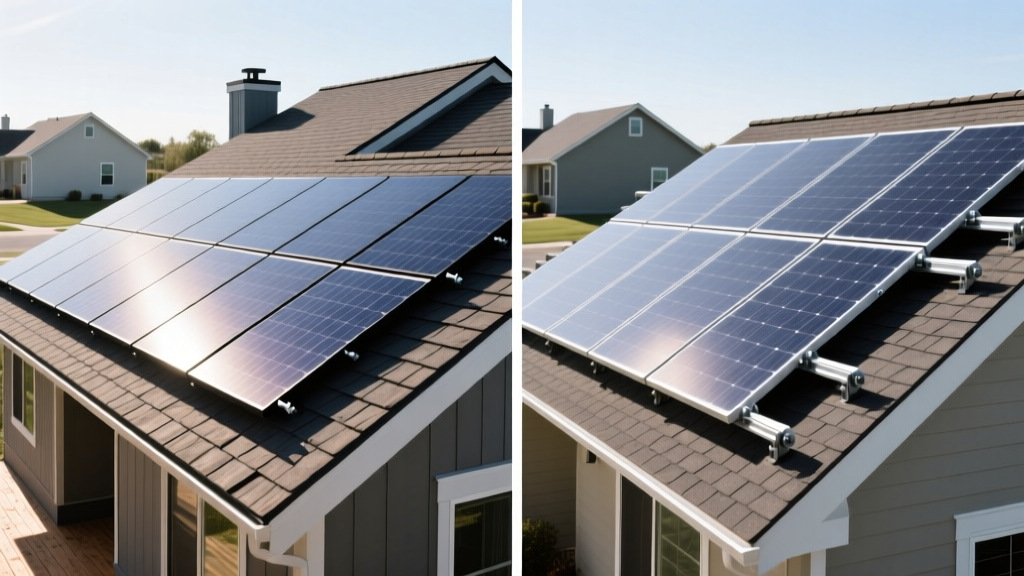
The Architecture of Nailable Solar: How GAF Timberline Solar Works
Building-Integrated Photovoltaics (BIPV) have evolved significantly from the fragile, low-efficiency prototypes of the early 2010s. The GAF Timberline Solar system represents a pragmatic shift in this space, abandoning the glass-tile approach popularized by competitors in favor of a nailable asphalt-solar hybrid. Each active solar shingle generates approximately 45 watts of power using monocrystalline silicon cells, achieving a module efficiency of roughly 17.5%. According to National Renewable Energy Laboratory (NREL) photovoltaic research, while this efficiency is slightly lower than premium rack-mounted panels (which frequently exceed 22%), the seamless integration eliminates the aerodynamic drag and structural loading issues associated with traditional racking systems.
Core System Specifications
- Active Shingle Output: 45W per nailable unit.
- Inverter Compatibility: Designed specifically for Enphase IQ8 microinverters, ensuring panel-level MPPT (Maximum Power Point Tracking) and NEC-compliant rapid shutdown.
- Base Material: Integrates directly with GAF Timberline HDZ standard architectural shingles for the non-solar portions of the roof.
- Wind Rating: Up to 130 mph when installed with the requisite GAF accessory matrix and Master Elite protocols.
Scenario Matching: GAF Solar Shingles vs. Rack-Mounted Panels
Choosing between BIPV and traditional rack-mounted solar is rarely a simple matter of preference; it is dictated by roof condition, geometry, and local regulatory environments. The following matrix outlines the ideal application scenarios for 2026 installations.
| Scenario Variable | GAF Timberline Solar (BIPV) | Traditional Rack-Mounted Panels |
|---|---|---|
| Roof Lifecycle | Ideal for roofs needing immediate, full replacement. Combines roofing and solar labor into one crew. | Best for roofs with 10+ years of remaining life. Adding solar to an aging roof incurs double R&R (remove and reinstall) costs later. |
| HOA & Aesthetic Restrictions | Highly favorable. Flush-mounted design often bypasses strict HOA aesthetic covenants that ban elevated panels. | Frequently challenged by historic districts and strict HOAs due to visual profile and glare. |
| Roof Geometry | Poor for complex roofs. Requires large, unbroken rectangular planes for optimal active shingle placement. | Highly adaptable. Panels can be skipped around obstructions or mounted on specialized tilt-racks for flat sections. |
| Weight & Structural Load | Low impact. Adds roughly the same weight as a standard second layer of asphalt shingles. | High impact. Adds 2.5 to 4 lbs per square foot, often requiring structural reinforcement on older timber framing. |
The 'Dead Zone' Problem: Roof Geometry Constraints
The most critical limitation of the GAF Timberline Solar system—and nailable BIPV in general—is the inability to cut the active solar shingles on-site. Standard asphalt shingles can be trimmed with a utility knife to fit tight valleys, hips, and dormer intersections. Solar shingles cannot be cut without destroying the photovoltaic laminate and voiding the warranty.
If your roof features multiple intersecting gables, dormers, or complex valleys, the installer must use standard, non-solar Timberline HDZ shingles in these transition zones. On a highly fragmented 30-square roof, these 'dead zones' can consume up to 40% of the total surface area. This severely limits the maximum kilowatt capacity you can install, potentially making BIPV unviable for homes with high electrical loads (e.g., EV charging, geothermal heat pumps) that require 10kW+ systems.
Before committing to GAF solar shingles, request a detailed CAD layout from your contractor. Verify the exact ratio of active solar squares to total roof squares. If the active solar coverage drops below 60% of the total south/west-facing roof area, traditional panels will likely yield a better financial return.
2026 Financial Breakdown & ROI Timelines
Evaluating the cost of GAF solar shingles requires isolating the marginal cost of solar from the baseline cost of a roof replacement. As of 2026, utility rate escalations have shortened solar payback periods, while the 30% Federal Investment Tax Credit (ITC) remains fully active, as tracked by the DSIRE database for state and federal solar incentives.
| System Size (Approx. Shingles) | Baseline Roof Cost (Timberline HDZ) | Marginal Solar Upgrade Cost | Net Cost After 30% ITC | Est. Annual Production |
|---|---|---|---|---|
| 6.0 kW (133 shingles) | $14,000 - $18,000 | $28,000 - $32,000 | $19,600 - $22,400 | 7,200 - 8,400 kWh |
| 8.5 kW (189 shingles) | $16,000 - $21,000 | $38,000 - $44,000 | $26,600 - $30,800 | 10,200 - 11,900 kWh |
| 11.0 kW (244 shingles) | $19,000 - $25,000 | $49,000 - $56,000 | $34,300 - $39,200 | 13,200 - 15,400 kWh |
Note: Pricing reflects national averages for 2026. The marginal solar cost includes the active shingles, Enphase microinverters, monitoring hardware, and specialized labor, but excludes the base underlayment and standard shingles required for the rest of the roof.
Installation Prerequisites & Warranty Traps
The performance of any BIPV system is inextricably linked to the quality of the water barrier beneath it. GAF mandates specific installation protocols to maintain both the roofing warranty and the solar performance guarantee.
The Golden Pledge Plus Requirement
To secure the GAF Timberline Solar official specifications and the top-tier Golden Pledge Plus warranty, the system must be installed by a GAF Master Elite contractor. This warranty provides 30 years of coverage on the solar components and a lifetime limited warranty on the roofing materials, including 130 mph wind coverage and 50 years of non-prorated material replacement.
- Verify Master Elite status directly via the GAF contractor locator (only ~2% of roofers hold this credential).
- Ensure the contract explicitly lists the Enphase IQ8 microinverters and the Enphase Envoy-S communication gateway.
- Confirm the inclusion of GAF TigerPaw or FeltBuster synthetic underlayment across the entire deck, not just the solar sections.
- Verify that ice and water shield is applied in all valleys, eaves, and around all penetrations, exceeding local building code minimums.
Pitch and Ventilation Constraints
While standard asphalt shingles can technically be installed on slopes as low as 2:12 (with specialized underlayment), GAF Timberline Solar shingles require a minimum pitch of 4:12 to ensure adequate water shedding across the overlapping photovoltaic laminates. Furthermore, because solar shingles absorb and transfer significant thermal energy, adequate ridge and soffit ventilation is non-negotiable. A poorly ventilated attic will not only degrade the lifespan of the asphalt base but will also reduce the voltage output of the monocrystalline cells due to thermal throttling.
Final Decision Framework
Use this sequential evaluation process to determine if GAF solar shingles are the correct application fit for your property:
- Assess Roof Age: If your current roof is less than 10 years old, abandon BIPV. The cost of removing and reinstalling standard panels is vastly lower than tearing off a functional roof to install solar shingles.
- Map the Geometry: Obtain a satellite measurement of your roof. Calculate the square footage of unbroken, south or west-facing planes. If complex valleys and dormers consume more than 35% of this area, pivot to traditional rack-mounted panels to maximize your system size.
- Check HOA Covenants: If your HOA explicitly bans elevated rack-mounted panels, GAF Timberline Solar becomes the default optimal choice, as its flush profile typically satisfies aesthetic review boards.
- Calculate the Blended Cost: Compare the total cost of (New Roof + GAF Solar) against the cost of (New Roof + Traditional Panels). If the GAF premium exceeds 15% of the total project cost, the aesthetic benefits must be weighed against a potentially extended ROI timeline.
- Verify Contractor Availability: Confirm that a certified GAF Master Elite contractor operates in your zip code. Without this specific certification, you forfeit the integrated warranty that makes the BIPV premium justifiable.