Clay Tile Roof Durability: Lifespan Analysis and Failure Modes
Discover the true lifespan of a clay tile roof. We analyze durability, common failure modes, ASTM standards, and long-term ROI for residential homes.
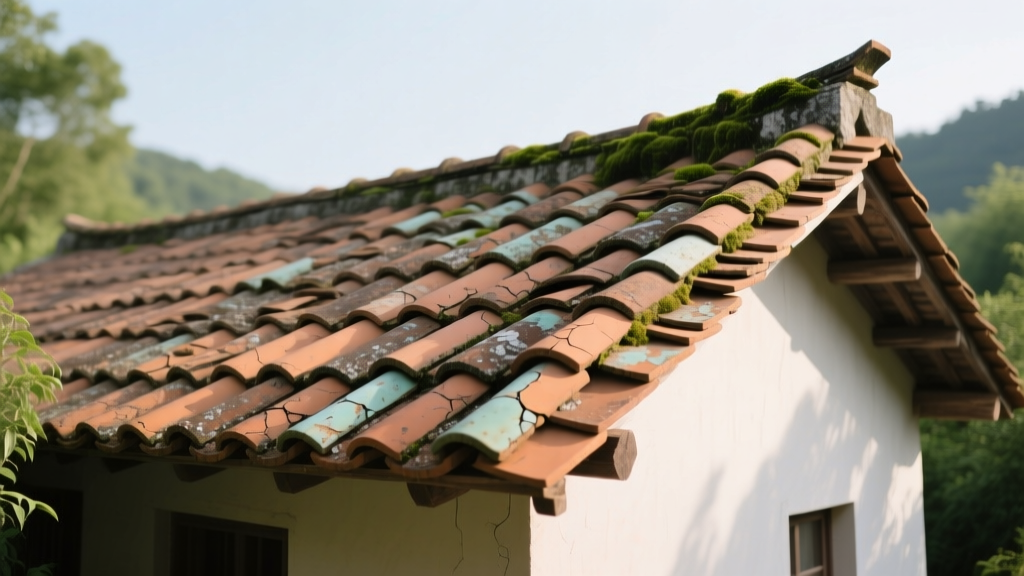
The True Lifespan of Clay Tile Roofs: Beyond the 50-Year Myth
When evaluating a clay tile roof, industry professionals separate the lifespan of the roofing material from the lifespan of the roofing system. The fired clay tiles themselves are virtually indestructible under normal conditions, routinely lasting 100 years or more without significant degradation. However, the underlying roofing system—comprising the underlayment, fasteners, flashings, and battens—operates on a completely different timeline.
As of 2026, the standard lifespan for a complete clay tile roof system before requiring major intervention is 30 to 50 years. The most common point of catastrophic failure is not the clay, but the underlayment beneath it. Homeowners and builders must plan for a 'lift and relay' procedure, where the clay tiles are carefully removed, the degraded underlayment is replaced, and the original tiles are reinstalled. In the current market, a lift and relay costs between $4.50 and $7.50 per square foot, a critical figure to factor into long-term ownership costs.
ASTM C1167 and Grade Classifications: What Dictates Durability?
The physical durability of the clay tile is governed by its porosity and resistance to freeze-thaw cycles. According to ASTM International standard C1167, clay roofing tiles are classified into three distinct grades based on water absorption rates and freeze-thaw resilience. Selecting the wrong grade for your climate is the fastest way to reduce a 100-year tile to a 15-year liability.
| ASTM Grade | Max Water Absorption | Freeze-Thaw Resistance | Recommended Climate Zones |
|---|---|---|---|
| Grade I | Less than 3% | High (Severe winter exposure) | Northern US, Canada, high-altitude regions |
| Grade II | Less than 6% | Moderate (Occasional freezing) | Transitional zones, Midwest, Pacific Northwest |
| Grade III | Less than 15% | Low (Non-freezing climates) | Deep South, Southern California, Florida |
If Grade III tiles are installed in a region that experiences hard freezes, water infiltrates the porous clay matrix, expands upon freezing, and causes spalling (surface flaking) and structural micro-fractures. Always verify the manufacturer's ASTM C1167 grading on the pallet wrapping before installation.
Primary Failure Modes: Where the System Breaks Down
While the clay endures, the ancillary components degrade. Understanding these specific failure modes allows for proactive maintenance and better material selection during the initial installation.
1. Underlayment Degradation (The 25-Year Ticking Clock)
Historically, 30-pound asphalt-saturated organic felt (ASTM D226 Type II) was the standard underlayment. While effective, organic felt dries out, becomes brittle, and loses its waterproofing integrity after 20 to 25 years of thermal cycling. Modern best practices dictate the use of high-tensile synthetic underlayments (such as GAF TigerPaw or Owens Corning ProArmor), which resist UV degradation during installation delays and maintain structural integrity for 40 to 50 years. In high-wind or ice-dam-prone regions, a self-adhering polymer-modified bitumen membrane (ASTM D1970) must be applied to the first 36 inches of the eaves.
2. Fastener Corrosion and Wind Uplift
A clay tile roof in a coastal environment is a harsh testing ground for metal fasteners. Electro-galvanized nails will rust through completely within 15 years in salt-spray zones, leading to tiles sliding off the battens during wind events. The National Roofing Contractors Association (NRCA) mandates the use of minimum 304-grade stainless steel, or 316-grade for strict coastal applications, to prevent galvanic and salt corrosion. Furthermore, in High-Velocity Hurricane Zones (HVHZ), the Tile Roofing Institute (TRI) requires a two-piece fastening system (a corrosion-resistant ring-shank nail paired with a copper or stainless steel wind clip) or approved structural polyurethane foam adhesives to resist uplift pressures exceeding 110 mph.
3. Flashing and Penetration Failures
Flashings are the transition points where water is most likely to infiltrate. Standard neoprene or rubber pipe boots used for plumbing vents have a maximum lifespan of 12 to 15 years before UV radiation causes them to crack and shatter. For a clay tile system designed to last 50+ years, installers must use cast-iron, lead-collared, or copper pipe flashings. Similarly, step flashings at wall intersections should be fabricated from 16-ounce cold-rolled copper or 20-gauge galvanized steel, measuring no less than 7x7 inches to ensure adequate overlap.
Expert Warning: Never use standard roofing cement or tar to seal flashing joints on a clay tile roof. These petroleum-based compounds degrade under UV exposure, trap moisture against the metal, and accelerate galvanic corrosion. Use high-grade polyurethane sealants (like Sikaflex) specifically rated for exterior masonry and metal transitions.
Environmental Stressors and Regional Lifespan Variations
The environment dictates the maintenance schedule. A clay tile roof does not age uniformly across different geographies.
- Coastal and Salt-Spray Zones: Salt accelerates the corrosion of fasteners and flashings. The clay itself is unaffected, but the structural attachment system requires inspection every 10 years. Efflorescence (white, powdery salt deposits) may appear on the tiles; this is cosmetic and will naturally weather away with rain.
- Desert and High-UV Zones: Extreme diurnal temperature shifts (hot days, cold nights) cause thermal shock. While clay handles this better than asphalt, the underlying wooden battens can dry-rot if attic ventilation is inadequate. Continuous ridge vents and intake soffit vents are non-negotiable to keep the deck temperature stable.
- Heavy Foliage and Humid Zones: In damp, shaded environments, biological growth (moss, lichen, algae) can root into the porous surface of Grade II and III tiles. Over time, root structures can widen micro-fissures. Annual treatments with zinc-strip runoff or specialized, non-acidic biocides are required to preserve the tile matrix.
Long-Term ROI: Clay Tile vs. Architectural Asphalt Shingles
To justify the premium upfront cost of a clay tile roof, one must analyze the 60-year lifecycle cost. While asphalt shingles require complete tear-offs and replacements every 18 to 25 years, clay tile only requires the underlayment replacement at the 40-year mark.
| Cost Metric (Per Sq. Ft.) | Premium Architectural Asphalt | Clay Tile Roof System |
|---|---|---|
| Initial Installation (2026) | $5.50 - $8.00 | $14.00 - $26.00 |
| First Replacement (Year 22) | $6.50 - $9.50 (Tear-off + New) | $0 (Routine Maintenance) |
| Second Replacement (Year 44) | $8.00 - $11.50 (Tear-off + New) | $5.00 - $7.50 (Lift & Relay Underlayment) |
| 60-Year Cumulative Cost | $20.00 - $29.00 | $19.00 - $33.50 |
| End-of-Life Material Value | Landfill Disposal Fee | High Salvage/Resale Value |
When factoring in the increased resale value of a home with a permanent clay roof, the structural insurance discounts in wind-prone regions, and the elimination of complete tear-off landfill fees, the clay tile system achieves cost parity with premium asphalt by year 45, while offering vastly superior fire resistance (Class A) and thermal mass properties.
Actionable Maintenance Protocol for Maximum Longevity
Preserving a clay tile roof requires specific, non-destructive maintenance techniques. The most common cause of premature tile breakage is improper foot traffic during HVAC servicing or gutter cleaning.
The Mechanics of Walking on Clay Tile
Clay tiles are essentially brittle beams. They are supported at the top by the nail/batten and at the bottom by the nose of the tile resting on the tile below. The absolute weakest point is the exact center of the tile span. If you must access the roof, follow these strict load-path rules:
- Walk in the Valleys: For interlocking or flat tiles, walk only in the recessed water channels, never on the raised crests.
- Target the Headlap: For barrel or Spanish tiles, step only on the bottom third of the tile. This area is reinforced by the double-layer headlap of the tile beneath it, transferring your weight directly to the roof deck rather than spanning the void.
- Use Foam Pads: Roofing professionals should distribute their weight using closed-cell foam crawl boards or roof ladders equipped with soft treads to prevent point-loading.
Annual Inspection Checklist
Conduct a bi-annual visual inspection (using binoculars from the ground or a drone) focusing on the following metrics:
- Slipped Tiles: Look for tiles that have migrated downward, exposing the underlayment or the top edge of the tile below. This indicates a broken fastener or a failed hanging lug.
- Mortar Degradation: If your ridge caps or hip tiles are set in mortar (common in older installations), check for cracking and crumbling. Modern standards prefer mechanical fastening or flexible polyurethane adhesives for ridges to accommodate thermal expansion.
- Debris Accumulation: Clear all pine needles and leaves from the horizontal water channels and valleys. Trapped organic matter holds moisture against the tiles and accelerates the degradation of the underlying underlayment.
By aligning material selection with ASTM climate grades, specifying 316 stainless steel fasteners, upgrading to synthetic underlayments, and adhering to strict load-path protocols during maintenance, a clay tile roof will easily outlast the structure it protects, serving as a permanent, fire-resistant shield for generations.