Best Roof Material for Greenhouse Builds: Glass vs Polycarbonate
Compare glass, polycarbonate, and poly film for your greenhouse roof. Explore R-values, light transmission, and costs to choose the best glazing.
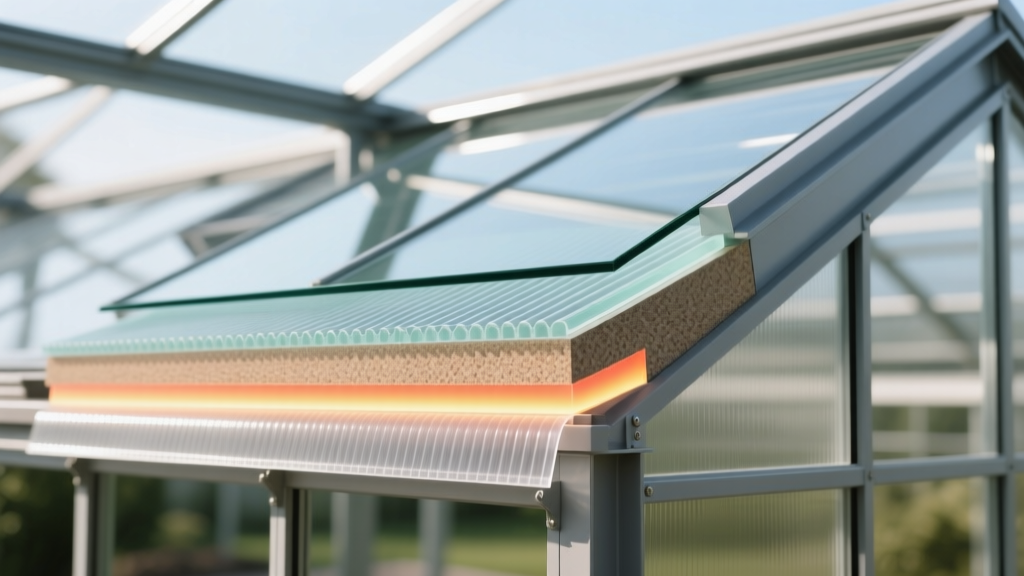
The Physics of Greenhouse Glazing: Beyond Simple Transparency
Selecting the correct roof material for greenhouse structures requires balancing three competing physical properties: thermal retention (R-value), Photosynthetically Active Radiation (PAR) transmission, and structural load capacity. A greenhouse roof is not merely a weather shield; it is the primary optical and thermal engine of the microclimate. According to guidelines from the National Greenhouse Manufacturers Association, modern glazing must also manage light diffusion, ultraviolet degradation, and condensation control to prevent crop diseases like Botrytis cinerea.
The ideal roof material maximizes PAR transmission (the 400-700 nanometer wavelength spectrum plants use for photosynthesis) while minimizing infrared heat loss at night. This guide breaks down the technical specifications, failure modes, and real-world costs of the three dominant greenhouse roofing materials to help you engineer the optimal growing environment.
Material Deep Dive: Polycarbonate, Glass, and Polyethylene
8mm Twin-Wall Polycarbonate: The Modern Standard
Twin-wall polycarbonate dominates the hobbyist and mid-scale commercial market due to its impact resistance and insulating properties. An 8mm twin-wall panel (such as those manufactured by Palram or Polygal) features a co-extruded UV-inhibitor layer on the top surface. This layer blocks 99.9% of UV radiation, preventing the polymer chains from breaking down and yellowing.
- R-Value: ~1.6 (Significantly reduces nighttime heating costs compared to single-pane glass).
- PAR Transmission: 79% to 82%. The internal ribs create slight shadows, but the light is naturally diffused, reducing plant scorching.
- Weight: 0.35 lbs per square foot.
- Failure Mode: Installing the panel upside down (UV layer facing inward) will result in severe yellowing and embrittlement within 18 to 24 months. Additionally, failing to seal the bottom flutes with breathable tape allows algae and insects to colonize the internal air channels, permanently blocking light.
4mm Tempered Horticultural Glass: The Heritage Choice
Glass remains the premium choice for botanical gardens and high-end residential conservatories. Modern horticultural glass is typically 4mm thick and tempered for safety and hail resistance. Unlike standard architectural glass, horticultural glass is formulated with low iron content to maximize light transmission.
- R-Value: ~0.9 (Poor insulation; requires heavy supplemental heating in cold climates).
- PAR Transmission: 89% to 91%. Provides brilliant, direct, un-diffused light.
- Weight: 2.1 lbs per square foot (Requires heavy-gauge aluminum or galvanized steel framing).
- Failure Mode: Thermal shock. If a cold rainstorm hits glass that has been superheated by the sun, the rapid temperature delta can cause spontaneous shattering, even in tempered variants. Furthermore, direct light transmission creates harsh shadow lines and localized hot spots on the canopy below.
6-Mil Co-Extruded Polyethylene Film: The Commercial Workhorse
For large-scale commercial operations spanning acres, rigid panels are cost-prohibitive. Instead, growers use 6-mil (0.006-inch) co-extruded polyethylene film. Modern films, like SunMaster or Ginegar, contain multiple layers: an outer UV-stabilized layer, a middle core for structural integrity, and an inner layer with anti-drip and infrared (IR) blocking properties.
- R-Value: ~0.87 (Single layer). When used in a double-layer system with an inflation blower creating a dead air space, the R-value jumps to ~1.5.
- PAR Transmission: 88% to 90% (when new).
- Weight: 0.03 lbs per square foot.
- Failure Mode: Wind billowing and abrasion. If the film is not pulled to the correct tension (typically 15-20 lbs of linear pull), it will flap in the wind, abrading against the purlins and tearing within a single season. UV degradation limits lifespan to 3 to 4 years.
Thermal & Optical Performance Matrix
The following data table compares the core metrics of standard greenhouse roof materials as of 2026 market pricing.
| Material Type | Thickness / Config | R-Value | PAR Transmission | Weight (lbs/sq ft) | Est. Cost (per sq ft) | Lifespan |
|---|---|---|---|---|---|---|
| Tempered Glass | 4mm Single Pane | 0.90 | 90% | 2.10 | $6.50 - $9.00 | 25+ Years |
| Twin-Wall Polycarbonate | 8mm | 1.60 | 80% | 0.35 | $2.80 - $4.20 | 10-15 Years |
| Triple-Wall Polycarbonate | 16mm | 2.40 | 74% | 0.65 | $5.50 - $7.50 | 15-20 Years |
| Polyethylene Film | 6-Mil Double Inflated | 1.50 | 85% | 0.06 | $0.25 - $0.45 | 3-4 Years |
| Corrugated PVC | Single Layer | 0.85 | 88% | 0.40 | $1.50 - $2.50 | 3-5 Years |
Structural Load and Framing Compatibility
The dead load of your roof material dictates the gauge and spacing of your structural framing. According to structural engineering principles outlined by the Food and Agriculture Organization (FAO) for greenhouse design, the roof must support both the dead load of the material and the live loads of snow and wind uplift.
Glass requires a rigid, non-flexing frame. Aluminum extrusions with integrated rubber gaskets are mandatory; wood framing flexes with seasonal humidity changes, which will snap rigid glass panes. Polycarbonate, conversely, can flex up to 15% of its span width without failing, making it suitable for lighter gauge steel tubing or even heavy timber framing. Polyethylene film requires a completely smooth frame surface—any exposed bolt heads or rough welds must be covered with foam tape to prevent punctures.
Polycarbonate expands and contracts at a rate of approximately 1/8 inch per 4-foot span for every 100°F temperature change. If you drill standard-sized holes and drive screws tight, the panels will buckle and crack when summer temperatures peak. Always drill oversize holes (1/4 inch for a #10 screw) and use neoprene-backed roofing washers, tightening them only until they just make contact with the panel surface.
Condensation Management: The Hidden Crop Killer
When warm, humid greenhouse air hits a cold roof surface, condensation forms. In untreated glass or standard polycarbonate, this moisture forms distinct droplets. These droplets act as magnifying lenses, focusing sunlight and burning the foliage below. More critically, when the droplets grow heavy and fall onto the plants, they spread fungal spores and create the damp leaf surfaces required for powdery mildew and blight to thrive.
To combat this, specify polycarbonate panels with a hydrophilic anti-drip coating (often branded as "No-Drip" or "PolySmart"). This chemical treatment lowers the surface tension of the panel, causing condensation to spread out into a thin, uniform sheet of water that runs down the flutes into the gutter system rather than forming droplets. For polyethylene films, ensure the inner layer includes an anti-condensate (AC) additive.
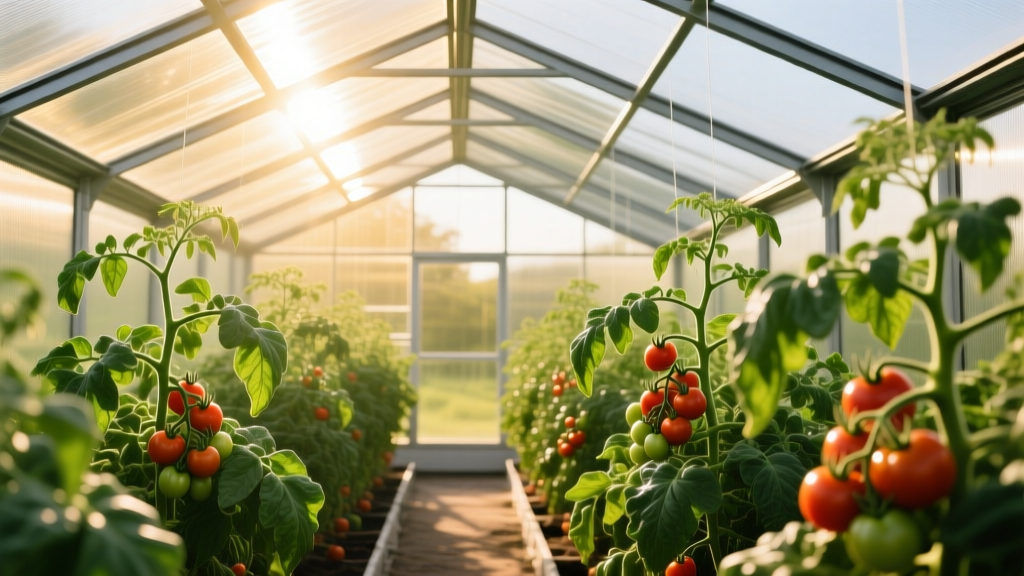
Climate-Specific Decision Framework
Use this conditional framework to select the optimal roof material based on your USDA Hardiness Zone and local weather patterns:
- Zones 3-5 (Heavy Snow / Extreme Cold): Use 16mm Triple-Wall Polycarbonate or a Double-Inflated Poly Film system. The priority is maximizing R-value to control winter heating costs. The steep pitch required for snow shedding (minimum 6:12) pairs well with the flexibility of triple-wall panels.
- Zones 6-8 (Moderate / Mixed Seasons): Use 8mm Twin-Wall Polycarbonate. This offers the best balance of light transmission, impact resistance against spring hail, and adequate insulation for mild winters and warm summers.
- Zones 9-11 (High Heat / Intense Sun): Use 4mm Tempered Glass or Diffused Polycarbonate. In high-heat environments, insulation is less critical than light diffusion and ventilation. Glass lasts indefinitely under intense UV, provided the greenhouse is equipped with automated shade cloth systems to prevent crop scorching during peak summer months.
Installation Gotchas and Edge Cases
Even the most expensive roof material will fail prematurely if installation details are ignored. Pay strict attention to these edge cases:
- Flute Sealing on Polycarbonate: The open channels at the top and bottom of polycarbonate panels must be sealed. Use solid, waterproof aluminum tape on the top edge (under the ridge cap) to prevent rain ingress. Use breathable micro-porous tape on the bottom edge. This allows condensation inside the flutes to evaporate out while blocking dust and insects.
- Poly Film Tensioning: Never install poly film on a cold morning. The film will expand as the day warms, causing it to sag and pool water. Install film when the ambient temperature is between 65°F and 75°F to ensure it remains taut across seasonal temperature swings.
- Fastener Selection: Never use standard zinc-plated wood screws or drywall screws to secure greenhouse roofing. The high humidity and constant condensation will rust them within a single season, leading to roof blow-offs during wind events. Always use 304 or 316 stainless steel fasteners with EPDM or neoprene sealing washers.
By matching the specific optical and thermal properties of your roof material to your local climate and crop requirements, you can drastically reduce supplemental heating costs while maximizing crop yield and structural longevity.
Written by
David NakamuraDavid Nakamura is a licensed architect (AIA) and construction technology writer focused on sustainable building methods, mass timber engineering, and high-performance building envelopes. He holds a Master of Architecture from the University of Washington and is a certified Passive House Consultant (CPHC). David spent eight years at the Seattle firm Mithun, where he led the design of three LEED Platinum projects, before founding his own practice specializing in net-zero residential design. He serves on the editorial advisory board of GreenBuilder Magazine and has authored peer-reviewed papers on cross-laminated timber (CLT) connections for the Journal of Structural Engineering. In his spare time, David teaches woodworking at Pratt Fine Arts Center and kayaks the Puget Sound.
More from David Nakamura
View all
Construction Cost
Labor Cost to Build a Deck Per Sq Ft: 2026 Installation Guide
Discover the exact labor cost to build a deck per sq ft in 2026. This installation guide breaks down contractor rates, complexity factors, and hidden fees.
Aug 4, 2026

Construction Cost
How Much Does It Cost to Build a 3 Bedroom House? Financing Guide
Learn exactly how much it costs to build a 3 bedroom house and explore 2026 financing options, construction loan types, and budget frameworks for your build.
Aug 4, 2026

Construction Cost
Cost to Build a Tennis Court: 2026 Guide
How much does it cost to build a tennis court in 2026? Breakdowns for asphalt, concrete, and synthetic surfaces plus fencing and lighting.
Jul 30, 2026