Clear Roof Panels: Application Guide for Patios and Pergolas
Match clear roof panels to your specific project. Compare polycarbonate, acrylic, and fiberglass for patios, pergolas, and greenhouses with 2026 pricing.
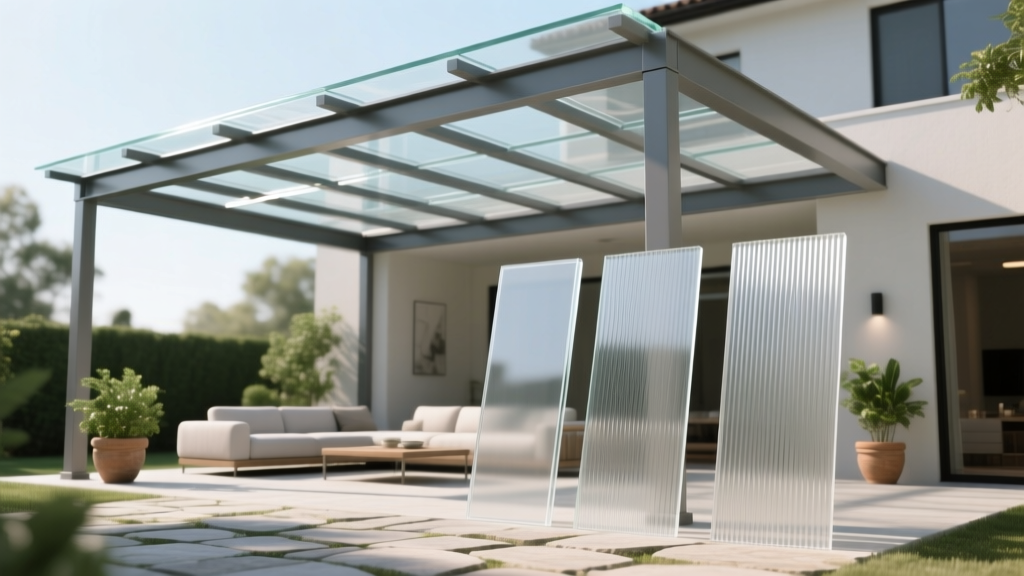
Selecting transparent roofing requires matching polymer chemistry to environmental stressors. A material that performs flawlessly over a backyard greenhouse will shatter under hail when installed over a high-traffic patio. Clear roof panels are not a monolith; they span three distinct material families—polycarbonate, acrylic, and fiberglass—each with specific light transmission rates, thermal expansion coefficients, and impact tolerances.
This guide maps specific clear roof panel materials to their ideal architectural scenarios, providing exact product specifications, installation tolerances, and 2026 market pricing to ensure your project avoids premature yellowing, buckling, or catastrophic failure.
The Polymer Matrix: Material Capabilities
Before assigning a panel to a project, you must understand the baseline physics of the three primary transparent roofing polymers. The wrong choice leads to rapid UV degradation or structural tearing at the fastener points.
| Material | Light Transmission | Impact Resistance (vs. Glass) | UV Degradation Profile | Best Application |
|---|---|---|---|---|
| Multiwall Polycarbonate | 80% - 88% | 250x stronger | Co-extruded UV layer (10-15 yr life) | Patios, Pergolas, Atriums |
| Corrugated Polycarbonate | 85% - 90% | 200x stronger | Co-extruded UV layer (10+ yr life) | Greenhouses, Curved Roofs |
| Acrylic (Plexiglas) | 90% - 92% | 15x stronger | Inherently UV stable (20+ yr life) | Skylights, Flat Glazing |
| Fiberglass (FRP) | 75% - 85% | 30x stronger | Requires UV gel coat (3-5 yr life) | Utility Sheds, Industrial |
Scenario 1: Residential Patios and Pergolas
For outdoor living spaces, the primary goals are diffusing harsh direct sunlight while blocking 99.9% of UV rays to protect patio furniture and human skin. Single-wall corrugated panels cast harsh, distinct shadows and offer minimal thermal insulation.
The Specification: Multiwall Polycarbonate
Use 8mm to 10mm twin-wall or triple-wall polycarbonate (e.g., Palram Polygal or Lexan Thermoclear). The internal rib structure serves two purposes: it creates microscopic prisms that diffuse light into a soft, shadow-free glow, and it traps air to provide an insulating R-value of 1.4 to 1.7. According to the U.S. Department of Energy, utilizing multiwall glazing in passive solar designs significantly reduces thermal transfer, keeping the patio space up to 8°F cooler in peak summer compared to single-layer glazing.
Multiwall panels have open flutes at the ends. If installed on a roof with less than a 5:12 pitch, water can wick backward into the chambers via capillary action, causing algae growth. Always seal the top edge with solid aluminum U-channel tape and the bottom edge with breather tape to allow condensation to escape while blocking insects and debris.
Scenario 2: Backyard Greenhouses and Cold Frames
Greenhouses demand maximum photosynthetically active radiation (PAR) transmission and high structural resilience against snow loads and hail. Light diffusion is secondary to raw light volume and thermal retention during cold nights.
The Specification: Corrugated Polycarbonate or Twin-Wall
For hoop houses and curved cold frames, 0.030-inch corrugated polycarbonate (like Tuftex PolyCarb or Palram Suntuf) is mandatory. Its corrugated profile allows it to bend to a radius as tight as 4 feet without snapping. For rigid-frame glasshouses, 8mm twin-wall remains the standard.
- Snow Load Deflection: Ensure purlin spacing does not exceed 24 inches on center for 8mm twin-wall in regions with >30 PSF ground snow loads.
- Hail Resistance: Look for panels rated under the UL 2218 Impact Resistance Standard (Class 3 or 4). Standard 8mm twin-wall will survive 1-inch hail, but 1.5-inch hail requires stepping up to 16mm triple-wall polycarbonate.
- Condensation Management: Greenhouses generate massive interior humidity. Use 'anti-drip' coated polycarbonate, which lowers the surface tension of the inner wall, forcing condensation to sheet off rather than forming heavy droplets that block light and spread fungal spores onto plants.
Scenario 3: Utility Sheds and Wood Storage Overhangs
For non-occupied spaces where aesthetic light diffusion is irrelevant and budget is the primary constraint, multiwall polycarbonate is an unnecessary expense.
The Specification: Fiberglass (FRP) or Corrugated PVC
Fiberglass reinforced panels (FRP) cost roughly 40% less than polycarbonate. While they lack the impact resistance of polycarbonate, they offer excellent stiffness. However, FRP is highly susceptible to UV degradation. The resin matrix will chalk and expose the glass fibers within 3 to 5 years unless you specify panels with a factory-applied UV-inhibited gel coat (e.g., Kalwall). For temporary or ultra-low-budget woodsheds, corrugated PVC is an option, but it becomes highly brittle below 40°F and will shatter if struck by falling branches in winter.
Critical Installation Failures to Avoid
The most common reason clear roof panels fail is not material defect, but installer error regarding thermal dynamics and chemical compatibility.
Never use standard EPDM rubber washers with polycarbonate panels. EPDM contains sulfur and carbon black, which chemically react with polycarbonate under UV exposure, causing 'crazing' (micro-fractures) that radiate from the screw holes and eventually split the panel. You must use 100% silicone or specialized neoprene washers designed specifically for polycarbonate glazing.
Thermal Expansion Mathematics
Polycarbonate expands and contracts at a rate of roughly 0.0000375 inches per inch per degree Fahrenheit. If you install a 10-foot (120-inch) panel in the spring at 60°F, and it reaches 140°F on the roof surface in July, the temperature delta is 80°F. The panel will expand by 0.36 inches. If your fastener holes are drilled to the exact diameter of the screw shaft, the panel will buckle, warp, and eventually tear through the fastener. Always pre-drill fastener holes at least 3/8-inch oversize to allow the panel to slide freely along the fastener shaft during thermal cycling.
2026 Cost Breakdown and ROI
Pricing for clear roof panels has stabilized following the supply chain volatility of the early 2020s. Below is the current material cost matrix for standard residential applications.
| Panel Type | Material Cost (per sq. ft.) | Fastener & Trim Cost (per sq. ft.) | Total Material Cost (per sq. ft.) | Expected Lifespan |
|---|---|---|---|---|
| Corrugated PVC | $0.90 - $1.20 | $0.35 | $1.25 - $1.55 | 3 - 5 Years |
| Corrugated Polycarbonate | $1.60 - $2.40 | $0.45 | $2.05 - $2.85 | 10 - 15 Years |
| 8mm Twin-Wall Polycarbonate | $2.80 - $3.60 | $0.75 (includes H-channels) | $3.55 - $4.35 | 15 - 20 Years |
| Acrylic (Plexiglas) | $5.50 - $8.00 | $0.60 | $6.10 - $8.60 | 20+ Years |
While acrylic offers the longest lifespan and highest clarity, its high cost and lower impact resistance make it unsuitable for large-span patio roofing. Multiwall polycarbonate remains the undisputed ROI leader for residential outdoor living spaces, balancing a 20-year lifespan with moderate material costs.
Frequently Asked Questions
Can I install clear roof panels directly over existing asphalt shingles?
No. Clear panels require a solid, vented structural substrate (like purlins or a spaced deck). Installing them directly over shingles traps heat, causing the polycarbonate to exceed its thermal limits (softening occurs around 270°F) and voiding the manufacturer's warranty. Furthermore, condensation trapped between the panel and shingles will rapidly rot the roof deck.
How do I clean polycarbonate panels without scratching them?
Polycarbonate is highly susceptible to micro-scratching. Never use a pressure washer, abrasive sponges, or ammonia-based glass cleaners (like Windex), which will chemically cloud the UV coating. Wash only with a mild dish soap (like Dawn) diluted in lukewarm water, using a clean microfiber mop, and rinse with a low-pressure garden hose.
Do clear roof panels block heat?
Standard clear panels transmit both light and infrared heat. If heat rejection is required for a sunroom or south-facing patio, you must specify 'bronze' or 'grey' tinted polycarbonate, or panels with a specialized solar-reflective co-extruded layer, which can block up to 65% of solar heat gain while maintaining 40-50% visible light transmission.