Columbia MD Roofing Materials Prices: 2026 Complete Guide
Discover accurate 2026 roofing materials prices in Columbia, MD. Compare asphalt, metal, and slate costs, plus local labor rates for your roof replacement.
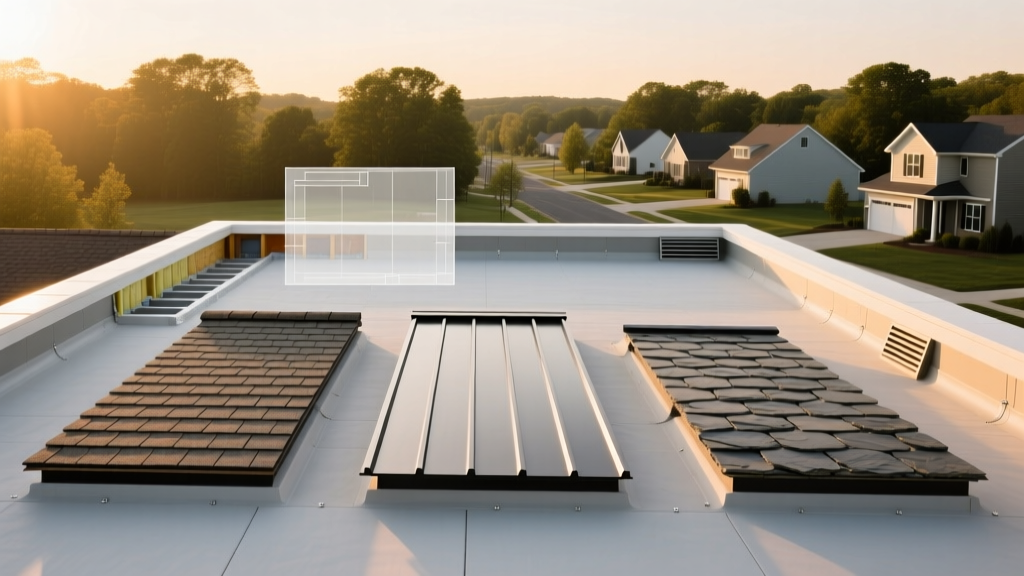
2026 Roofing Material Costs per Square in Columbia, MD
Estimating a roof replacement in Howard County requires accounting for local supply chain dynamics, regional contractor demand, and Maryland's specific building codes. In 2026, the baseline material costs for residential roofing in Columbia, MD, are priced per "square" (100 square feet). The figures below represent material-only costs before tear-off, disposal, and installation labor.
| Material Type | Top Local Brand/Model | Material Cost (Per Square) | Expected Lifespan |
|---|---|---|---|
| Architectural Asphalt | GAF Timberline HDZ | $135 - $175 | 25 - 30 Years |
| Premium Designer Shingles | Owens Corning Duration SURENail | $210 - $280 | 30 - 40 Years |
| Standing Seam Metal | 24-Gauge Galvalume Steel | $950 - $1,350 | 50+ Years |
| Synthetic Slate | DaVinci Multi-Width Slate | $1,250 - $1,600 | 50+ Years |
| EPDM Rubber (Flat/Low-Slope) | Carlisle 60-mil Reinforced EPDM | $480 - $650 | 25 - 30 Years |
Howard County Labor Rates and Permit Requirements
Material costs only tell half the story. Columbia's roofing labor market commands a premium due to the high cost of living in the Baltimore-Washington corridor and strict local insurance requirements for contractors. Expect to pay between $250 and $425 per square for professional installation, which includes tear-off of one existing layer, hauling, and basic decking repair.
For a standard 2,000-square-foot home (20 squares), total installed costs in 2026 typically range from $9,500 to $13,500 for architectural asphalt, and $24,000 to $35,000 for standing seam metal. Furthermore, the Howard County Department of Inspections, Licenses, and Permits mandates that a building permit is required if you are altering the structural roof decking or changing the roofing material type (e.g., switching from asphalt to heavy synthetic slate, which requires structural engineering verification).
Maryland law requires all home improvement contractors to be licensed by the Maryland Home Improvement Commission (MHIC). If a Columbia contractor offers a cash-only deal without a permit, you risk voiding your homeowner's insurance coverage for future roof leaks and facing county stop-work orders.
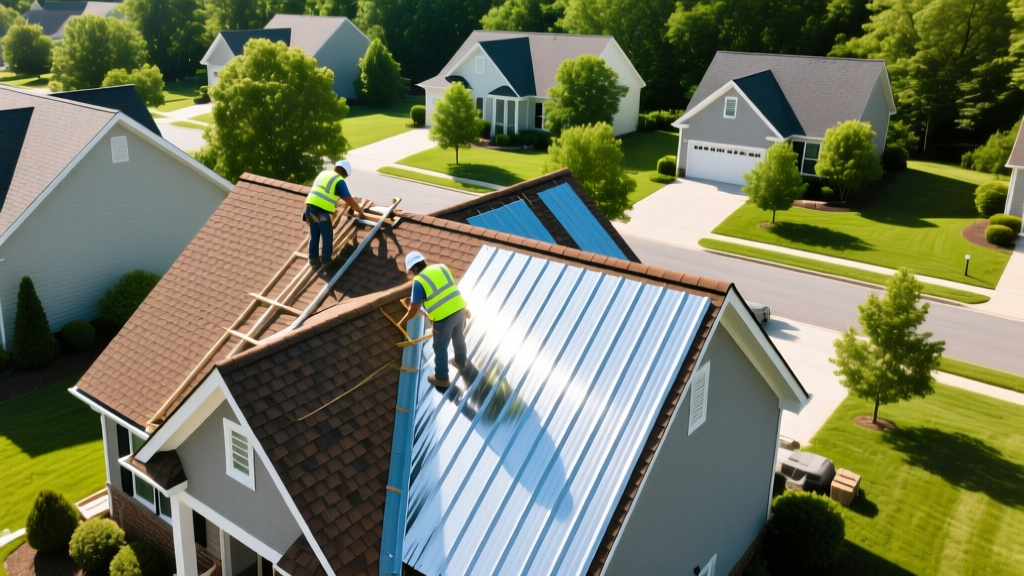
Climate-Driven Upgrades for Maryland Weather
Columbia experiences a humid subtropical climate with freezing winter snaps and heavy summer thunderstorms. Standard national roofing practices often fail here without specific localized upgrades. When reviewing your material list, ensure these three components are explicitly included:
- Ice and Water Shield: Per Maryland building code adaptations of the IRC, a self-adhering polymer-modified bitumen membrane (such as Grace Ice & Water Shield HT) must be installed along the eaves. It must extend at least 24 inches past the interior warm wall line to prevent ice dam water intrusion during February freezes.
- Synthetic Underlayment: Reject traditional #15 asphalt felt paper. High summer humidity in Howard County can cause felt to wrinkle and telegraph through shingles. Demand a high-traction synthetic underlayment like GAF TigerPaw or Owens Corning ProArmor.
- Corrosion-Resistant Fasteners: For metal roofing or coastal-adjacent areas experiencing driving rain, specify 304 or 316 stainless steel fasteners rather than standard galvanized nails to prevent rust streaking and premature pull-through.
Material Suitability Matrix for Columbia Architecture
Columbia's master-planned development features distinct architectural eras, from 1970s contemporary homes with low-slope roofs to traditional colonial builds in villages like Harper's Choice and Oakland Mills. Matching the material to the architectural style and roof pitch is critical for both aesthetics and warranty validity.
Contemporary and Low-Slope Homes (2:12 to 4:12 Pitch)
Many mid-century modern and contemporary homes in Columbia feature low-pitch roofs. Standard asphalt shingles are strictly prohibited by manufacturers on pitches below 4:12 due to capillary action and wind-driven rain. For these structures, fully adhered 60-mil EPDM rubber or mechanically fastened TPO membranes are the only viable options. Expect to pay $8.50 to $12.00 per square foot fully installed for a commercial-grade low-slope system adapted for residential use.
Traditional Colonials and Steep-Pitch Roofs (6:12+ Pitch)
For steep-pitch colonials, GAF Timberline HDZ architectural shingles remain the dominant choice due to their high wind warranty (up to 130 mph) and StrikeZone nailing area, which reduces installation errors during high-wind spring storms. For luxury builds or historic restorations, synthetic slate provides the aesthetic of natural slate without requiring expensive structural reinforcement to support the immense dead load of real stone.
Evaluating Your Roofing Quote: The 5-Point Checklist
Do not accept a one-page estimate. A professional Columbia roofing contractor must provide a detailed scope of work. Verify your quote includes these exact specifications:
- Decking Inspection Clause: The quote must state a per-sheet cost (typically $65 - $95 per 4x8 sheet of CDX plywood or OSB) for replacing rotted decking discovered after tear-off.
- Ventilation Calculation: Proper attic ventilation is required to validate shingle warranties. The quote should specify the installation of a continuous ridge vent (e.g., ShingleVent II) paired with intake soffit vents to achieve a 1:150 net free ventilation area ratio.
- Flashing Specifications: Verify that all step flashing and chimney counter-flashing will be replaced with new 26-gauge galvanized steel or aluminum. Reusing old flashing is a primary cause of post-installation leaks.
- Drip Edge and D-Style Metal: Ensure code-compliant aluminum drip edge is listed for the eaves and rakes to protect the underlying wood fascia from water rot.
- Waste Disposal: The contract must explicitly include the cost of a dump trailer or dumpster and daily magnetic sweeping of the property to remove hidden roofing nails.
Frequently Asked Questions
Are "cool roof" coatings worth the investment in Maryland?
While the EPA Cool Roofs guide highlights energy savings, highly reflective cool roof coatings are most beneficial on flat or low-slope commercial buildings. For steep-slope residential homes in Columbia, choosing architectural shingles with reflective granules (like the Owens Corning Duration Premium COOL line) offers a better balance of summer heat reduction and winter solar heat gain, which helps lower heating bills during Maryland's cold winters.
How long does a typical roof replacement take in Howard County?
For an average 20-to-25-square asphalt shingle roof, a licensed crew of 5 to 7 installers will complete the tear-off, decking repair, and installation in 1.5 to 2.5 days. Metal roofing installations or synthetic slate projects require specialized fabrication and precision flashing, extending the timeline to 5 to 8 days.
Does my homeowner's insurance cover roof replacement?
Insurance will only cover a roof replacement if the damage is caused by a sudden, covered peril, such as a microburst, hail, or a falling tree limb. Insurance adjusters will not pay for a roof that has simply reached the end of its 25-year lifespan due to normal thermal expansion, UV degradation, and wear. Always request a detailed photo report from your contractor before filing a claim to prove sudden damage.
Written by
James ThorntonJames Thornton is a construction industry veteran with 25 years of hands-on experience in wood framing, lumber grading, and residential building codes. He started as a framing carpenter in rural Oregon, earned his ICC Residential Building Inspector certification, and eventually became a senior plan reviewer for the City of Portland Bureau of Development Services. James holds a B.S. in Wood Science & Technology from Oregon State University and is a certified lumber grader through the West Coast Lumber Inspection Bureau (WCLIB). He has inspected over 3,000 residential construction sites and authored the city's internal guide on advanced framing techniques (2x6 at 24" O.C.). James lives in Bend, OR, where he builds custom timber-frame cabins and competes in lumberjack sports.
More from James Thornton
View all
Insulation
Best Home Insulation Materials: Complete 2026 Guide
Compare top home insulation materials for 2026. Find R-values, installed costs per square foot, and best uses for fiberglass, spray foam, and mineral wool.
Aug 4, 2026

Sustainable Building
Certify Your Green Building Material for LEED and WELL
Step-by-step guide to certifying a green building material for LEED v5 and WELL v2. Master EPDs, HPDs, and VOC limits for 2026 project specifications.
Aug 4, 2026

Stone & Masonry
Veneer Stacked Stone Panels: Interior Design & Style Showcase
Discover how veneer stacked stone panels transform interiors. Explore modern design profiles, material pairings, and technical installation specs.
Aug 4, 2026