What Is the Longest Lasting Roof Material for Your Climate Zone?
Discover the longest lasting roof material for your specific climate zone. Compare slate, metal, clay, and synthetic options with 2026 pricing.
The Myth of a Universal Longest Lasting Roof Material
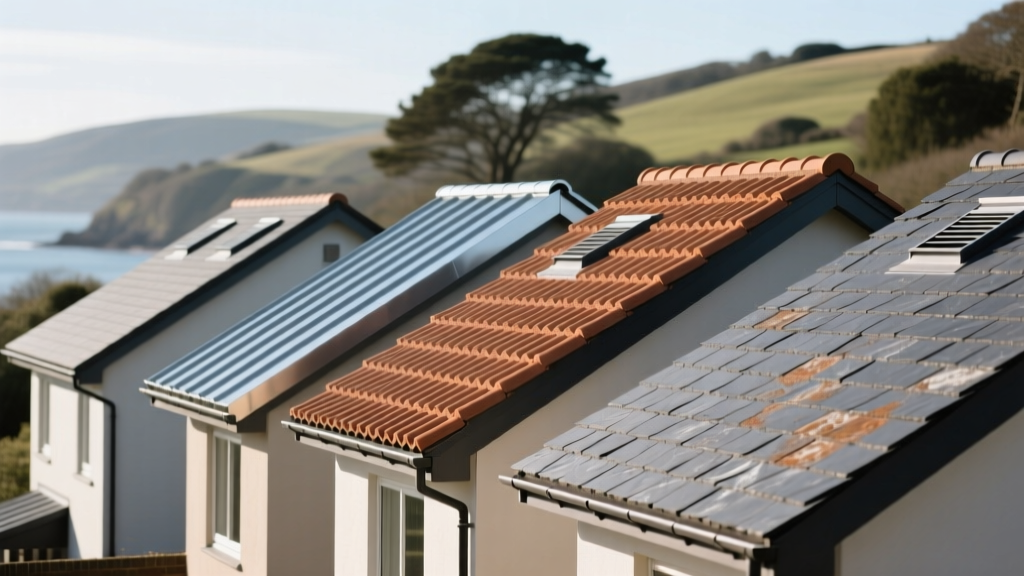
Homeowners searching for the longest lasting roof material often encounter a misleading marketing claim: that one product outlasts all others universally. In reality, material longevity is inextricably linked to regional climate stressors. A natural slate roof that survives 150 years in a dry, temperate zone will delaminate and shatter in two decades if subjected to the severe hail of Tornado Alley. Similarly, a clay tile system that thrives in the arid Southwest will suffer catastrophic spalling if installed in a region with frequent freeze-thaw cycles.
According to the National Roofing Contractors Association (NRCA), selecting a roof requires evaluating local weather extremes—specifically wind uplift, thermal shock, impact resistance, and moisture intrusion—rather than relying solely on manufacturer lifespan warranties. This guide breaks down the most durable roofing systems by specific climate zones, providing exact material specifications, failure modes, and 2026 installation costs.
Climate Zone Matrix: Matching Material to Environment
The table below maps premium roofing materials to their ideal environments, highlighting the primary environmental threats that dictate their actual lifespan.
| Material | Ideal Climate Zone | Hostile Climate Zone | Expected Lifespan | Primary Failure Mode |
|---|---|---|---|---|
| Natural Slate | Northeast / Temperate | Great Plains (Hail) | 100–150+ Years | Impact shattering; delamination in freeze-thaw |
| Standing Seam Metal | Heavy Snow / High Wind | Coastal Salt-Spray | 50–70 Years | Galvanic corrosion; cosmetic hail denting |
| Clay / Concrete Tile | Hot / Arid (Southwest) | Midwest (Freeze-Thaw) | 75–100 Years | Spalling; structural sagging from weight |
| Synthetic Slate | Hail / Temp Swings | Extreme UV (Uncoated) | 50–75 Years | UV degradation; thermal expansion warping |
| Aluminum Shingles | Coastal / Hurricane | Heavy Hail Zones | 50–60 Years | Severe denting; fastener back-out in high wind |
Deep Dive: Top Contenders by Climate
Hot & Arid (Southwest US): Clay & Concrete Tile
In regions like Arizona, Nevada, and Southern California, the longest lasting roof material is undoubtedly fired clay tile. Brands like Ludowici and Boral Roofing produce tiles that inherently resist UV degradation and provide exceptional thermal mass, reducing cooling loads by up to 20% compared to asphalt.
- Specification: Look for Grade 1 clay tile per ASTM C1167, which mandates a water absorption rate of less than 3%. This low porosity is what prevents the tile from degrading over decades of sun exposure.
- Installation Detail: Tiles must be installed over a minimum 5/8-inch CDX plywood deck with a self-adhering ice and water shield (e.g., Grace Ice & Water Shield HT) rather than standard felt, as the underlayment will bake at temperatures exceeding 180°F beneath the tiles.
- 2026 Cost: $22 to $35 per square foot installed. The high cost reflects the specialized labor required to properly flash valleys and ridges without relying on excessive polyurethane foam adhesives, which degrade in high UV.
Heavy Snow & High Wind (Northeast/Midwest): Standing Seam Metal
For areas accumulating 40+ inches of snow annually and experiencing winter gales, a 24-gauge Galvalume standing seam metal roof is the optimal choice. Unlike exposed-fastener corrugated metal, standing seam panels (such as Petersen PAC-CLAD or ATAS International) utilize concealed clips that allow the metal to expand and contract thermally without compromising the weather seal.
- Specification: Require a 2-inch mechanical lock seam for wind uplift resistance up to 140 mph (UL 580 Class 90). The Galvalume coating (ASTM A792) provides sacrificial zinc-aluminum corrosion protection that outlasts standard galvanized steel by decades.
- Snow Management: Metal roofs shed snow rapidly. You must install staggered pad-style snow guards (e.g., S-5! color-matched guards) above all eaves, entryways, and lower roof intersections to prevent dangerous snow avalanches that can destroy gutters and injure pedestrians.
- 2026 Cost: $16 to $26 per square foot installed. Labor premiums apply for complex roof geometries with multiple valleys or dormers, as every penetration requires custom-fabricated flashings.
Hail & Extreme Temp Swings (Great Plains): Synthetic Slate
Natural slate and clay tile fail catastrophically in Tornado Alley and the Great Plains due to 2-inch+ hailstones. Here, the longest lasting roof material is high-end synthetic slate, specifically engineered from virgin resins and impact modifiers. DaVinci Roofscapes and Euroshield (recycled rubber) dominate this sector.
- Specification: Demand a Class 4 Impact Rating per UL 2218. This means the material survives a 2-inch steel ball dropped from 20 feet without cracking. DaVinci’s Multi-Width Slate achieves this while maintaining a Class A fire rating and a 110 mph wind warranty.
- The Insurance Advantage: Installing a Class 4 impact-resistant roof often qualifies homeowners for a 15% to 30% discount on the wind and hail portion of their property insurance premiums, significantly offsetting the upfront material cost over time.
- 2026 Cost: $15 to $22 per square foot installed. While cheaper than natural slate, it remains a premium investment compared to architectural asphalt shingles.
Coastal & Salt-Spray (Southeast/Atlantic): Aluminum Standing Seam
Steel-based roofing systems, even those with heavy Galvalume coatings, will eventually succumb to galvanic corrosion in salt-air environments within 1,500 feet of the ocean. For coastal longevity, aluminum is the mandatory substrate.
- Specification: Use 0.032-inch or 0.040-inch aluminum panels with a Kynar 500 (PVDF) fluoropolymer paint finish. Aluminum naturally forms a protective oxide layer when exposed to salt, preventing the red rust that destroys steel panels.
- Fastener Warning: The FEMA Home Builder’s Guide to Coastal Construction strictly warns against mixing dissimilar metals. Using steel screws to fasten aluminum panels will cause rapid galvanic corrosion. Installers must use stainless steel (Series 300) or aluminum fasteners with neoprene washers.
- 2026 Cost: $20 to $30 per square foot installed. Aluminum material costs are roughly 25% higher than steel, and coastal labor rates command a premium.
Structural Prerequisites: The Hidden Dealbreaker
Before selecting the longest lasting roof material based on climate, you must verify your home’s structural capacity. Natural slate weighs between 800 and 1,200 pounds per square (100 sq. ft.), and clay tile weighs 600 to 900 pounds per square. Standard residential roof trusses are typically engineered for a dead load of just 10 to 15 pounds per square foot (equivalent to asphalt shingles). Installing slate or tile without a structural engineer’s assessment and subsequent truss reinforcement (sistering joists or adding load-bearing walls) will result in severe roof sagging, drywall cracking, and potential catastrophic collapse under winter snow loads.
If your home cannot support the dead load of natural slate or clay, synthetic alternatives (weighing 300 to 400 lbs per square) or standing seam metal (weighing 100 to 150 lbs per square) provide the same aesthetic and longevity without requiring thousands of dollars in structural retrofitting.
Evaluating the FORTIFIED Roof Standard
Regardless of the material chosen, longevity is ultimately dictated by installation quality. The Insurance Institute for Business & Home Safety (IBHS) developed the FORTIFIED Roof standard, which goes beyond local building codes to ensure survival in extreme weather. Key FORTIFIED requirements that extend roof life include:
- Sealed Roof Deck: Taping all plywood seams with a minimum 4-inch wide self-adhering polymer-modified bitumen tape (e.g., Zip System tape) before applying underlayment. This prevents water intrusion if the outer roofing material is blown off during a hurricane.
- Ring-Shank Nails: Using 8d ring-shank nails (rather than smooth shank) to secure the roof decking to the trusses, doubling the uplift resistance.
- Edge Metal Upgrades: Installing a continuous metal drip edge and a sealed peel-and-stick membrane at the eaves and rakes to prevent wind-driven rain from lifting the starter course.
Expert Verdict: How to Choose
There is no single longest lasting roof material; there is only the most appropriate material for your specific environmental stressors. If you live in a hot, arid climate with minimal freeze-thaw cycles, invest in Grade 1 clay tile. If you face heavy snow and high winds, specify a 24-gauge Galvalume standing seam system with mechanical locks. For hail-prone regions, a Class 4 synthetic slate offers the best balance of impact resistance and structural feasibility. Always prioritize the underlayment system and fastener specifications, as a premium exterior material will fail prematurely if the secondary water barrier and attachment methods are compromised.
Written by
David NakamuraDavid Nakamura is a licensed architect (AIA) and construction technology writer focused on sustainable building methods, mass timber engineering, and high-performance building envelopes. He holds a Master of Architecture from the University of Washington and is a certified Passive House Consultant (CPHC). David spent eight years at the Seattle firm Mithun, where he led the design of three LEED Platinum projects, before founding his own practice specializing in net-zero residential design. He serves on the editorial advisory board of GreenBuilder Magazine and has authored peer-reviewed papers on cross-laminated timber (CLT) connections for the Journal of Structural Engineering. In his spare time, David teaches woodworking at Pratt Fine Arts Center and kayaks the Puget Sound.
More from David Nakamura
View all
Construction Cost
Labor Cost to Build a Deck Per Sq Ft: 2026 Installation Guide
Discover the exact labor cost to build a deck per sq ft in 2026. This installation guide breaks down contractor rates, complexity factors, and hidden fees.
Aug 4, 2026

Construction Cost
How Much Does It Cost to Build a 3 Bedroom House? Financing Guide
Learn exactly how much it costs to build a 3 bedroom house and explore 2026 financing options, construction loan types, and budget frameworks for your build.
Aug 4, 2026

Construction Cost
Cost to Build a Tennis Court: 2026 Guide
How much does it cost to build a tennis court in 2026? Breakdowns for asphalt, concrete, and synthetic surfaces plus fencing and lighting.
Jul 30, 2026