Different Types of Roofing Materials for Specific Climates
Compare different types of roofing materials for hot, cold, coastal, and humid climates. Expert 2026 guide on costs, specs, and climate failure modes.

The Climate-Material Matrix: Why Geography Dictates Roof Performance
A roofing system that delivers a 50-year lifespan in the arid Southwest may suffer catastrophic failure in just 12 years if installed in the freeze-thaw cycles of the Northeast. When evaluating the different types of roofing materials, the primary variable is not just aesthetic preference or initial budget, but the specific thermodynamic and meteorological stresses of your microclimate. UV radiation, thermal shock, wind uplift, and moisture intrusion demand entirely different material chemistries and installation methodologies.
This guide bypasses generic material overviews to provide a climate-specific engineering framework, detailing exact product specifications, 2026 installation costs, and the hidden failure modes that occur when materials are mismatched with their environment.
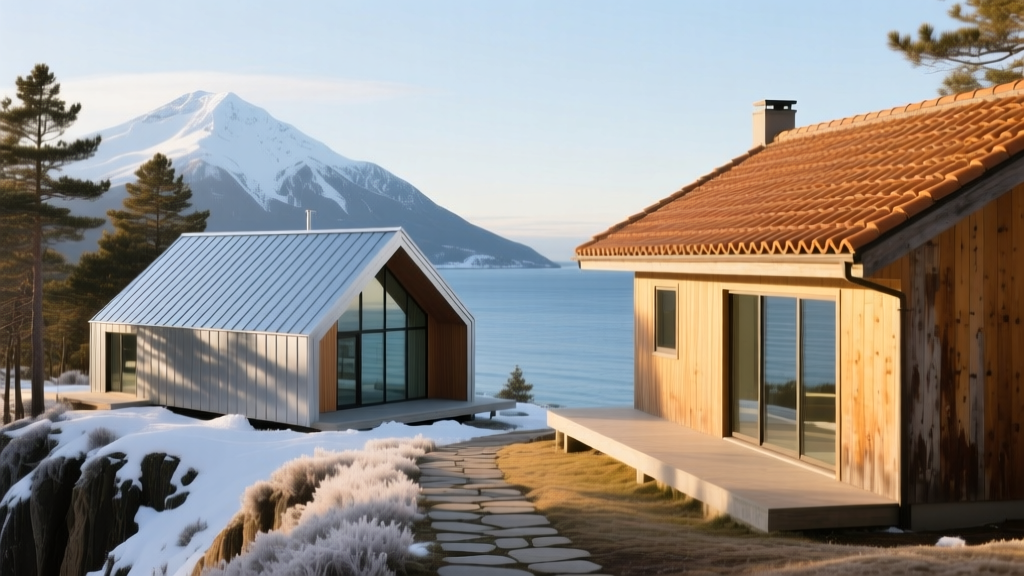
Hot & Arid Climates: Mitigating UV Degradation and Thermal Shock
In regions with intense, year-round solar exposure (e.g., Arizona, Nevada, Southern California), roofing materials face two primary enemies: ultraviolet (UV) radiation breaking down chemical bonds, and extreme diurnal temperature swings causing thermal expansion and contraction.
Optimal Materials and Specifications
- Clay and Concrete Tile: Brands like Ludowici or Boral offer exceptional thermal mass. The air gap created by the tile batten system allows passive ventilation, reducing attic heat transfer by up to 40%.
- Reflective Metal Roofing: Standing seam panels coated with Kynar 500® or Hylar 5000® PVDF resin. To meet the Department of Energy's Cool Roof standards, specify a Solar Reflectance Index (SRI) of 50 or higher for steep-slope roofs, and 78+ for low-slope applications.
- Cool Roof Coatings: For flat or low-slope commercial structures, silicone-based coatings like Henry 887 Tropi-Cool reflect up to 90% of the sun's rays and resist ponding water degradation.
High-Wind & Hurricane-Prone Zones: Engineering for Uplift Resistance
Coastal regions and hurricane alleys (Southeast US, Gulf Coast) require materials tested against extreme wind uplift and impact from airborne debris. The benchmark for these zones is the FORTIFIED Home standard, which dictates strict fastening patterns and perimeter sealing.
Optimal Materials and Specifications
- Stone-Coated Steel: Systems like Decra or Gerard interlock laterally and vertically, creating a continuous membrane capable of withstanding 120+ mph winds without the tear-off vulnerability of asphalt.
- High-Wind Architectural Shingles: If using asphalt, you must specify Class H (150 mph) rated shingles, such as GAF Timberline UHDZ. Crucially, installation requires a 6-nail pattern per shingle (rather than the standard 4-nail) and a 1.5-inch ring-shank roofing nail to penetrate the roof decking.
- Miami-Dade NOA Compliance: Any material installed in High-Velocity Hurricane Zones (HVHZ) must possess an active Miami-Dade Notice of Acceptance (NOA), verifying it has passed large missile impact testing (ASTM D7158).
Heavy Snow & Freeze-Thaw Cycles: Combating Ice Dams and Spalling
Northern climates and mountainous regions subject roofs to massive dead loads from snow accumulation and the destructive mechanics of ice damming. When attic heat melts the bottom layer of snow, water runs down to the unheated eaves, refreezes, and backs up under the roofing material.
Optimal Materials and Specifications
- Standing Seam Metal: The gold standard for snow country. The continuous, raised seams eliminate horizontal laps where ice can force water upward. Furthermore, the slick surface facilitates snow shedding. Specification: Always install engineered snow guards to prevent catastrophic avalanche-style snow slides over entryways.
- Synthetic Slate: Products like DaVinci Roofscapes or Euroshield (recycled rubber) offer the impact resistance needed for heavy hail and the freeze-thaw durability that natural slate and porous clay tiles lack.
High Humidity & Heavy Rainfall: Preventing Biological Growth and Rot
The Pacific Northwest and the Deep South feature prolonged moisture retention, high humidity, and dense canopy cover. The primary threat here is biological: Gloeocapsa magma (blue-green algae), moss, and wood-decaying fungi.
Optimal Materials and Specifications
- Algae-Resistant Asphalt Shingles: Specify shingles infused with copper or zinc granules, such as Owens Corning Duration with StreakGuard. The copper ions leach out slowly with rainfall, creating a toxic environment for algae spores.
- Galvalume or Aluminum Metal: Aluminum is highly preferred in coastal humid zones because it naturally forms an oxide layer that prevents saltwater corrosion, unlike standard galvanized steel which will rust at the cut edges.
2026 Cost & Lifespan Comparison Matrix by Climate
The following matrix outlines the realistic financial and performance expectations for premium roofing systems tailored to specific environmental stressors. Costs reflect 2026 national averages for fully installed systems, including tear-off and disposal.
| Climate Zone | Optimal Material | Expected Lifespan | 2026 Installed Cost (per sq. ft.) | Critical Spec to Demand |
|---|---|---|---|---|
| Hot / Arid | Clay / Concrete Tile | 50 - 100 Years | $14.00 - $24.00 | SRI 50+ Cool Roof Rating |
| Hurricane / High Wind | Stone-Coated Steel | 40 - 70 Years | $12.00 - $18.00 | Miami-Dade NOA / Class 4 Impact |
| Heavy Snow / Freeze | Standing Seam Metal | 50+ Years | $13.00 - $21.00 | HT (High-Temp) Ice & Water Shield |
| Humid / High Rainfall | Copper-Infused Asphalt | 30 - 40 Years | $5.50 - $8.50 | Algae-Resistant Copper Granules |
Real-World Failure Modes: The Cost of Mismatching
Understanding how roofs fail in the wrong environment is just as critical as knowing what to buy. Here are three common, expensive mistakes made by contractors who ignore climate-specific engineering:
1. The Exposed Fastener Failure in Snow Zones
Using exposed-fastener corrugated metal (like standard agricultural pole-barn panels) on residential homes in freeze-thaw climates is a major liability. As the metal expands and contracts wildly between summer heat and winter freezes, the screws work themselves loose, compromising the neoprene washers and guaranteeing leaks within 5 to 8 years. Standing seam's concealed clip system allows the metal to float and expand without breaking the waterproof seal.
2. Porous Tile Spalling in Northern Climates
Clay and concrete tiles are highly porous. If installed in regions with frequent freezing temperatures without being sealed or rated for freeze-thaw, water absorbs into the tile matrix. When temperatures drop, the water expands by 9%, causing the face of the tile to literally explode off (spalling) or crack entirely.
3. The EPDM Heat Island Effect
Black EPDM rubber membranes are standard for flat roofs in cold climates because they absorb heat to melt snow. However, installing black EPDM in the Southwest without a reflective topcoat accelerates the breakdown of the rubber polymers, leading to alligatoring and premature membrane failure. The EPA notes that utilizing cool roofing strategies in hot climates is essential not just for building efficiency, but for material longevity.
Actionable Framework: Selecting Your Roofing System
Follow this sequence before signing any roofing contract to ensure your material choice is structurally and financially sound for your specific geography:
- Pull Local ASCE 7-22 Wind Speeds: Check your local building department for the updated ultimate design wind speed (Vult). If you are in a 115+ mph zone, mandate a 6-nail pattern and ring-shank fasteners in the contract.
- Verify the Underlayment Chemistry: The shingles or metal panels are only half the system. Specify synthetic underlayment (like GAF TigerPaw) for high-wind and humid zones due to its tear strength and breathability, and self-adhering bitumen for the first 3-6 feet of the eaves in snow zones to block ice dam backup.
- Calculate the Pitch Penalty: If your roof pitch is below 4:12, standard shingles and tiles are voided by the manufacturer. You must pivot to low-slope systems like TPO, PVC, or double-lock standing seam metal with soldered seams.
- Demand the Warranty Transfer: Ensure the manufacturer's warranty explicitly covers your specific climate zone. Some manufacturers void warranties for algae damage in the Deep South unless their specific proprietary copper-infused product line was used.
Written by
Priya KapoorPriya Kapoor is a real estate market analyst and construction economics researcher with expertise in housing affordability, development feasibility, and infrastructure investment. She holds a Master of Regional Planning from Cornell University and previously worked as a senior analyst at CBRE's Investment Properties group, where she modeled returns for $4B in mixed-use development pipelines. Priya now runs an independent research practice advising developers, municipalities, and REITs on construction cost forecasting and market timing. She publishes the quarterly "BuildMat Market Pulse" report tracking material price indices across 12 commodity categories. Based in Austin, TX, Priya serves on the board of Habitat for Humanity Austin and is a marathon runner.
More from Priya Kapoor
View all
Construction Cost
Cost to Build a 1600 Sq Ft Home in 2026: Full Breakdown
Accurate 2026 cost to build a 1600 sq ft home—material, labor, and regional pricing breakdowns included. Plan your budget with real-time estimates.
Aug 11, 2026

Wood & Lumber
Name the Types of Wood for Pressure Treatment and Preservation
Learn how to name the types of wood best suited for pressure treatment. Compare species treatability, chemical retention levels, and 2026 preservation costs.
Aug 4, 2026

Stone & Masonry
Stone Veneer Suppliers Lindenhurst: 2026 Cost Analysis
Analyze 2026 stone veneer costs in Lindenhurst, NY. Compare local supplier pricing, delivery fees, and Suffolk County installation labor rates.
Aug 4, 2026