Labor Cost to Build a Roof Over a Deck: Selection Framework
Analyze the labor cost to build a roof over a deck using our selection framework. Compare framing, materials, and tie-in complexity to optimize your budget.
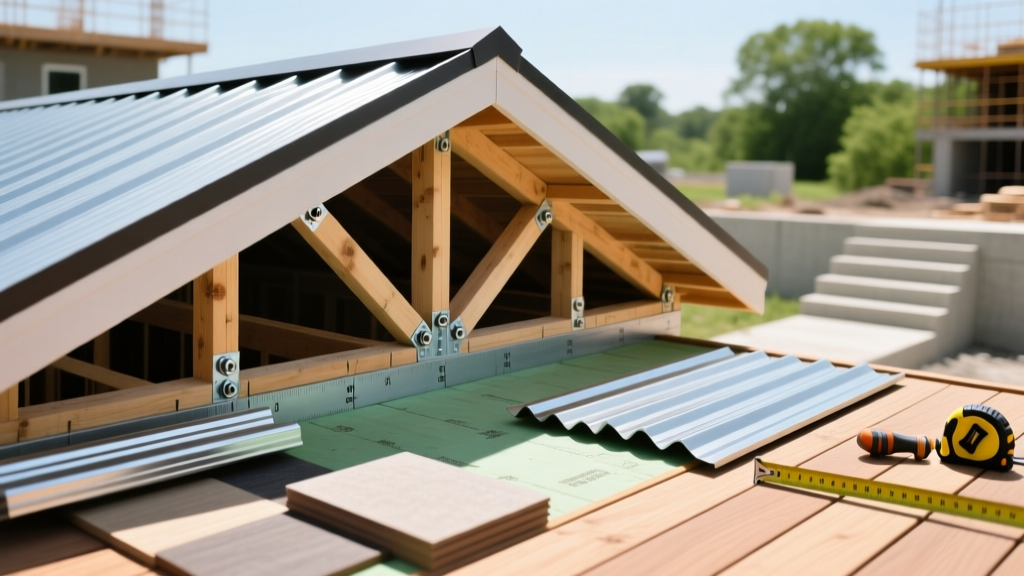
The Core Variables Driving Deck Roof Labor Costs
When calculating the labor cost to build a roof over a deck, the final figure is rarely a simple multiplication of square footage and an hourly rate. Labor expenses typically account for 45% to 65% of the total project budget, ranging from $2,500 to $8,500 for a standard 200-square-foot covered patio. The variance is dictated by a selection framework encompassing structural framing methods, roofing membrane choices, and the complexity of the house tie-in.
Journeyman carpenters and specialized roofers command different rates. According to the U.S. Bureau of Labor Statistics, the mean hourly wage for carpenters hovers around $29.50, but burdened contractor rates (including insurance, overhead, and profit) push the effective cost to the homeowner to $75–$125 per hour. Roofing specialists typically charge $60–$110 per hour. Understanding how your material selections trigger different labor tiers is the first step in controlling costs.
Labor Multipliers by Roof Pitch and Style
The pitch of your deck roof dictates both the framing labor and the allowable roofing materials. Lower pitches require specialized waterproofing labor, while steeper pitches demand more complex rafter cuts and increased safety harnessing time.
| Roof Style / Pitch | Framing Labor Multiplier | Required Skill Level | Primary Labor Sink |
|---|---|---|---|
| Shed / Lean-to (2:12 to 3:12) | 1.0x (Baseline) | Intermediate | Continuous membrane welding / specialized metal seaming |
| Gable (4:12 to 6:12) | 1.4x | Advanced | Ridge beam installation, birdsmouth rafter cuts, gable end siding |
| Hip Roof (4:12+) | 1.8x | Expert | Compound angle cuts, hip rafter layout, jack rafter installation |
| Flat / Low-Slope (Under 2:12) | 1.1x | Specialized | Substrate leveling, tapered insulation installation, EPDM/TPO seaming |
Framing Decisions: Stick-Built vs. Pre-Fabricated Trusses
The most significant labor divergence occurs during the structural framing phase. You must select between traditional stick-framing (cutting rafters and joists on-site) and utilizing pre-fabricated roof trusses.
Stick-Built Framing Labor
Stick-framing requires a skilled carpenter to calculate plumb cuts, heel heights, and birdsmouth notches for every individual rafter. For a 200-square-foot gable roof, expect 40 to 60 man-hours of carpentry labor. This method is highly customizable and ideal for decks with complex geometries, non-square corners, or when matching an existing, irregular house roofline. However, the premium for skilled labor makes this the most expensive framing route.
Pre-Fabricated Truss Labor
Trusses are engineered off-site and delivered as complete triangular assemblies. The on-site labor shifts from precision cutting to heavy lifting. A crew can typically set and brace trusses for a standard deck in 8 to 12 hours. The trade-off is the requirement for a crane or telehandler, which adds $800 to $1,500 in equipment rental costs. If your deck spans more than 12 feet without intermediate support posts, trusses become the economically superior choice due to the massive reduction in skilled carpentry hours.
Never rely solely on lag screws for attaching the deck roof ledger board to the house rim joist. Modern building codes require structural tension ties (such as the Simpson Strong-Tie DTT2Z) to prevent the roof from pulling away from the house under snow or wind loads. Installing these tension ties requires drilling through the interior floor joists and adding 2 to 4 hours of labor, but bypassing this step risks catastrophic structural failure and code violations.
Material Selection Matrix: How Roofing Choices Dictate Labor
Once the framing is complete, the selected roofing material determines the speed and specialized nature of the finishing labor. The International Residential Code (IRC) Chapter 9 strictly governs minimum roof slopes for various materials, forcing labor adaptations if you select a material mismatched to your pitch.
| Roofing Material | Min. Pitch | Labor Hours (per 100 sq ft) | Installation Nuances & Labor Drivers |
|---|---|---|---|
| Asphalt Shingles (Architectural) | 4:12 (2:12 with underlayment) | 4 - 6 hours | Fastest installation. Requires standard roofing nailer. Low skill threshold keeps hourly rates at the lower end ($50-$70/hr). |
| Standing Seam Metal | 3:12 (1:4:12 with special sealant) | 10 - 14 hours | Requires specialized seamers, snips, and precise panel alignment. High skill requirement pushes labor rates to $85-$120/hr. |
| Corrugated Polycarbonate / PVC | 2:12 | 5 - 8 hours | Fast to lay, but requires meticulous purlin spacing (usually 24" OC) and specialized closure strips to prevent wind-driven rain infiltration. |
| EPDM Rubber Membrane | 1:4:12 | 8 - 12 hours | Requires fully adhered or mechanically fastened substrate (plywood/ISO board). Seam taping and flashing details are highly time-consuming. |
Hidden Labor Sinks: Flashing, Tie-Ins, and Permitting
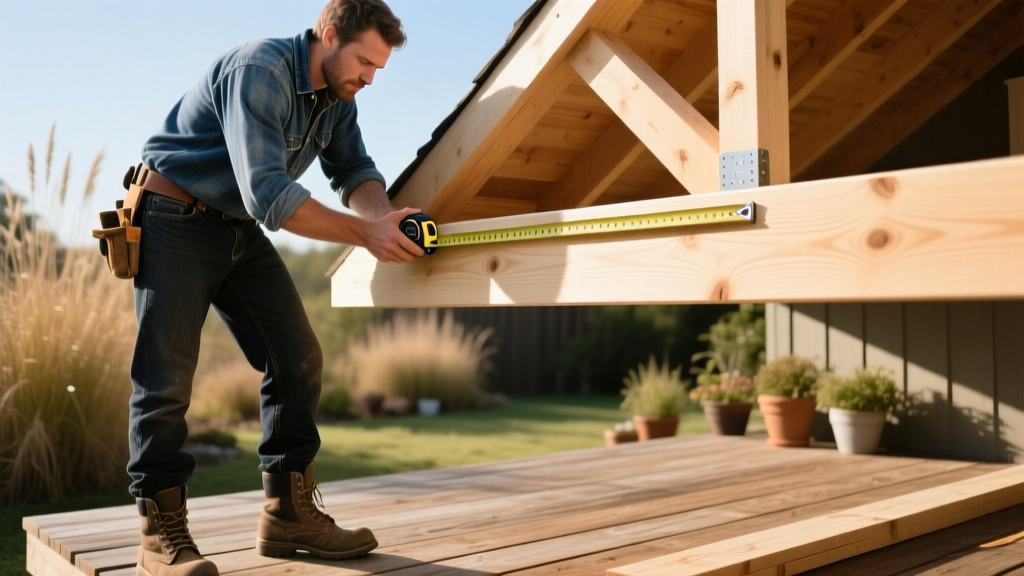
Amateur estimates frequently calculate labor based solely on the deck's footprint, ignoring the integration with the primary residence. The house tie-in is where labor budgets are routinely exceeded.
- Siding Removal and Replacement: To install a proper ledger board and step flashing, the contractor must remove a section of the house siding (vinyl, fiber cement, or wood). This adds 3 to 6 hours of careful demolition and reinstallation labor.
- Step Flashing and Counter-Flashing: If the deck roof ties into a brick or stucco wall, the mason or roofer must grind a reglet (slot) into the masonry to insert counter-flashing. This specialized masonry labor can add $400 to $800 to the project.
- Ice and Water Shield Application: In northern climates, applying self-adhering ice and water protector along the eaves, valleys, and tie-in points requires meticulous surface preparation. Expect this to add 2 to 3 hours of prep labor before the primary roofing material is even unrolled.
- Gutter Integration: Tying the new deck roof's gutter system into the existing house downspouts requires trenching or routing aluminum extensions, adding 2 to 4 hours of finish carpentry and metalwork.
The Selection Framework: Optimizing Your Labor Budget
To minimize the labor cost to build a roof over a deck without sacrificing structural integrity, apply this decision framework during the planning phase:
- Assess the Span: If your deck depth exceeds 12 feet, abandon stick-framing. Select pre-fabricated trusses to eliminate 30+ hours of journeyman carpentry, offsetting the crane rental cost.
- Match Pitch to Material: If you desire a low-slope shed roof (under 3:12) to preserve second-story window sightlines, do not select asphalt shingles. Select a continuous EPDM membrane or standing seam metal. Attempting to force shingles onto a low slope requires double-underlayment labor and voids manufacturer warranties.
- Standardize Fasteners: Specify structural screws (like LedgerLOK or FastenMaster OVG) in your material list. These eliminate the need for pre-drilling pilot holes through thick pressure-treated lumber, saving 10 to 15 minutes per fastener and significantly reducing framing labor time.
- Evaluate the Tie-In Early: Before soliciting bids, identify your house's exterior cladding. If you have masonry or complex architectural shingles, seek contractors who employ in-house flashing specialists rather than those who sub-contract the tie-in, which inherently adds a profit margin markup on the specialized labor.
By treating labor not as a fixed commodity but as a variable driven by your structural and material selections, you can accurately forecast costs and select the optimal configuration for your specific property constraints.
Written by
Priya KapoorPriya Kapoor is a real estate market analyst and construction economics researcher with expertise in housing affordability, development feasibility, and infrastructure investment. She holds a Master of Regional Planning from Cornell University and previously worked as a senior analyst at CBRE's Investment Properties group, where she modeled returns for $4B in mixed-use development pipelines. Priya now runs an independent research practice advising developers, municipalities, and REITs on construction cost forecasting and market timing. She publishes the quarterly "BuildMat Market Pulse" report tracking material price indices across 12 commodity categories. Based in Austin, TX, Priya serves on the board of Habitat for Humanity Austin and is a marathon runner.
More from Priya Kapoor
View all
Construction Cost
Cost to Build a 1600 Sq Ft Home in 2026: Full Breakdown
Accurate 2026 cost to build a 1600 sq ft home—material, labor, and regional pricing breakdowns included. Plan your budget with real-time estimates.
Aug 11, 2026

Wood & Lumber
Name the Types of Wood for Pressure Treatment and Preservation
Learn how to name the types of wood best suited for pressure treatment. Compare species treatability, chemical retention levels, and 2026 preservation costs.
Aug 4, 2026

Stone & Masonry
Stone Veneer Suppliers Lindenhurst: 2026 Cost Analysis
Analyze 2026 stone veneer costs in Lindenhurst, NY. Compare local supplier pricing, delivery fees, and Suffolk County installation labor rates.
Aug 4, 2026