GAF Timberline Shingles: Performance Specs & Wind Ratings Analyzed
Analyze GAF Timberline shingles performance specs, including HDZ and UHDZ wind ratings, impact resistance, and warranty requirements for installations.
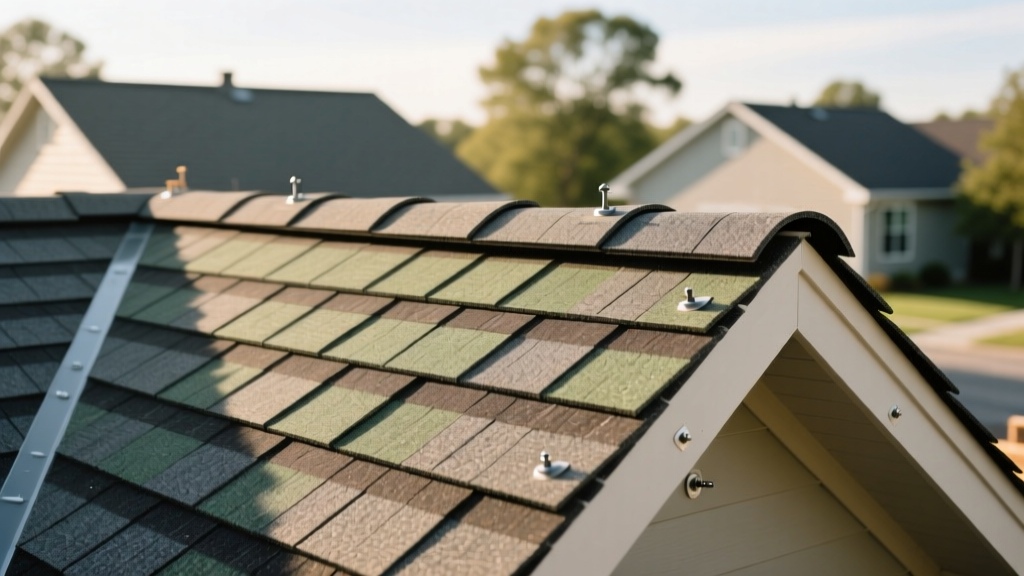
Decoding the GAF Timberline Shingle Lineup
The GAF Timberline series dominates the North American residential roofing market, but treating all Timberline shingles as identical is a critical specification error. As of 2026, the lineup is segmented into distinct performance tiers, each engineered with specific asphalt formulations, mat weights, and dimensional profiles. Understanding the exact material science behind these tiers is mandatory for architects, roofers, and homeowners targeting specific wind, impact, and longevity benchmarks.
The transition from the legacy Timberline Natural Shadow to the current Timberline HDZ (High Definition Zoning) and UHDZ (Ultra High Definition Zoning) models represents a shift from standard oxidized asphalt to advanced polymer-modified formulations in select tiers. While HDZ relies on a heavy-weight fiberglass mat coated with refined asphalt and ceramic granules, the premium tiers incorporate proprietary shadow-line engineering and enhanced sealant strips.
Critical Performance Ratings: Wind, Fire, and Impact
Evaluating asphalt shingles requires looking past marketing terminology and examining the underlying ASTM (American Society for Testing and Materials) test results. The Timberline lineup achieves varying certifications based on the specific model selected.
Wind Resistance and the WindProven Limited Warranty
Standard architectural shingles typically carry a 130 mph wind rating per ASTM D7158. However, GAF's Timberline HDZ and UHDZ models feature LayerLock technology—a proprietary mechanical micro-seal that fuses the shingle layers together during manufacturing—combined with a 600% wider nailing area known as the StrikeZone. When installed as part of a complete GAF Roofing System, these models qualify for the WindProven Limited Wind Warranty, which carries no maximum wind speed limit. This is a significant deviation from industry standards, effectively shifting blow-off liability to the manufacturer provided the installation matrix is strictly followed.
Impact Resistance: Class 4 vs. Standard Formulations
A common misconception in the roofing industry is that all premium architectural shingles offer high impact resistance. Standard Timberline HDZ and UHDZ shingles are not rated for severe hail impact. To achieve a UL 2218 Class 4 impact rating (surviving a 2-inch steel ball dropped from 20 feet without fracturing the fiberglass mat), you must specify Timberline ArmorShield II. This model utilizes an SBS (Styrene-Butadiene-Styrene) polymer-modified asphalt core, which remains pliable in freezing temperatures and absorbs kinetic hail energy rather than shattering like standard oxidized asphalt.
Fire and Algae Resistance Specs
All Timberline models carry a Class A fire rating per ASTM E108, the highest classification for external fire exposure, driven by the non-combustible fiberglass mat and ceramic granule surface. For biological resistance, HDZ features StainGuard Plus (10-year algae warranty), while UHDZ upgrades to StainGuard Plus PRO, utilizing time-release copper capsules engineered to prevent Gloeocapsa magma (blue-green algae) colonization for 25 years.
Technical Callout: The StrikeZone Nailing Area
The StrikeZone is not merely a painted line; it is a precision-engineered 1.5-inch continuous sealant strip. Independent testing by the Insurance Institute for Business & Home Safety (IBHS) indicates that missed nails are the primary cause of shingle blow-offs in high-wind events. The StrikeZone's expanded dimensions yield up to 99.9% nailing accuracy, drastically reducing the risk of high-nail or low-nail penetrations that compromise the shingle's pull-through resistance and void the wind warranty.
Dimensional Specifications and Coverage Data
Accurate material estimation and structural load calculations require precise dimensional data. The following matrix outlines the core physical specifications for the primary Timberline models available in 2026.
| Specification | Timberline HDZ | Timberline UHDZ | ArmorShield II (IR) |
|---|---|---|---|
| Profile / Architecture | Standard Dimensional | Ultra-Dimensional (Dual Shadow) | Dimensional (SBS Modified) |
| Approx. Weight per Square | 240 - 250 lbs | 280 - 300 lbs | 260 - 275 lbs |
| Bundles per Square | 3 | 4 | 4 |
| Exposure (Reveal) | 5 5/8 inches | 5 5/8 inches | 5 5/8 inches |
| Impact Rating (UL 2218) | Not Rated | Not Rated | Class 4 |
| Algae Resistance Warranty | 10 Years (StainGuard Plus) | 25 Years (StainGuard Plus PRO) | 10 Years (StainGuard Plus) |
Warranty Validation: The System Requirement Matrix
GAF's warranty structure is heavily gated by installation protocols. Purchasing Timberline shingles alone only secures the baseline material warranty. To unlock the 50-year non-prorated Golden Pledge warranty—which includes 25 years of workmanship coverage and tear-off costs—the installation must be performed by a GAF Master Elite contractor and include specific accessory components. According to GAF's official Timberline HDZ specifications, the required system matrix includes:
- Leak Barrier: GAF WeatherWatch or StormGuard installed in all valleys, eaves, rakes, and around all penetrations.
- Starter Strip: GAF Pro-Start or WeatherBlocker applied at the eaves and rakes to prevent wind uplift at the critical first course.
- Attic Ventilation: A balanced intake and exhaust system meeting the 1/300 net free ventilation area (NFVA) ratio mandated by the International Residential Code (IRC). Failure to document adequate ventilation is the most common reason for warranty claim denials related to thermal blistering.
- Ridge Cap: GAF TimberTex or Seal-A-Ridge ridge cap shingles (standard 3-tab shingles cut for ridges void the Golden Pledge).
Real-World Failure Modes and Installation Edge Cases
Even with superior manufacturing specs, Timberline shingles are susceptible to specific failure modes when installation parameters deviate from the Asphalt Roofing Manufacturers Association (ARMA) guidelines.
Thermal Cracking and Blistering
When Timberline HDZ or UHDZ shingles are installed over unventilated cathedral ceilings or poorly insulated attic spaces, the underside of the shingle can exceed 160°F. This trapped radiant heat bakes the asphalt from the bottom up, driving off the volatile oils and causing premature thermal cracking. This manifests as horizontal fissures across the shingle tabs, entirely unrelated to the top-surface ceramic granules. Proper intake-to-exhaust ventilation is non-negotiable to preserve the asphalt's plasticity.
Zippering in High-Wind Zones
In coastal or high-wind regions (where basic wind speeds exceed 110 mph per ASCE 7-22), ASTM D7158 mandates a 6-nail pattern per shingle. If roofers default to the standard 4-nail pattern to save time, the shingles lack the sheer pull-through resistance required for the WindProven warranty. During a severe squall, a single lifted shingle creates an aerodynamic scoop effect, leading to a cascading 'zipper' failure that can strip an entire roof plane in minutes.
Shadow Line Distortion
The aesthetic appeal of the UHDZ dual-shadow profile relies on a perfectly planar substrate. If installed over existing wood shakes, uneven skip-sheathing, or warped OSB decking without a leveling underlayment, the thick, rigid UHDZ shingles will bridge the gaps. This creates telegraphing, where the substrate's imperfections distort the shingle's shadow lines, resulting in a wavy, unprofessional appearance that cannot be corrected by the sealant strips.
Expert Verdict: Specifying the Right Timberline Model
Selecting the correct Timberline shingle requires aligning the project's environmental risks with the material's engineered strengths. For standard residential applications in moderate climates, Timberline HDZ provides the optimal balance of cost, wind resistance, and aesthetic depth. For luxury builds where deep, dramatic shadow lines and long-term algae resistance are paramount, the added weight and cost of Timberline UHDZ are justified. However, in hail-prone regions like the Great Plains or Texas Panhandle, specifying standard HDZ or UHDZ is a liability; Timberline ArmorShield II must be mandated to secure Class 4 impact resistance and the associated insurance premium discounts.