Ludowici vs Eagle: Premium Tile Roof Product Lines Compared
Compare Ludowici clay and Eagle concrete tile roof product lines. Explore pricing, weight, wind ratings, and specific models for your 2026 build.
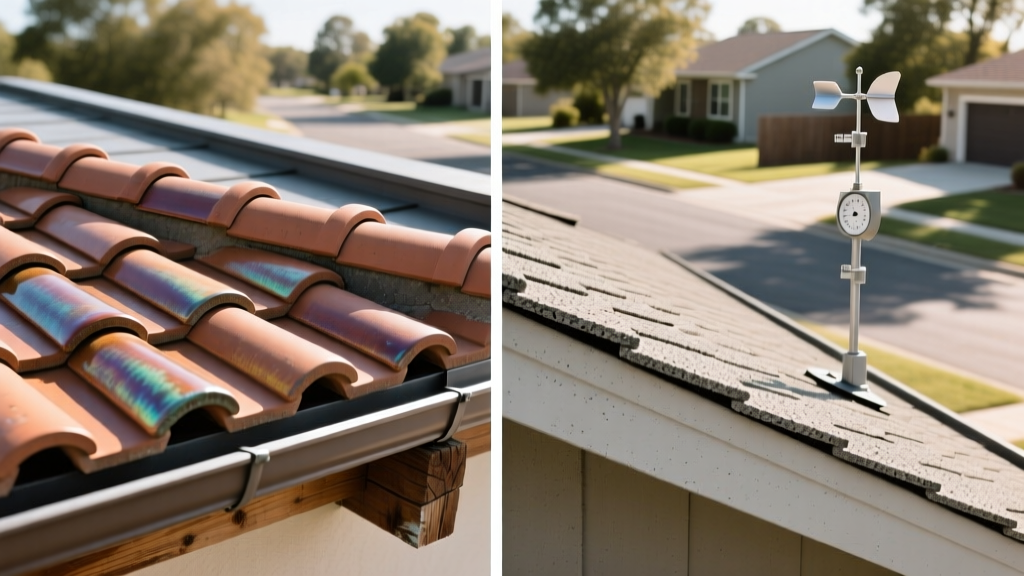
The Material Divide: Clay vs. Concrete in Premium Roofing
When specifying a premium tile roof for high-end residential or commercial projects, architects and builders typically narrow the field to two dominant material categories: kiln-fired clay and extruded concrete. In the North American market, Ludowici and Eagle Roofing Products represent the pinnacle of these respective categories. Selecting between them requires moving beyond basic aesthetics to evaluate dead load implications, wind uplift resistance, long-term color retention, and specific product line capabilities. This deep-dive analyzes the flagship product lines from both manufacturers to provide a concrete decision-making framework for your next build.
Ludowici Clay Tile: Heritage and Product Specifications
Ludowici specializes in architectural terra cotta and clay roofing. Clay tiles are formed from natural clay and fired in a kiln at temperatures exceeding 1,900°F. This vitrification process makes the material virtually impervious to water absorption and entirely UV-stable. Ludowici products comply with ASTM C1167 standards for clay roof tiles, ensuring strict tolerances for dimensional stability and breaking strength.
Flagship Product Lines
- Spanish Barrel (Mission S): The classic one-piece S-curve profile. Weighing approximately 900 lbs per square (100 sq. ft.), it requires a staggered butt layout. Ideal for Mediterranean, Spanish Colonial, and Mission Revival architectures.
- New York Slate (Interlocking): A flat, interlocking profile designed to mimic natural slate without the extreme weight. Weighing 650 lbs per square, it features a concealed side-lock mechanism that drastically reduces the risk of wind-driven rain infiltration.
- Royal Flush: A large-format, flat shingle-style tile that offers a clean, modern aesthetic while maintaining the thermal mass and fire resistance inherent to clay.
Ludowici utilizes ceramic glazes and engobes that are fused into the clay body during firing. Unlike surface-painted materials, the color of a Ludowici clay tile roof will not chalk, peel, or fade from UV exposure over its 75-year warranty period.
Eagle Roofing Products: Concrete Innovation and Profiles
Eagle Roofing Products focuses on high-performance concrete roof tiles. Concrete tiles are manufactured from a dense mixture of Portland cement, sand, and iron oxide pigments, extruded under high pressure. They comply with ASTM C1492 standards. While concrete tiles cure and gain compressive strength over time, they are inherently more porous than clay and rely on factory-applied sealers and acrylic coatings for initial color and water resistance.
Flagship Product Lines
- Bel Air (Flat/Slab): A straight-edge, flat profile that delivers a sleek, contemporary look. Weighing roughly 850 lbs per square, Bel Air is a top choice for modern and mid-century modern retrofits where the look of slate or wood shake is desired.
- Malibu (Medium Barrel): A multi-curve profile that bridges the gap between traditional Spanish barrel and flat slate. It offers excellent water-channeling capabilities and is widely used in Sun Belt developments.
- Monarch (Large Format Flat): Designed for rapid installation, Monarch tiles cover more square footage per piece, reducing labor time on large commercial or multi-family residential roofs.
Concrete tiles can exhibit efflorescence (a white, powdery salt deposit) during the first 12 to 24 months as moisture migrates through the cement matrix. Eagle mitigates this with factory-applied densifiers, but contractors must advise clients that early-stage efflorescence is a natural curing byproduct, not a manufacturing defect.
Head-to-Head Performance Matrix
The following matrix compares the technical specifications of Ludowici's premier clay lines against Eagle's top concrete offerings, referencing data aligned with the Tile Roofing Institute Alliance (TRIA) guidelines.
| Metric | Ludowici (Clay) | Eagle (Concrete) |
|---|---|---|
| Average Weight per Square | 650 - 950 lbs | 750 - 950 lbs |
| Water Absorption Rate | < 3% (Virtually impervious) | 6% - 12% (Requires sealer) |
| Wind Uplift Rating | Up to 150 mph (HVHZ compliant) | Up to 130 mph (Standard clip) |
| Impact Resistance (Class 4) | High (but brittle under point-load) | Very High (fibers add tensile strength) |
| Warranty Coverage | 75-Year Limited | Lifetime Transferable |
| Material Cost (per square) | $650 - $1,200+ | $350 - $600 |
Structural Load and Decking Requirements
The most frequent point of failure in tile roof installations is inadequate structural preparation. Both clay and concrete tile roofs impose a massive dead load compared to asphalt shingles (which average 250 lbs per square). Retrofitting an existing structure from asphalt to tile requires a licensed structural engineer to verify truss capacity.
Truss and Framing Specifications
For new construction in 2026, standard 2x4 trusses spaced at 24 inches on-center (O.C.) are insufficient for tile. Builders must specify engineered trusses or minimum 2x6 rafters designed for a dead load of 10-12 psf (pounds per square foot) plus regional snow and live loads.
Decking and Underlayment Protocols
According to the IBHS FORTIFIED Home program, the underlayment is the true secondary water barrier in a tile roof system, as the tiles themselves are primarily water-shedsders, not waterproof membranes.
- Spaced Sheathing (Battens): Traditional method using 1x4 or 2x4 horizontal wood battens. Allows for excellent ventilation beneath the tiles but requires a solid structural deck underneath the underlayment in high-wind zones.
- Solid Decking: Minimum 5/8-inch CDX plywood or OSB. Mandatory in High-Velocity Hurricane Zones (HVHZ) and when utilizing self-adhering SBS modified bitumen underlayments.
- Underlayment Selection: Avoid standard 30-lb organic felt for premium tile roofs, as it degrades after 20-30 years. Specify a synthetic underlayment (like Tyvek Protec 120) or a peel-and-stick SBS modified bitumen membrane for a 50-year secondary barrier lifespan.
2026 Installed Cost Breakdown
Pricing for tile roofing systems has stabilized following the supply chain disruptions of the early 2020s, but specialized labor remains a premium. The following breakdown reflects national averages for a 2,500 sq. ft. roof (25 squares) with a standard 6/12 pitch.
| Cost Component | Ludowici (Clay) | Eagle (Concrete) |
|---|---|---|
| Material (Tiles & Trim) | $18,000 - $30,000 | $9,000 - $15,000 |
| Underlayment & Flashing | $2,500 - $4,000 | $2,500 - $4,000 |
| Labor & Installation | $15,000 - $22,000 | $12,000 - $18,000 |
| Total Estimated Project Cost | $35,500 - $56,000 | $23,500 - $37,000 |
Note: Costs do not include structural reinforcement or tear-off of existing roofing, which can add $4,000 to $8,000 depending on local disposal fees and framing requirements.
The Decision Framework: Which Tile Roof System Fits Your Build?
Use the following parameters to finalize your specification:
- Choose Ludowici Clay if: The project is a historic restoration, a coastal property in a severe salt-spray environment (concrete can suffer from rebar corrosion if metal fasteners fail, whereas clay is inert), or the client demands absolute zero color-fading over a 75+ year lifecycle. The budget must accommodate the premium material cost.
- Choose Eagle Concrete if: The project requires a modern, flat-profile aesthetic (like Bel Air) at a more accessible price point, the structure is located in a high-hail region where the tensile strength of concrete outperforms brittle clay, or the client values a Lifetime transferable warranty for immediate resale value.
- Choose Neither (Opt for Metal or Slate) if: The existing roof framing cannot be structurally upgraded to support a 900 lb/sq dead load, or the roof pitch is below 4/12 (standard tile systems require a minimum 4/12 pitch without specialized waterproofing detailing).