Roof Maxx Shingle Rejuvenation: Lifespan & Durability Analysis
Analyze the durability, lifespan extension, and real-world failure modes of Roof Maxx shingle rejuvenation treatment versus full roof replacement.
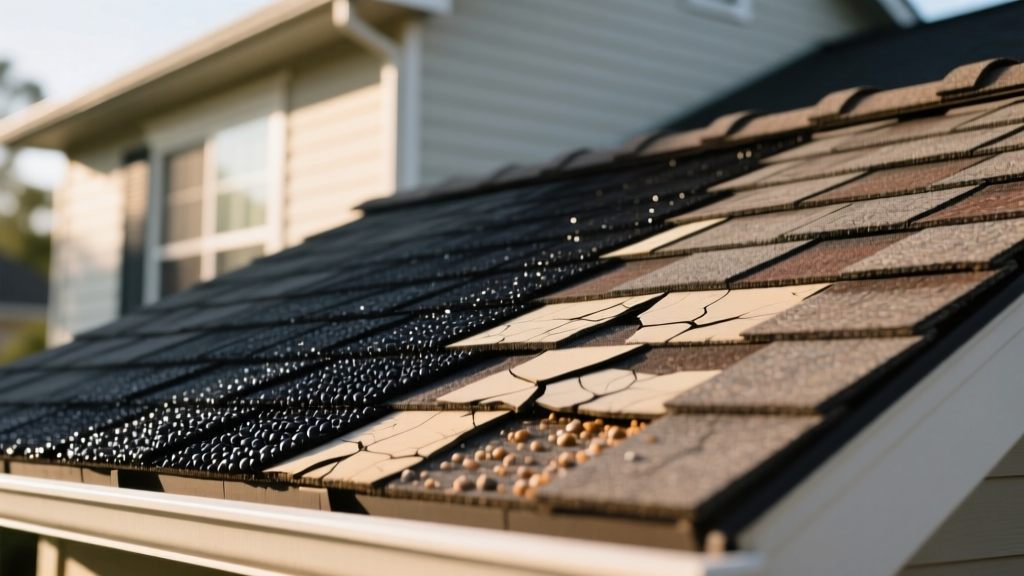
The Science of Asphalt Shingle Aging and Rejuvenation
To evaluate the durability of any shingle rejuvenation product, it is necessary to understand the chemical degradation of asphalt roofing. Asphalt shingles consist of a fiberglass mat saturated and coated with asphalt—a petroleum byproduct—and topped with ceramic granules for UV protection. The asphalt binder contains two primary chemical components: asphaltenes (which provide structural rigidity) and maltenes (the oily resins that provide flexibility and waterproofing).
Over time, continuous exposure to UV radiation and thermal cycling causes the maltenes to evaporate and oxidize. According to data from the Asphalt Roofing Manufacturers Association (ARMA), this depletion is the primary catalyst for shingle brittleness, curling, and eventual cracking. Modern architectural shingles are manufactured with roughly 20% to 30% less asphalt than legacy 3-tab shingles to meet modern fire and weight standards. Consequently, modern roofs often begin exhibiting severe maltene depletion and brittleness between years 8 and 12, well before the end of their theoretical 30-year warranty period.
Roof Maxx addresses this specific chemical failure mode. Rather than applying a topical acrylic or silicone coating that sits on the surface, Roof Maxx utilizes a soy methyl ester formulation. This bio-oil is designed to mimic the molecular weight of the original petrochemical maltenes, allowing it to penetrate the asphalt matrix, rehydrate the shingle, and restore its flexibility and waterproofing properties.
Roof Maxx Treatment: Mechanism and Expected Lifespan
The core value proposition of Roof Maxx is lifecycle extension rather than structural replacement. When applied to an aging but structurally sound roof, the soy-based bio-oil saturates the shingle, replacing the lost petrochemical oils. This restores the shingle's ability to expand and contract with temperature fluctuations without cracking.
Warranty and Longevity Metrics
- Single Application Lifespan: Each treatment is backed by a 5-year transferable warranty. Independent laboratory testing indicates that the soy methyl ester remains active in the shingle matrix for approximately 60 months before UV degradation necessitates reapplication.
- Maximum Lifecycle Extension: A single roof can be treated up to three times over its lifespan. This equates to a potential 15-year extension on a roof that would otherwise require tearing off at the 12-to-15-year mark.
- Penetration Timeframe: The treatment requires ambient temperatures above 45°F (7°C) to properly absorb. In optimal conditions, the oil penetrates the asphalt matrix within 30 to 60 minutes, leaving the surface dry to the touch and preventing runoff into gutters or landscaping.
Critical Warning: Pre-Existing Failure Modes
Roof Maxx is a chemical rejuvenator, not a structural repair system. It will not fix shingles that have already lost their ceramic granules exposing the fiberglass mat, nor will it adhere to or repair severely curled, cupped, or delaminated shingles. If the roof decking is compromised by rot, or if the underlayment has failed, topical rejuvenation will not prevent interior leaks. Applying the treatment to a roof past the 'point of no return' is a sunk cost that will not yield the advertised 5-year durability.
Durability Comparison: Rejuvenation vs. Full Replacement
When analyzing lifespan and durability, homeowners must weigh the guaranteed longevity of a full tear-off against the incremental lifecycle extension of rejuvenation. The following matrix breaks down the physical and logistical differences between the two approaches for a standard 2,000-square-foot residential roof.
| Feature | Roof Maxx Rejuvenation | Full Architectural Shingle Replacement |
|---|---|---|
| Lifespan Added | 5 years per application (up to 15 years max) | 25 to 30 years (depending on manufacturer) |
| Impact Resistance | Restores original Class 3 or Class 4 impact rating | New Class 4 impact rating (if premium shingles used) |
| Wind Warranty | Does not alter original wind warranty | Up to 130 mph wind warranty (with proper nailing) |
| Installation Time | 1 to 3 hours | 2 to 5 days |
| Underlayment/Flashing | Not replaced (must be manually repaired) | Fully replaced with modern synthetic underlayment |
| Landfill Waste | Zero waste generated | Approx. 4,000 to 6,000 lbs of tear-off waste |
Real-World Performance and Specific Failure Modes
While the chemical efficacy of soy methyl ester is well-documented, real-world durability depends heavily on application conditions and the baseline state of the roof. Based on field data and roofing contractor reports aligned with National Roofing Contractors Association (NRCA) maintenance guidelines, the following edge cases frequently lead to treatment failure or diminished lifespan:
- Thermal Application Limits: If applied when the roof surface temperature is below 45°F, the bio-oil becomes viscous and fails to penetrate the asphalt matrix. It will sit on the surface, wash away in the next rainstorm, and provide zero durability extension.
- Neoprene Pipe Boot Degradation: Roof Maxx treats asphalt shingles only. The neoprene rubber collars around plumbing vents typically crack and fail between years 8 and 12. If a contractor sprays the shingles but ignores the crumbling pipe boots, the roof will still leak, rendering the rejuvenation investment moot.
- Pre-Existing Algae and Moss: Applying the treatment over heavy Gloeocapsa magma (black algae) or moss traps moisture against the shingle surface and prevents the oil from reaching the asphalt. A thorough soft-wash and chemical treatment to kill organic growth must precede the bio-oil application.
- Severe Granule Loss in Valleys: Roof valleys experience the highest volume of water runoff. If the ceramic granules in the valleys have washed away, exposing the bare fiberglass mat, the bio-oil will absorb into the fiberglass rather than the asphalt, leading to rapid degradation in the most critical water-shedding zones.
2026 Cost-Benefit Analysis
Evaluating durability requires contextualizing it against cost. In 2026, the national average for a full architectural shingle replacement ranges from $5.50 to $8.50 per square foot, factoring in synthetic underlayment, ice and water shield, and labor. For a 2,000-square-foot roof (20 squares), a full replacement costs between $11,000 and $17,000.
Conversely, Roof Maxx treatment typically costs between $0.18 and $0.28 per square foot. For the same 2,000-square-foot roof, the treatment costs between $3,600 and $5,600. If the roof is a candidate for all three treatments over a 15-year period, the total investment maxes out at roughly $16,800, which is comparable to a single replacement. However, the rejuvenation route defers the massive capital expenditure of a replacement, avoids landfill fees, and prevents the risk of interior water damage that often occurs during the tear-off phase of a full replacement.
Decision Framework: Is Your Roof a Candidate?
Do not rely solely on the age of the roof to determine if it is a candidate for rejuvenation. Manufacturing variations, roof pitch, and solar exposure drastically alter the aging curve. Use this step-by-step physical inspection framework to determine if the shingles possess the structural integrity required to absorb and retain the bio-oil:
- The Visual Granule Check: Inspect the downspouts and gutters. A light dusting of granules is normal for a 10-year-old roof. However, if you find heavy accumulations of granules resembling coarse sand, the shingle matrix is actively breaking down, and the roof is likely past the point of rejuvenation.
- The Physical Bend Test: Find a loose shingle piece in the yard or gently lift the tab of an unsealed shingle at the eave. Bend it back on itself at a 90-degree angle. If it snaps cleanly, the asphaltenes have entirely overtaken the maltenes; the shingle is dead and requires replacement. If it bends smoothly but shows white stress lines, it is severely dried out but remains an excellent candidate for Roof Maxx.
- The Sealant Strip Inspection: Check the factory-applied tar sealant strips on the shingle overlaps. If the strips are intact and the shingles are not lifting in moderate winds, the roof's structural wind-resistance is sound, making it safe to rejuvenate.
- Flashing and Boot Audit: Inspect all step flashing, chimney counter-flashing, and plumbing vent boots. Any compromised metal or rubber must be physically replaced by a contractor before the bio-oil treatment is authorized.
By strictly adhering to this physical inspection protocol, homeowners can accurately identify whether their aging asphalt roof possesses the necessary baseline durability to benefit from soy methyl ester rejuvenation, ensuring a high return on investment and extended weather protection.