Complete List of Roofing Materials: Costs and Lifespans
Explore our comprehensive list of roofing materials, including 2026 costs, lifespans, and climate suitability for asphalt, metal, tile, and flat roofs.
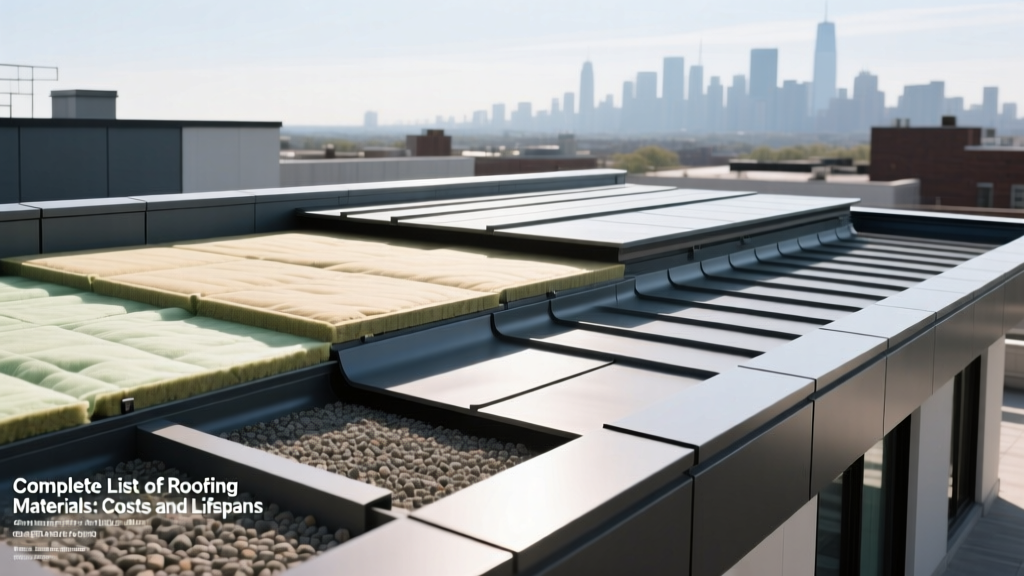
The Core List of Roofing Materials: 2026 Market Overview
Selecting the right roofing system requires balancing initial capital expenditure, structural load capacity, and regional climate demands. The modern roofing market has evolved significantly, with advancements in polymer chemistry and metallurgy extending lifespans and improving wind uplift resistance. Below is the definitive list of roofing materials categorized by slope application, complete with current material costs (per 100-square-foot "square"), expected lifespans, and critical performance metrics.
| Material Type | Material Cost (Per Square) | Expected Lifespan | Weight (Per Sq Ft) | Max Wind Rating |
|---|---|---|---|---|
| Architectural Asphalt | $130 - $180 | 30 - 50 Years | 2.5 - 3.5 lbs | 130 mph |
| Standing Seam Metal | $450 - $700 | 50 - 70 Years | 1.0 - 1.5 lbs | 150+ mph |
| Clay / Concrete Tile | $400 - $800 | 50 - 100 Years | 6.0 - 12.0 lbs | 125 mph |
| Synthetic Slate/Shake | $350 - $550 | 50 Years | 2.0 - 3.0 lbs | 110 mph |
| TPO Membrane (Flat) | $150 - $250 | 20 - 30 Years | 0.3 - 0.5 lbs | 90 mph (FM 1-90) |
| EPDM Rubber (Flat) | $140 - $200 | 25 - 35 Years | 0.3 - 0.4 lbs | 90 mph (FM 1-90) |
Deep Dive: Steep-Slope Roofing Systems
Steep-slope roofs (typically defined as a pitch of 3:12 or greater) rely on gravity and overlapping material layers to shed water. The materials used here prioritize aesthetics, impact resistance, and thermal reflectivity.
Architectural Asphalt Shingles
Three-tab shingles are virtually obsolete in new construction. The market is dominated by architectural (dimensional) and luxury laminated shingles. Premium lines like GAF Timberline HDZ and Owens Corning Duration utilize proprietary nailing zones (e.g., GAF's StrikeZone) that drastically reduce installation errors and improve wind uplift resistance. For hail-prone regions, specify SBS (Styrene-Butadiene-Styrene) modified asphalt shingles, such as the GAF ArmorShield II, which carry a Class 4 impact resistance rating under UL 2218. These polymer-modified shingles remain flexible in freezing temperatures, preventing the micro-cracking that plagues standard fiberglass mat shingles during thermal shock.
Metal Roofing: Standing Seam vs. Exposed Fastener
Metal roofing offers superior longevity but requires precise engineering to manage thermal expansion.
- Standing Seam (Concealed Fastener): The gold standard for residential and commercial steep slopes. Panels are typically 24-gauge Galvalume steel with a Kynar 500 (PVDF) paint finish. The concealed clip system allows the metal to expand and contract without tearing the fastener holes. Specify a minimum 2-inch mechanical lock seam for slopes under 3:12 to prevent capillary water draw.
- Exposed Fastener (Ag Panels): Usually 29-gauge steel. While cheaper upfront, these systems are prone to "fastener back-out" over time. The neoprene washers degrade under UV exposure, and the thermal cycling of the metal eventually wallows out the screw holes, leading to leaks within 15-20 years.
Clay and Concrete Tile
Tile is highly prevalent in coastal and high-wind zones due to its mass and permeability. According to the Insurance Institute for Business & Home Safety (IBHS), properly fastened tile roofs perform exceptionally well in hurricane-prone regions. However, the structural implications are severe. A standard residential roof truss is engineered for a dead load of 10-15 lbs per square foot. Clay tile systems can exert 40 to 50+ lbs per square foot. Structural reinforcement, including heavier trusses and enhanced shear wall bracing, must be factored into the initial architectural plans. Retrofitting an existing stick-built home for tile often requires sistering joists and adding load-bearing beams, which can double the project cost.
Synthetic Slate and Shake
Natural slate requires specialized installers and massive structural support. Synthetic alternatives like DaVinci Roofscapes (polymer) and EcoStar (recycled rubber/plastics) replicate the aesthetic at a fraction of the weight and cost. These materials are molded with UV stabilizers and Class A fire ratings. Unlike natural slate, which can spall and delaminate after decades of freeze-thaw cycles, high-end polymer slanes maintain their integrity and carry lifetime limited warranties.
Flat and Low-Slope Roofing Systems
Low-slope roofs (under 3:12 pitch) cannot shed water quickly enough for overlapping shingles. They require continuous, watertight membranes. For a comprehensive breakdown of low-slope assemblies, refer to the National Roofing Contractors Association (NRCA) roof systems guidelines.
TPO and PVC Thermoplastics
Thermoplastic Polyolefin (TPO) is the dominant commercial flat roof material. Brands like Carlisle Sure-Weld and GAF EverGuard offer 60-mil and 80-mil reinforced membranes. TPO seams are heat-welded using hot air, creating a monolithic bond that is stronger than the membrane itself.
PVC (Polyvinyl Chloride) is chemically distinct and must be specified when the roof will be exposed to animal fats, grease, or chemical exhaust (e.g., commercial kitchens or manufacturing plants). TPO will degrade and soften when exposed to lipids, whereas PVC remains stable.
EPDM Rubber Membranes
Ethylene Propylene Diene Monomer (EPDM) is a thermoset rubber membrane, typically installed in black or white. While highly resistant to UV degradation and extreme cold, EPDM relies on liquid adhesives, contact cement, or seam tape rather than heat welding. Over time, ponding water and UV exposure can degrade the lap sealants, making EPDM more maintenance-intensive than TPO. It remains an excellent, cost-effective choice for simple, unobstructed residential flat roofs or covered porches.
Decision Framework: Matching Material to Climate
Do not select a roofing material based solely on aesthetics. Regional climate dictates the necessary physical properties of the assembly.
- High Heat / Sunbelt Regions: Prioritize solar reflectance. The Department of Energy's Cool Roof guidelines highlight that highly reflective TPO membranes or light-colored metal roofs with cool-roof pigment coatings can reduce peak cooling demand by 10-15%. Avoid dark asphalt shingles, which can reach 160°F and accelerate asphalt volatization (loss of oils), leading to premature curling.
- Heavy Snow / Alpine Regions: Metal roofing is optimal due to its low surface friction, facilitating snow shedding. However, this necessitates the installation of heavy-duty snow guards to prevent catastrophic avalanches onto walkways or lower roof planes. Ensure the structural deck utilizes 5/8-inch CDX plywood rather than OSB to handle the sheer weight of ice damming.
- Coastal / Salt-Spray Environments: Standard galvanized steel will corrode rapidly. Specify aluminum standing seam panels or .032-inch aluminum shingles. If using steel, ensure it has an AZ55 Galvalume coating and avoid cutting or drilling the panels on-site without immediately treating the exposed edges with a zinc-rich cold galvanizing compound.
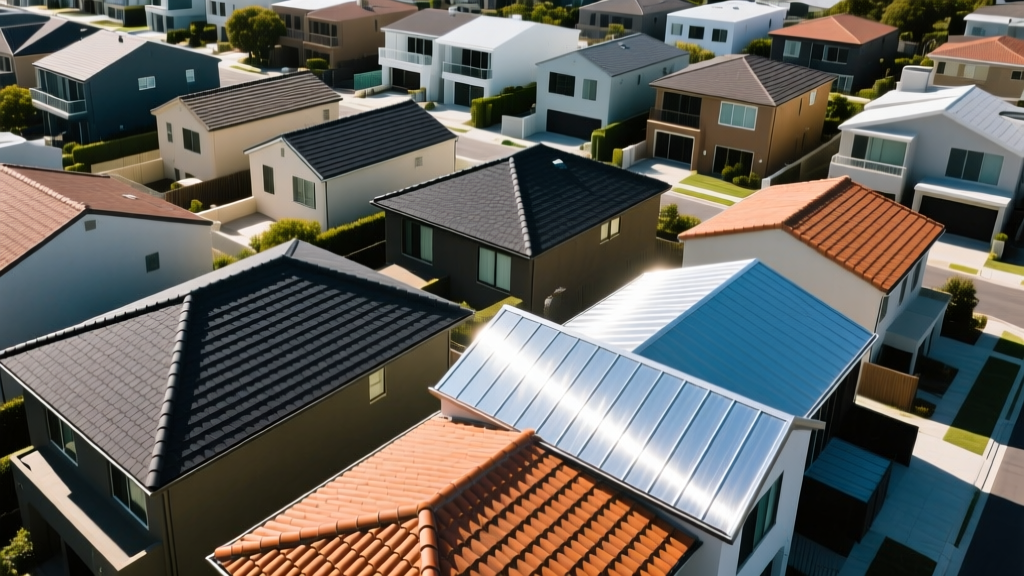
Hidden Costs: Underlayment, Decking, and Flashing
The membrane or shingle is only the outermost layer. The underlying assembly dictates the true longevity of the roof. When budgeting, account for these critical, often-overlooked components:
- Synthetic Underlayment: Replace traditional #15 felt with woven polypropylene synthetic underlayment (e.g., Tyvek Protec or GAF FeltBuster). Synthetic underlayment resists tearing, does not absorb moisture and wrinkle, and can be left exposed to UV for up to 6 months during construction delays.
- Ice and Water Shield: A self-adhering rubberized asphalt membrane (e.g., Grace Ice & Water Shield) is mandatory in eaves, valleys, and around all penetrations in climates with freezing temperatures. It seals around nail shanks and prevents water intrusion from ice dams.
- Flashing Upgrades: Never reuse old step flashing or drip edge. Specify 26-gauge galvanized steel or aluminum flashing. In masonry chimney intersections, reglet-cut counter-flashing into the mortar joints is required; surface-applied caulk and flashing tape will fail within 3-5 years.
Frequently Asked Questions
Can I install a metal roof over existing asphalt shingles?
While some local building codes permit a second layer of roofing, installing metal directly over shingles is highly discouraged. The uneven surface of the shingles will telegraph through the metal, causing severe oil-canning. Furthermore, it traps moisture against the roof deck and prevents the installation of a proper synthetic underlayment and ice/water shield. Always budget for a complete tear-off to the decking.
What is the most cost-effective roofing material for a 2,000 sq ft home?
Architectural asphalt shingles remain the most cost-effective option. For a 2,000 sq ft roof (20 squares), material costs will range from $2,600 to $3,600, with total installed costs typically falling between $8,500 and $12,000. While metal or tile costs 3 to 5 times more upfront, their 50+ year lifespans can yield a lower total cost of ownership if you plan to remain in the home for decades.
Written by
Priya KapoorPriya Kapoor is a real estate market analyst and construction economics researcher with expertise in housing affordability, development feasibility, and infrastructure investment. She holds a Master of Regional Planning from Cornell University and previously worked as a senior analyst at CBRE's Investment Properties group, where she modeled returns for $4B in mixed-use development pipelines. Priya now runs an independent research practice advising developers, municipalities, and REITs on construction cost forecasting and market timing. She publishes the quarterly "BuildMat Market Pulse" report tracking material price indices across 12 commodity categories. Based in Austin, TX, Priya serves on the board of Habitat for Humanity Austin and is a marathon runner.
More from Priya Kapoor
View all
Construction Cost
Cost to Build a 1600 Sq Ft Home in 2026: Full Breakdown
Accurate 2026 cost to build a 1600 sq ft home—material, labor, and regional pricing breakdowns included. Plan your budget with real-time estimates.
Aug 11, 2026

Wood & Lumber
Name the Types of Wood for Pressure Treatment and Preservation
Learn how to name the types of wood best suited for pressure treatment. Compare species treatability, chemical retention levels, and 2026 preservation costs.
Aug 4, 2026

Stone & Masonry
Stone Veneer Suppliers Lindenhurst: 2026 Cost Analysis
Analyze 2026 stone veneer costs in Lindenhurst, NY. Compare local supplier pricing, delivery fees, and Suffolk County installation labor rates.
Aug 4, 2026