The Maintenance and Cleaning Playbook for 3 Tab Shingles
Master the maintenance and cleaning playbook for 3 tab shingles. Learn exact washing techniques, moss removal, and inspection schedules to extend roof life.
The Structural Reality of 3 Tab Shingle Degradation
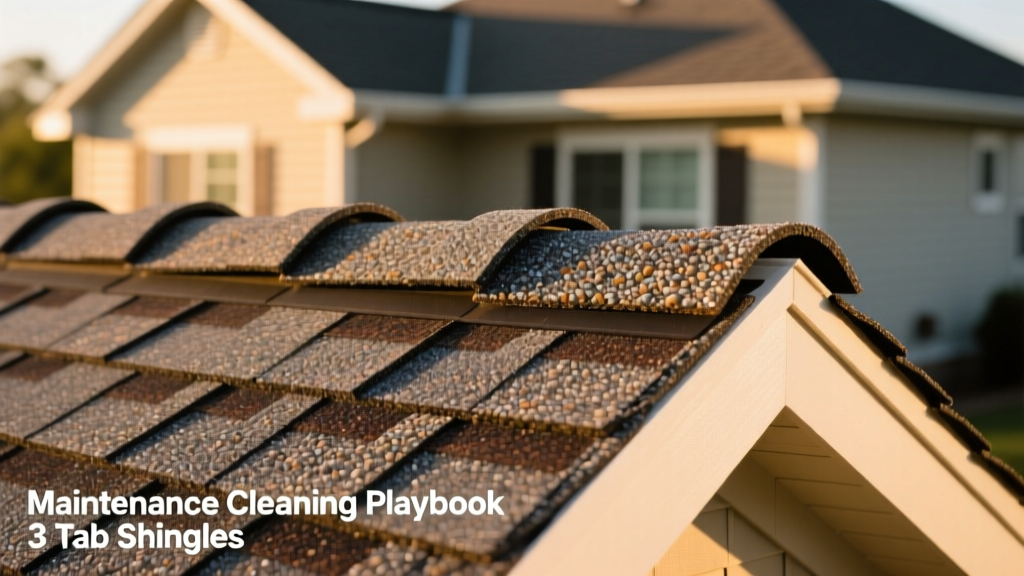
Three-tab asphalt shingles, often referred to as strip shingles, represent a single-layer roofing system. Unlike laminated architectural shingles that feature a multi-dimensional profile and dual-layer construction, 3 tab shingles rely on a uniform, flat design with precisely cut slots to simulate individual pieces. This single-layer architecture makes them inherently more vulnerable to thermal shock, wind uplift (typically rated for 60-70 mph compared to 110-130 mph for architectural variants), and mechanical damage during maintenance.
Because the asphalt mat is thinner and the ceramic granule layer is the sole defense against UV radiation, aggressive cleaning or neglected maintenance accelerates granule loss. Once the underlying asphalt is exposed to direct sunlight, the shingle undergoes rapid photo-oxidation, becoming brittle and prone to catastrophic failure. The following playbook is engineered specifically for the physical limitations and maintenance requirements of 3 tab systems.
The Bi-Annual Inspection Protocol
Routine inspections for 3 tab shingles must occur twice annually—ideally in mid-spring and late fall. Because these shingles lack the dimensional shadow lines that hide minor defects on architectural roofs, anomalies are easier to spot but require immediate categorization.
Targeted Defect Identification
- Fishmouthing: Characterized by the front edge of the shingle curling upward, creating a small opening. This is caused by moisture trapped in the roof deck or improper attic ventilation. If the opening exceeds 1/8 inch, it must be sealed with a dab of plastic roofing cement to prevent wind-driven rain infiltration.
- Thermal Blisters: Small, raised bumps on the shingle surface caused by volatile gases escaping the asphalt mat during high-heat events. Never pop or puncture these blisters; doing so breaks the waterproof membrane. Monitor them for rupturing during winter freeze-thaw cycles.
- Nail Pops: Fasteners that have backed out of the roof deck, pushing the shingle upward. On 3 tab shingles, a popped nail directly compromises the sealant strip of the overlapping shingle. Drive the original nail flush and place a new ring-shank roofing nail 1.5 inches adjacent to it, covering both heads with roofing cement.
- Sealant Strip Failure: 3 tab shingles rely on a thermally activated asphalt sealant strip. Use a flat bar to gently lift the leading edge of random shingles. If the sealant releases with zero resistance and no asphalt tear, the wind-uplift resistance of the roof is critically compromised.
The Soft-Wash Cleaning Playbook
Pressure washing is strictly prohibited for 3 tab shingles. Water forced at high velocity will bypass the overlapping joints, saturate the underlayment, and physically strip the protective ceramic granules. The only approved cleaning method is low-pressure soft washing, utilizing specialized chemical dwell times to eradicate biological growth.
Formulating the Soft-Wash Solution
The goal is to achieve a 1.5% to 2.0% active sodium hypochlorite (SH) concentration at the surface. This is strong enough to kill algae and moss roots without degrading the asphalt binder.
- Base Chemical: Use 12.5% liquid pool-grade sodium hypochlorite. Do not use household bleach, which contains thickeners and fragrances that leave residue.
- Dilution Ratio: Mix 1 part 12.5% SH with 5 parts clean water in your application tank. This yields an approximate 2.08% active chlorine solution.
- Surfactant Addition: Add 1 ounce of a dedicated roof-cleaning surfactant (such as Elemonate or a non-ionic agricultural surfactant) per gallon of mixed solution. The surfactant breaks the surface tension, allowing the chemical to cling to the steep pitch of the roof rather than running off immediately.
- Application Pressure: Utilize a 12-volt diaphragm pump or a dedicated soft-wash system calibrated to deliver the solution at 40 to 60 PSI. The stream should be comparable to a standard garden hose.
Biological Growth Eradication Matrix
Different organisms require different chemical approaches and dwell times. The Asphalt Roofing Manufacturers Association (ARMA) strongly advises against mechanical scraping of any biological growth, as the root structures (rhizoids) are intertwined with the ceramic granules. Pulling the moss will pull the granules.
| Organism | Visual Identification | Chemical Treatment | Required Dwell Time | Post-Treatment Action |
|---|---|---|---|---|
| Gloeocapsa Magma (Algae) | Black streaks or vertical shadow lines running down the roof slope. | 1.5% - 2.0% Sodium Hypochlorite + Surfactant. | 15 - 20 minutes. Do not let the solution dry on the shingle. | Light rinse. Streaks will fade to white and wash away over 2-3 rain events. |
| Bryophytes (Moss) | Thick, green, spongy mounds typically on north-facing slopes or under tree canopies. | 2.5% Sodium Hypochlorite or specialized Zinc Sulfate liquid application. | 30 - 45 minutes. Requires heavier saturation to penetrate the moss mat. | Wait 2 weeks for moss to turn brown and die. Gently sweep off with a soft-bristle push broom on a dry day. |
| Lichen | Crusty, grey-green, leaf-like patches tightly adhered to the granule surface. | Potassium salts of fatty acids (Moss/Lichen killer) or 2.0% SH. | 45 - 60 minutes. Lichen is highly resistant to rapid chemical breakdown. | Do not attempt to remove immediately. Allow natural weathering over 3-6 months to release the grip on the shingle. |
Preventative Synergy: Flashing, Gutters, and Metal Strips
Maintenance of 3 tab shingles extends beyond the shingle field. Biological growth and water damage are symptoms of secondary system failures.
Installing Sacrificial Metal Strips
To prevent the recurrence of algae and moss, install sacrificial metal strips near the roof ridge. As rain washes over the metal, it distributes microscopic ions down the roof slope, creating an environment hostile to biological growth.
- Zinc Strips: Highly effective against moss. Install a 3-inch wide galvanized zinc strip exactly 12 inches below the ridge cap. Secure with 1-inch ring-shank nails every 12 inches, sealing each nail head with polyurethane roof sealant.
- Copper Strips: Superior for algae (black streak) prevention but more expensive. Install using the same dimensions and fastening schedule as zinc. Note that copper runoff can stain light-colored gutters or paint, so ensure your gutter system is compatible.
Gutter and Fascia Maintenance
Clogged gutters cause water to wick back up under the bottom course of 3 tab shingles via capillary action, rotting the drip edge and roof deck. Clean gutters bi-annually. If your fascia boards show signs of rot, replace them immediately; a compromised fascia prevents the proper installation of the drip edge flashing, leaving the bottom edge of your 3 tab shingles entirely exposed to wind-driven rain.
When to Abort Maintenance: The End-of-Life Framework
Investing time and capital into maintaining a 3 tab roof that has exceeded its functional lifespan is a poor allocation of resources. According to data tracked by the National Roofing Contractors Association (NRCA), the realistic service life of a standard 3 tab shingle in moderate climates is 15 to 20 years, dropping to 10 to 12 years in regions with extreme thermal cycling or high UV exposure.
"If your 3 tab roof is approaching the 18-year mark and exhibits widespread granule loss, multiple sealant strip failures, and persistent fishmouthing across multiple slopes, maintenance will no longer prevent interior water damage. At this stage, chemical cleaning will only highlight the severe weathering and uneven fading of the shingles. Transition your budget from maintenance to full tear-off and replacement."
For further guidance on chemical safety and environmental runoff management during roof cleaning, consult the EPA Safer Choice database to ensure your chosen surfactants and algaecides comply with local watershed protection regulations. Proper maintenance of 3 tab shingles requires a disciplined, chemistry-first approach that respects the physical limitations of single-layer asphalt construction.