Rubber Roofing Materials Lifespan: EPDM Durability & Failure Modes
Discover the true lifespan of rubber roofing materials. We analyze EPDM durability, common failure modes, and maintenance costs to maximize your roof's life.

The True Lifespan of Rubber Roofing Materials
When evaluating rubber roofing materials for low-slope and flat applications, Ethylene Propylene Diene Monomer (EPDM) remains the undisputed industry standard. While thermoplastic options like TPO and PVC have gained market share, EPDM's proven track record for long-term weathering and UV resistance makes it a top choice for commercial and residential flat roofs. However, the actual lifespan of your rubber roof depends heavily on membrane thickness, installation methodology, and proactive maintenance.
The True Lifespan of Rubber Roofing Materials (EPDM Focus)
Not all rubber membranes are created equal. The longevity of your roof is directly tied to the mil thickness of the EPDM sheet and whether it is reinforced.
• 45-Mil Non-Reinforced: 15–20 Years
• 60-Mil Non-Reinforced: 25–30 Years
• 90-Mil Fleece-Backed (Reinforced): 30–40+ Years
According to the EPDM Roofing Association (ERA), properly installed 60-mil EPDM systems routinely exceed 30 years of service life. The shift toward fleece-backed membranes in recent years has further extended this ceiling, providing superior puncture resistance and allowing for wider adhesive application zones at the seams.
Material Breakdown: EPDM vs. Synthetic Rubber Blends
While EPDM dominates, facility managers occasionally encounter Neoprene (CR) and Silicone-modified rubber blends. Here is how they stack up in terms of durability and lifecycle costs.
| Material Type | Expected Lifespan | Puncture Resistance | Installed Cost (per sq ft) |
|---|---|---|---|
| 45-Mil EPDM (Black) | 15–20 Years | Low | $4.50 – $5.50 |
| 60-Mil EPDM (Black/White) | 25–30 Years | Moderate | $5.50 – $7.50 |
| 90-Mil Fleece-Backed EPDM | 30–40+ Years | High | $8.00 – $11.00 |
| Neoprene (CR) Membrane | 20–25 Years | Moderate | $7.00 – $9.00 |
Top 4 Failure Modes That Shorten Rubber Roof Lifespan
Rubber membranes rarely fail in the "field" (the broad, open areas of the roof). Instead, degradation is almost always localized to specific stress points. Understanding these failure modes is critical for maximizing durability.
1. Seam Delamination and Tape Failure
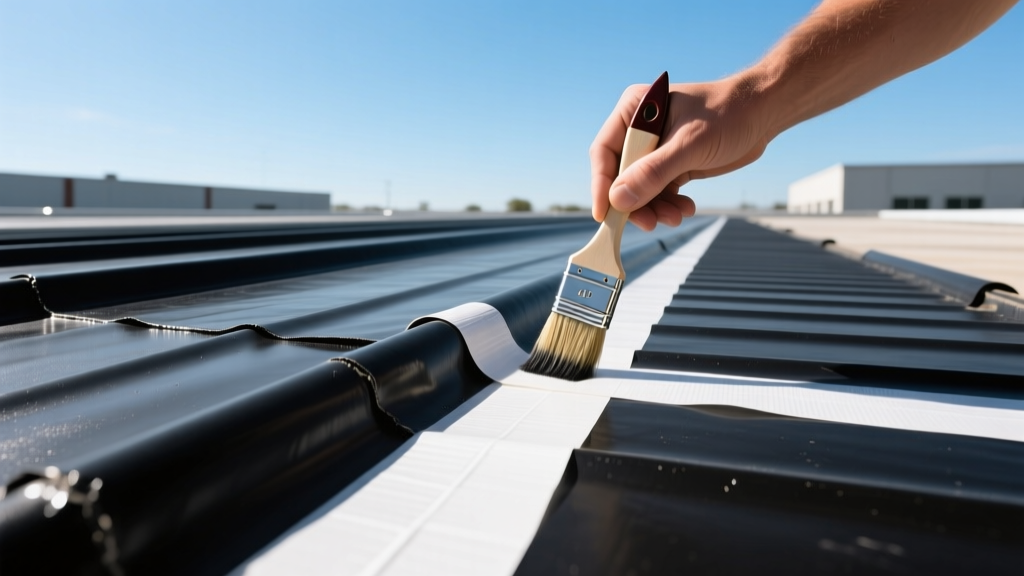
Historically, liquid contact adhesives were used to splice EPDM seams. These adhesives are highly sensitive to temperature and moisture during application, leading to premature peeling. Modern best practices dictate the use of 3-inch or 6-inch butyl seam tapes, activated with a specialized EPDM primer. If the primer is skipped or applied too thinly, the butyl tape will not chemically bond to the rubber, resulting in seam separation within 3 to 5 years. Over 85% of all flat roof leaks originate at improperly detailed seams.
2. Membrane Shrinkage and Bridging
EPDM is a thermoset material that naturally shrinks over its lifespan—often up to 1% to 2% of its original dimensions. If the membrane is installed too tightly without adequate slack at parapet walls, HVAC curbs, or pipe penetrations, the shrinkage creates a "bridging" effect. This tension eventually pulls the membrane away from termination bars or tears it at the corners of rooftop equipment. Proper detailing requires leaving a slight relaxation fold at all vertical transitions.
3. Punctures from Unprotected Foot Traffic
While 90-mil fleece-backed EPDM can withstand moderate abuse, standard 45-mil and 60-mil membranes are highly vulnerable to punctures from dropped tools, sharp gravel, or repetitive foot traffic. The National Roofing Contractors Association (NRCA) strongly recommends installing 60-mil reinforced walkway pads in all high-traffic zones, particularly around HVAC units and roof hatches. Failing to do so will inevitably lead to micro-punctures that allow water to infiltrate the substrate insulation. For more on protecting low-slope systems, refer to the NRCA's roofing maintenance guidelines.
4. Biological Growth on White EPDM
White EPDM is often specified for its solar reflectance and energy efficiency. However, the titanium dioxide used to pigment the membrane white can attract biological growth (algae and mold) in humid climates or on roofs with poor drainage. This biological layer not only degrades the reflective properties but can slowly compromise the top layer of the rubber. Routine power washing with a mild, non-abrasive biocide is required every 2 to 3 years to maintain both the lifespan and the energy rating of white rubber roofing materials.
Proactive Maintenance: Extending Your Roof to 40+ Years
A rubber roof is not a "set it and forget it" system. To push an EPDM roof past the 30-year mark, facility managers must implement a rigorous, documented maintenance protocol.
- Bi-Annual Visual Inspections: Conduct walk-throughs in spring and fall. Focus entirely on flashings, seams, and penetrations. Look for lifted tape edges, cracked lap sealant, and displaced termination bars.
- Debris and Drain Clearance: Ensure all scuppers, gutters, and internal drains are free of leaves and sediment. Ponding water exceeding 48 hours accelerates the degradation of the membrane and voids many manufacturer warranties.
- Infrared Moisture Surveys: Every 3 to 5 years, hire a certified thermographer to scan the roof. Infrared imaging detects trapped moisture within the polyiso insulation beneath the rubber membrane long before it causes structural deck rot or interior leaks.
- Seam Re-Sealing: At the 15-year mark, proactively apply a high-quality EPDM lap sealant over all critical T-joints and pipe boots, even if they appear visually intact.
Cost vs. Lifespan: The ROI of Premium Rubber Membranes
When budgeting for a flat roof replacement, the initial material cost is only a fraction of the total lifecycle expense. The labor required to tear off an existing roof, dispose of the old insulation, and install the new system accounts for roughly 60% to 70% of the total project cost.
"Upgrading from a 45-mil to a 60-mil EPDM membrane typically adds less than $1.50 per square foot to the total installed cost, yet it can double the functional lifespan of the roof. The return on investment for thicker, reinforced rubber membranes is overwhelmingly positive when calculated over a 30-year building hold period."
By opting for 90-mil fleece-backed EPDM, building owners effectively eliminate the need for a second roof replacement within a standard 40-year mortgage or building lifecycle. Furthermore, fleece-backed membranes can often be installed directly over existing, dry substrates using low-expanding polyurethane adhesives, saving thousands of dollars in tear-off and landfill disposal fees. For comprehensive lifecycle data on low-slope assemblies, the Whole Building Design Guide (WBDG) provides excellent federal and commercial case studies.
Final Verdict: Is Rubber Roofing Worth the Long-Term Investment?
When it comes to durability, rubber roofing materials—specifically 60-mil and 90-mil EPDM—offer an unmatched balance of weathering resistance, elasticity, and lifecycle value. The key to realizing a 30- to 40-year lifespan lies in avoiding the "race to the bottom" on material thickness. By specifying fleece-backed membranes, mandating butyl seam tapes with proper primers, and enforcing strict walkway pad usage, you transform a standard flat roof into a highly resilient, long-term asset.
Written by
Marcus ChenMarcus Chen is a licensed structural engineer (PE) and building materials analyst with over 12 years of experience across residential, commercial, and industrial construction. He holds a Master of Science in Civil Engineering from UC Berkeley and spent six years at Thornton Tomasetti before transitioning to independent consulting and technical writing. Marcus specializes in material selection for seismic-prone regions, concrete reinforcement strategies, and lifecycle cost analysis. His work has been cited by the American Concrete Institute (ACI) and the Structural Engineers Association of California (SEAOC). When he is not on a job site or at his desk, you will find him hiking the Sierra Nevada or restoring a 1920s craftsman bungalow in Oakland, CA.
More from Marcus Chen
View all
Construction Cost
How Much Did the Eiffel Tower Cost to Build?
How much did the Eiffel Tower cost to build in 1889? We adjust for inflation and compare its budget to modern skyscraper construction.
Aug 4, 2026

Fire Resistance
What Is a Fire Resistant Material? Testing & Certification Guide
Discover what is a fire resistant material through ASTM and UL testing. Learn how fire ratings, certifications, and assemblies work in construction.
Aug 4, 2026

Construction Cost
How Much Did the Burj Khalifa Cost to Build?
How much did the Burj Khalifa cost to build? We break down the $1.5B project and extract 5 money-saving strategies for your next build.
Jul 30, 2026