Porch Roofing Material Repair: Fixing Leaks, Rot, and Wear
Expert guide to porch roofing material repair. Diagnose leaks, fix flashing tie-ins, and restore polycarbonate, metal, and shingle porch roofs.

Porch roofs endure a unique microclimate of environmental stress. Unlike primary residential roofs, porch structures often feature lower pitches, making them highly susceptible to debris accumulation, ice damming at the main house tie-in, and accelerated UV degradation. When a porch roofing material fails, the damage rarely stays confined to the porch; water intrusion frequently migrates into the main structure's ledger board or exterior wall cavity. Effective porch roofing material repair requires moving beyond generic patching and addressing the specific mechanical and chemical failure modes of the installed system.
Diagnostic Matrix: Identifying Porch Roof Failures
Before purchasing sealants or replacement panels, map the physical symptoms to the underlying material failure. Use this diagnostic matrix to pinpoint the exact repair protocol required for your specific porch roofing material.
| Visible Symptom | Primary Culprit | Affected Materials | Urgency Level |
|---|---|---|---|
| Water stains on porch ceiling near house wall | Flashing failure at ledger board tie-in | All (Shingle, Metal, Membrane) | Critical (Structural rot risk) |
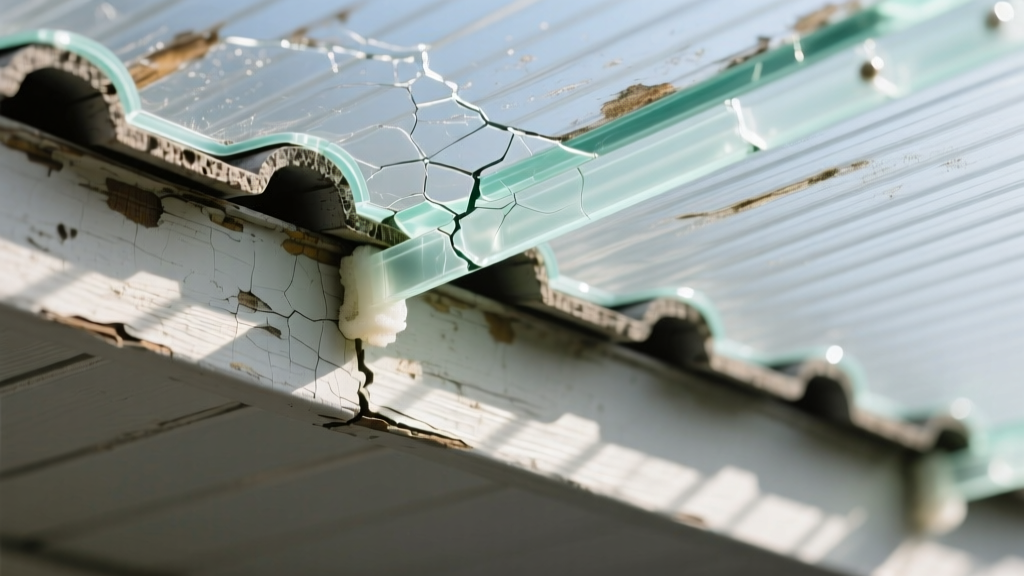
| Brittle, yellowed panels with micro-fractures | UV degradation and plasticizer loss | Polycarbonate / Acrylic | Moderate (Panel replacement needed) |
| Ponding water and separated black seams | Substrate deflection and adhesive failure | EPDM / TPO Flat Membranes | High (Membrane breach imminent) |
| Missing granules and curling edges | Insufficient pitch causing capillary action | Asphalt Shingles | High (Requires tear-off or overlay) |
| Rust streaking and popped fasteners | Galvanic corrosion and thermal expansion | Corrugated Metal / Standing Seam | Moderate (Fastener replacement) |
Material-Specific Repair Protocols
Polycarbonate and Acrylic Patio Panels
Multiwall polycarbonate panels (such as Palram Suntuf or Palruf) are dominant in covered patio and sunroom applications. The most common failure is not the panel itself, but the closure strips and sealants. Standard polyurethane caulks will chemically attack polycarbonate, causing 'crazing' (micro-cracking) that shatters the panel under wind load.
The Repair Protocol:
- Sealant Selection: Strip all failing caulk. Apply a 100% neutral-cure silicone specifically rated for plastics, such as Sikaflex-715 or GE Advanced Silicone 2 for Windows & Doors. Never use acetoxy-cure silicones (which smell like vinegar), as the acetic acid degrades the polycarbonate.
- Closure Strips: If wind is driving rain under the corrugated ridges, the foam closure strips have compressed or dry-rotted. Pry up the panels and replace them with high-density, UV-resistant EPDM foam closures cut to the exact corrugation profile.
- Thermal Expansion: When re-driving fasteners, ensure the holes in the polycarbonate are drilled 1/8-inch oversized. The fastener shaft must sit in the center of the hole to allow the panel to expand and contract (polycarbonate expands at roughly 1/8-inch per 3 feet per 30°F temperature change). Tighten the neoprene washer until it just kisses the panel, then stop.
Asphalt Shingle Porch Extensions
Asphalt shingles require a minimum 2:12 pitch to shed water effectively. Many porch additions are built with a 1.5:12 or 2:12 pitch to maximize headroom, pushing shingles to their absolute performance limit. At these low slopes, wind-driven rain easily breaches the shingle mat via capillary action.
The Repair Protocol:
- Ice and Water Shield: If repairing a low-slope shingle porch roof, standard felt underlayment is insufficient. Strip the bottom three feet of shingles and install a self-adhering modified bitumen membrane (e.g., Grace Ice & Water Shield) directly to the roof decking before reinstalling architectural shingles.
- Shingle Upgrades: Replace failing 3-tab shingles with heavy-duty architectural shingles like GAF Timberline HDZ, which feature a thicker fiberglass mat and proprietary strike-zone nailing areas that reduce blow-offs on exposed porch perimeters.
The intersection where the porch roof meets the main house wall (the ledger board tie-in) is the number one source of catastrophic structural rot. According to building science principles detailed by the Building Science Corporation, relying on surface-applied caulk at this joint guarantees failure. You must install a continuous piece of L-shaped aluminum or copper step-flashing that tucks behind the main house's weather-resistive barrier (WRB) and laps over the porch roofing material. If your porch ceiling shows water stains near the house wall, the flashing must be surgically extracted and replaced; surface patching will only trap moisture inside the wall cavity.
Standing Seam and Corrugated Metal Porches
Metal porch roofs (typically 24-gauge or 26-gauge steel) fail primarily at the fastener penetrations and through dissimilar metal reactions. Corrugated panels use exposed fasteners, which are subject to back-out due to the metal's aggressive thermal cycling.
The Repair Protocol:
- Fastener Replacement: Do not simply tighten loose screws; the neoprene washers are likely UV-baked and compressed. Back out the old screws and replace them with #10 x 1.5-inch hex-washer head woodgrip screws featuring premium EPDM seals (such as FastenMaster ProZap).
- Galvanic Corrosion: Inspect the flashing where the metal porch roof meets masonry or copper gutters. If copper flashing was used on a galvanized steel porch roof, galvanic corrosion will eat through the steel in 3 to 5 years. Separate dissimilar metals using a heavy-duty butyl rubber membrane or replace the copper with aluminum or painted steel flashing.
Flat Porch Roofs: EPDM and TPO Membranes
Flat porch roofs over enclosed spaces or high-end patios frequently utilize EPDM (rubber) or TPO membranes. The primary enemy of these systems is ponding water caused by joist deflection, which accelerates seam degradation.
The Repair Protocol:
- EPDM Seam Repair: If the black lap tape is peeling, do not apply liquid sealant over the dirt. Clean the membrane with EPDM splice wash, apply a dedicated primer (like Firestone QuickPrime Plus), and install a 3-inch wide strip of uncured EPDM flashing tape. Roll it aggressively with a silicone seam roller to activate the chemical bond.
- Addressing Ponding: If water stands for more than 48 hours after a storm, the roof structure is deflecting. Before applying new membrane, sister the underlying floor joists or install tapered polyiso insulation boards to create positive drainage toward the scuppers or gutters. The Asphalt Roofing Manufacturers Association (ARMA) notes that eliminating standing water extends low-slope membrane lifespans by up to 40%.
Biannual Preventative Maintenance Checklist
Reactive repairs cost three times more than proactive maintenance. Implement this strict biannual schedule to maximize the lifecycle of your porch roofing material:
- Clear the Tie-In Trough: Remove all leaf litter and pine needles from the corner where the porch roof meets the house wall. Organic debris holds moisture against the flashing and accelerates aluminum oxidation and wood rot.
- Inspect Neoprene Washers: On metal and polycarbonate roofs, visually inspect every exposed fastener. If the rubber washer shows radial cracking or is no longer flush against the metal, schedule a fastener swap before the next freeze-thaw cycle.
- Test the Scuppers and Gutters: Pour a 5-gallon bucket of water at the highest point of the porch roof. Observe the flow rate. If water backs up more than 1 inch at the drainage point, clear the downspout or enlarge the scupper cutout.
- Check for Biological Growth: North-facing porch roofs are prone to Gloeocapsa magma (black algae) and moss. Treat affected shingle or modified bitumen areas with a 50/50 mix of sodium hypochlorite and water, rinsing gently to avoid damaging landscaping.
By understanding the specific mechanical limits and chemical vulnerabilities of your installed system, you can execute targeted repairs that restore the porch roof's weathertight integrity without requiring a premature full-system replacement.
Written by
Priya KapoorPriya Kapoor is a real estate market analyst and construction economics researcher with expertise in housing affordability, development feasibility, and infrastructure investment. She holds a Master of Regional Planning from Cornell University and previously worked as a senior analyst at CBRE's Investment Properties group, where she modeled returns for $4B in mixed-use development pipelines. Priya now runs an independent research practice advising developers, municipalities, and REITs on construction cost forecasting and market timing. She publishes the quarterly "BuildMat Market Pulse" report tracking material price indices across 12 commodity categories. Based in Austin, TX, Priya serves on the board of Habitat for Humanity Austin and is a marathon runner.
More from Priya Kapoor
View all
Construction Cost
Cost to Build a 1600 Sq Ft Home in 2026: Full Breakdown
Accurate 2026 cost to build a 1600 sq ft home—material, labor, and regional pricing breakdowns included. Plan your budget with real-time estimates.
Aug 11, 2026

Wood & Lumber
Name the Types of Wood for Pressure Treatment and Preservation
Learn how to name the types of wood best suited for pressure treatment. Compare species treatability, chemical retention levels, and 2026 preservation costs.
Aug 4, 2026

Stone & Masonry
Stone Veneer Suppliers Lindenhurst: 2026 Cost Analysis
Analyze 2026 stone veneer costs in Lindenhurst, NY. Compare local supplier pricing, delivery fees, and Suffolk County installation labor rates.
Aug 4, 2026