Composition Roof Material: Synthetic Polymer vs. Fiberglass Asphalt
Compare composition roof material options: synthetic polymer vs. fiberglass asphalt. 2026 costs, impact ratings, failure modes, and ROI analysis.

The Terminology Trap: Defining 'Composition' in 2026
The term composition roof material is one of the most misunderstood phrases in residential and commercial roofing. Historically, contractors used 'composition' as a catch-all synonym for asphalt shingles. However, as material science has advanced, the market has bifurcated. Today, when sourcing a composition roof, you are actually choosing between two fundamentally different chemical structures: Fiberglass Asphalt Composition and Synthetic Polymer Composition.
Conflating these two leads to severe bidding errors, structural miscalculations, and mismatched warranty expectations. According to the National Roofing Contractors Association (NRCA), asphalt-based systems remain the volume leader, but synthetic composites are capturing the premium replacement market due to severe weather resilience. This guide dissects both materials at the chemical, structural, and financial levels.
Material Breakdown: What Are You Actually Buying?
1. Fiberglass Asphalt Composition (The Traditional Standard)
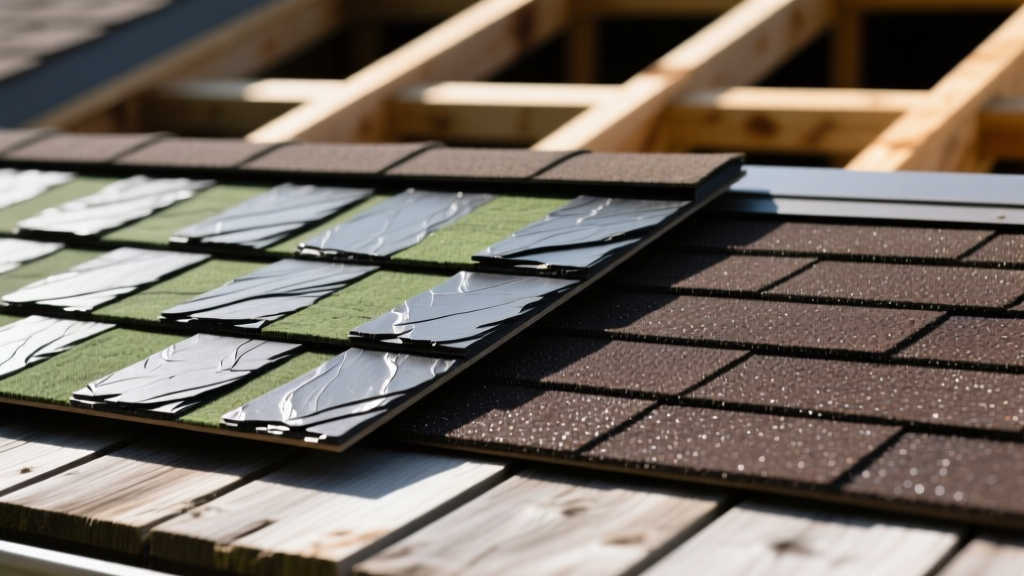
Standard architectural composition shingles (e.g., GAF Timberline HDZ, Owens Corning Duration) are a sandwich of three layers:
- Base Mat: Woven fiberglass providing tensile strength and fire resistance.
- Asphalt Coating: Either oxidized asphalt (standard) or SBS/APP modified asphalt (premium impact-rated). This provides the waterproofing barrier.
- Surface Granules: Ceramic-coated crushed rock that shields the asphalt from UV degradation and provides color.
2. Synthetic Polymer Composition (The Premium Disruptor)
True synthetic composite roofing (e.g., DaVinci Roofscapes, F-Wave REVIA, EcoStar) abandons asphalt entirely. These are engineered from:
- Virgin Polyurethane or Engineered Resins: Injection-molded or extruded to mimic the exact texture of natural slate or cedar shake.
- UV Stabilizers & Fire Retardants: Compounded directly into the resin, meaning the color and fire resistance go all the way through the material, not just on the surface.
Head-to-Head Performance Matrix
The following data reflects 2026 manufacturing specifications for premium architectural asphalt versus mid-to-high-tier synthetic polymer composites.
| Feature | Fiberglass Asphalt (Architectural) | Synthetic Polymer (Composite) |
|---|---|---|
| Weight per Square (100 sq ft) | 230 – 260 lbs | 150 – 210 lbs |
| Impact Resistance (UL 2218) | Class 3 or Class 4 (SBS modified only) | Class 4 (Inherent to material) |
| Wind Warranty | 110 – 130 mph (Requires 6-nail pattern) | 110 – 150 mph |
| Thermal Expansion | Low (Fiberglass mat restricts movement) | High (Requires specific fastener spacing) |
| Expected Lifespan | 22 – 30 Years | 50+ Years |
2026 Real-World Cost Analysis: The 2,500 Sq. Ft. Roof
Pricing a composition roof material requires looking beyond the shingle bundle. Below is a fully burdened cost breakdown for a standard 2,500 sq. ft. residential roof (25 squares), including tear-off of one layer, synthetic underlayment, ice and water shield in valleys/eaves, and standard flashing.
Fiberglass Asphalt (Premium Architectural)
- Material Cost: $3,500 – $5,500
- Labor & Overhead: $5,000 – $8,000
- Total Installed Range: $8,500 – $13,500 ($3.40 – $5.40 per sq. ft.)
Synthetic Polymer (Composite Slate/Shake)
- Material Cost: $12,000 – $18,000
- Labor & Overhead: $7,500 – $12,000 (Requires specialized cutting tools and precise alignment)
- Total Installed Range: $19,500 – $30,000 ($7.80 – $12.00 per sq. ft.)
Failure Modes and Edge Cases
Every roofing material has a specific failure point. Understanding these edge cases is critical for long-term performance.
Asphalt Composition Failures
- Thermal Shock Cracking: In regions with massive diurnal temperature swings (e.g., Colorado, Nevada), the asphalt matrix becomes brittle over time. Rapid drops from 90°F days to 40°F nights cause the mat to micro-fracture.
- Gloeocapsa Magma (Algae Streaking): In humid climates, airborne algae feed on the limestone filler in asphalt granules, creating black streaks. While copper-algae-resistant granules exist, they typically lose efficacy after 10-12 years.
- Hail Bruising: Even 'impact-resistant' asphalt shingles suffer from granule displacement and mat bruising during 1.5-inch+ hail, compromising the waterproofing layer long before the warranty expires.
Synthetic Polymer Failures
- Oil-Canning and Warping: If synthetic composites are installed on a hot day (roof deck temperatures exceeding 120°F) without the manufacturer-specified expansion gaps, the polymer will expand and buckle ('oil-can') when it cools.
- Fastener Back-Out: Polymer materials expand and contract at a different rate than the wood decking. If smooth-shank nails are used instead of ring-shank roofing nails, the thermal cycling will slowly push the fasteners out over a decade.
- UV Chalking (Budget Brands): Inferior thermoplastics lack adequate titanium dioxide (TiO2) UV inhibitors, leading to surface chalking and color fading within 15 years.
Insurance Implications and ROI
The financial calculus of a composition roof material extends into property insurance. The Insurance Institute for Business & Home Safety (IBHS) heavily promotes the FORTIFIED Home standard, which mandates UL 2218 Class 4 impact resistance.
In hail-prone states like Texas, Oklahoma, and Colorado, installing a Class 4 synthetic polymer composite roof routinely qualifies homeowners for a 15% to 30% discount on the wind and hail portion of their property insurance premiums. Over a 30-year period, a $4,000 annual premium reduced by 20% yields $24,000 in savings, effectively paying for the premium material upgrade twice over. Fiberglass asphalt shingles can achieve Class 4 ratings via SBS rubber modification, but they will still require replacement after a severe hail event due to cosmetic granule loss, whereas polymer composites simply bounce back.
The Final Decision Framework
Selecting the right composition roof material requires aligning your budget, climate, and structural constraints.
Choose Fiberglass Asphalt Composition If:
- Your total roofing budget is capped below $15,000.
- You plan to sell the home within 5 to 7 years and need a fresh, visually appealing roof to satisfy buyer inspections without over-improving for the neighborhood.
- Your roof features complex, tight valleys and numerous dormers where the flexibility of asphalt is easier for general contractors to flash and weave correctly.
Choose Synthetic Polymer Composition If:
- You live in a severe hail corridor or high-wind coastal zone and want to eliminate the cycle of filing insurance claims every 7-10 years.
- You desire the architectural aesthetic of natural slate or heavy cedar shake, but your home's roof trusses were not engineered to support the 800+ lbs per square of real stone.
- You are building a forever home and want a zero-maintenance, algae-proof roof that will outlast the mortgage.
Written by
Sarah WhitfieldSarah Whitfield is a chartered quantity surveyor (MRICS) and construction cost analyst with 15 years of experience in material pricing, procurement strategy, and project budgeting. She earned her degree in Construction Management from the University of Reading (UK) and has worked on projects ranging from $2M custom homes to $180M mixed-use developments across North America and Europe. Sarah currently leads cost estimating for BuildMat Insight, maintaining a proprietary database of 4,000+ material price points updated quarterly. She is a frequent contributor to RSMeans cost data panels and has presented at the International Cost Engineering Council (ICEC) congress. Based in Denver, CO, Sarah is an avid trail runner and volunteer mentor for Women in Construction.
More from Sarah Whitfield
View all
Wood & Lumber
What Are the Different Types of Wood? A Builder's Guide
Compare structural softwoods, finish hardwoods, and engineered lumber. Analyze Janka ratings, MOE values, and 2026 pricing for construction.
Aug 4, 2026

Walls & Panels
Steel Framing vs Wood Framing: Corrosion and Moisture Defense
Compare steel framing vs wood framing for moisture resistance. Learn about galvanized coatings, condensation risks, and corrosion protection strategies.
Jul 21, 2026

Stone & Masonry
How to Cut Stone Veneer: Wet Saw vs Grinder Comparison
Compare the best tools for cutting stone veneer. We review wet saws, angle grinders, and chop saws to help you achieve clean, chip-free cuts.
Jul 21, 2026