Roofing Material Removal: Lifespan Limits and Tear-Off Triggers
Learn when roofing material removal is mandatory. Explore lifespan limits, failure modes, 2026 tear-off costs, and building code restrictions.

The Lifespan-to-Removal Continuum
Every roofing system has a finite durability threshold. While routine maintenance can extend a roof's functional life, environmental stressors, thermal cycling, and material fatigue eventually necessitate complete roofing material removal. Unlike cosmetic upgrades, end-of-life removal (commonly known as a tear-off) is a structural imperative. It addresses hidden decking rot, compromised underlayment, and trapped moisture that an overlay would merely conceal. Understanding the exact lifespan limits and specific failure modes of your roofing material is critical for planning a tear-off before catastrophic interior water damage occurs.
Material Lifespans and Mandatory Removal Triggers
The decision to initiate roofing material removal is rarely based on age alone. It is driven by the material's specific degradation profile. The table below outlines the expected lifespans of common commercial and residential roofing systems and the precise physical markers that indicate the material has reached the end of its serviceable life.
| Roofing Material | Expected Lifespan | Primary Degradation Mechanism | Mandatory Removal Trigger |
|---|---|---|---|
| 3-Tab Asphalt Shingles | 15–20 Years | UV-induced asphalt embrittlement | Fiberglass mat exposure; >30% granule loss in gutters |
| Architectural Shingles | 25–30 Years | Wind uplift fatigue and thermal blistering | Sealant strip failure; widespread creasing or tearing |
| Standing Seam Metal | 40–60 Years | Galvanic corrosion and fastener back-out | Panel oil-canning; seam splitting; rust weeping at clips |
| TPO / PVC Single-Ply | 20–30 Years | Plasticizer migration and UV cracking | Membrane shattering on impact; seam delamination |
| EPDM Rubber | 25–35 Years | Ozone degradation and shrinkage | Membrane pulling away from flashings; severe alligatoring |
| Clay / Concrete Tile | 50–100 Years | Freeze-thaw spalling and efflorescence | Cracked tiles exceeding 10% of total field; underlayment failure |
Code Restrictions: When Overlays Are Prohibited
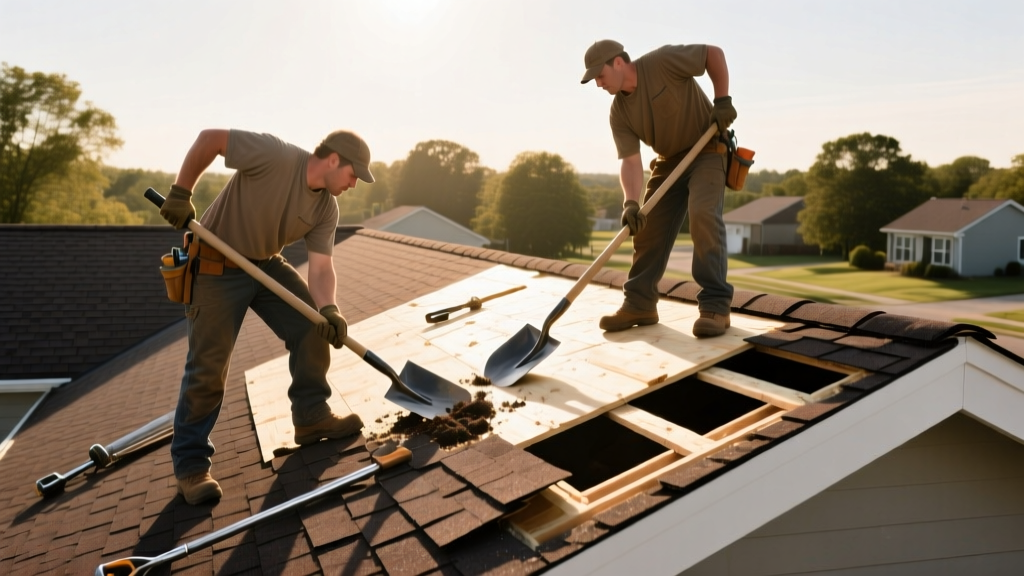
Before considering a roof overlay (installing new material over the old), contractors must evaluate local building codes and structural load capacities. The International Residential Code (IRC) explicitly restricts the number of roof coverings permitted on a structure. According to IRC Section R907.3, a complete tear-off is legally required if the existing roof has two or more applications of any type of roof covering.
Even if local codes permit a second layer, structural engineers often mandate roofing material removal due to dead load limits. Standard asphalt shingles weigh 250–400 lbs per square (100 sq ft). Adding a second layer increases the dead load significantly. In regions with heavy snow loads, this added weight can cause roof truss deflection or catastrophic collapse. Always verify the truss engineering specifications before opting against a tear-off.
Diagnostic Framework: Assessing End-of-Life Degradation
Identifying the exact failure mode requires a systematic inspection. Different materials exhibit unique symptoms when they cross the threshold from repairable to requiring total removal.
Asphalt Shingles: Mat Exposure and Sealant Failure
Asphalt shingles rely on ceramic granules to shield the underlying asphalt from UV radiation. When granules wash away, the asphalt bakes, losing its volatile oils and becoming brittle. If an inspection reveals widespread fiberglass mat exposure or if the shingles crack when gently bent (a sign of failed ASTM D7158 wind resistance standards), the roof has reached the end of its lifespan. Furthermore, if the factory-applied thermoplastic sealant strips have lost adhesion across more than 15% of the roof field, wind uplift will inevitably cause mass shingle loss, making spot repairs futile.
Metal Roofing: Fastener Fatigue and Galvanic Corrosion
While metal panels can last over half a century, the fasteners and neoprene washers often fail much sooner. In corrugated or exposed-fastener metal roofs, thermal expansion and contraction cause screws to back out over time, compromising the watertight seal. If a roof exhibits widespread fastener back-out, stripped screw holes in the purlins, or galvanic corrosion where dissimilar metals (like aluminum flashings against steel panels) meet without dielectric separation, complete roofing material removal is necessary to replace the compromised substrate and upgrade to concealed-clip standing seam systems.
Single-Ply Membranes: Plasticizer Loss and Seam Delamination
Commercial flat roofs utilizing TPO or PVC membranes degrade through plasticizer migration. Over decades, the chemicals that keep the membrane flexible leach out, causing the material to stiffen and crack under thermal shock. For EPDM roofs, the primary failure point is the adhesive or tape used at the seams. If a core sample reveals moisture trapped within the polyiso insulation board below the membrane, a simple re-cover is impossible; the entire assembly must be torn off down to the structural deck to prevent rot and mold proliferation.
2026 Cost Matrix for Roofing Material Removal
The cost of roofing material removal varies drastically based on material weight, pitch, and local landfill tipping fees. As of 2026, inflation and stricter environmental regulations regarding Construction and Demolition (C&D) debris have pushed disposal costs higher. The following matrix provides average national pricing per square (100 sq ft) for complete tear-off, including labor, heavy-duty debris bags, and standard dump fees.
| Material Type | Avg. Weight per Square | Tear-Off Labor Cost | Disposal / Tipping Fees | Total Removal Cost / Sq |
|---|---|---|---|---|
| Asphalt Shingles (1 Layer) | 250 - 350 lbs | $90 - $130 | $40 - $75 | $130 - $205 |
| Asphalt Shingles (2 Layers) | 500 - 700 lbs | $140 - $190 | $80 - $150 | $220 - $340 |
| Metal Panels / Standing Seam | 50 - 120 lbs | $120 - $180 | $20 - $40 (Scrap value offsets) | $100 - $160 |
| Clay / Concrete Tile | 900 - 1,200 lbs | $350 - $500 | $150 - $250 | $500 - $750 |
| Built-Up Roof (BUR) / Tar | 800 - 1,000 lbs | $250 - $400 | $100 - $180 | $350 - $580 |
Note: Homes built before 1980 may contain asbestos in roofing felts, flashings, or mastic. Asbestos abatement requires licensed professionals and can add $800 to $2,500+ per square to the removal cost. Always consult the CDC/NIOSH guidelines on asbestos before disturbing older roofing materials.
Sustainable Disposal and C&D Recycling
Roofing tear-offs generate millions of tons of waste annually. However, complete removal does not have to mean total landfill reliance. According to the EPA's data on Construction and Demolition debris, asphalt shingles are highly recyclable. Recycled Asphalt Shingles (RAS) are routinely processed and used in hot-mix asphalt for road paving. When planning your roofing material removal, seek out contractors who partner with local shingle recycling facilities. Not only does this divert waste from landfills, but it can also reduce the contractor's tipping fees, savings that are often passed on to the homeowner. Metal roofing is nearly 100% recyclable, and contractors will typically salvage and sell steel or aluminum tear-offs, further offsetting labor costs.
Decision Matrix: Overlay vs. Complete Tear-Off
Use this rapid diagnostic framework to determine if your project requires full roofing material removal or if an overlay is a viable, code-compliant option.
- Choose Complete Tear-Off If:
- The roof already has two or more layers of existing material.
- There are signs of decking rot, soft spots, or interior water stains indicating trapped moisture.
- The existing roof is wood shake, slate, or clay tile (overlays are structurally and physically incompatible).
- The roof deck exhibits severe sagging or structural deflection.
- You are upgrading to a heavier material (e.g., switching from asphalt to synthetic slate) and need to inspect/reinforce the trusses.
- An Overlay May Be Acceptable If:
- The existing roof is a single layer of architectural shingles lying completely flat.
- The roof deck is structurally sound (verified by walking the attic and checking for deflection).
- Local building codes explicitly permit a second layer.
- There is no existing moisture damage, mold, or compromised underlayment.
Ultimately, while an overlay saves money on day-one roofing material removal costs, a complete tear-off provides a clean substrate, allows for the installation of modern synthetic underlayments and ice-and-water shields, and ensures the manufacturer's warranty remains fully valid. Prioritizing a tear-off at the end of a material's lifespan is the only way to guarantee the next roofing system achieves its maximum durability potential.
Written by
Elena RodriguezElena Rodriguez is a civil engineer and technical writer specializing in concrete technology, masonry systems, and ASTM/ACI compliance. She earned her B.S. in Civil Engineering from Texas A&M University and spent a decade at a materials testing laboratory, performing over 2,000 concrete compressive strength tests and masonry prism evaluations. Elena is an ACI-certified Field Testing Technician (Grade I) and a member of ASTM Committee C12 on Natural Building Stone. She currently consults on forensic engineering cases involving concrete failures and moisture intrusion. Based in San Antonio, TX, Elena is a proud member of the Society of Women Engineers (SWE) and coaches her daughter's FIRST Robotics team.
More from Elena Rodriguez
View all
Walls & Panels
Cost Analysis: Light Gauge Steel Framing Advantages and Disadvantages
Evaluate light gauge steel framing advantages and disadvantages through a strict cost analysis lens, comparing material, labor, and lifecycle expenses.
Aug 4, 2026

Walls & Panels
Gypsum Board Types: Exact Specifications, Thickness & Dimensions
Compare standard, Type X, and moisture-resistant gypsum board types. Get exact specifications, thicknesses, dimensions, and ASTM standards for your project.
Aug 4, 2026

Fire Resistance
Best Fire-Resistant Outdoor Decking Materials: 2026 Buyer Guide
Discover the best fire-resistant outdoor decking materials for 2026. Compare Class A PVC, aluminum, and hardwood options for WUI compliance and safety.
Aug 4, 2026