Roll On Roofing Material Guide: MSR vs Mod-Bit vs Liquid Coatings
Compare roll on roofing materials for low-slope roofs. We analyze MSR asphalt, modified bitumen, and liquid silicone coatings for cost and lifespan.

Defining the 'Roll On' Roofing Category
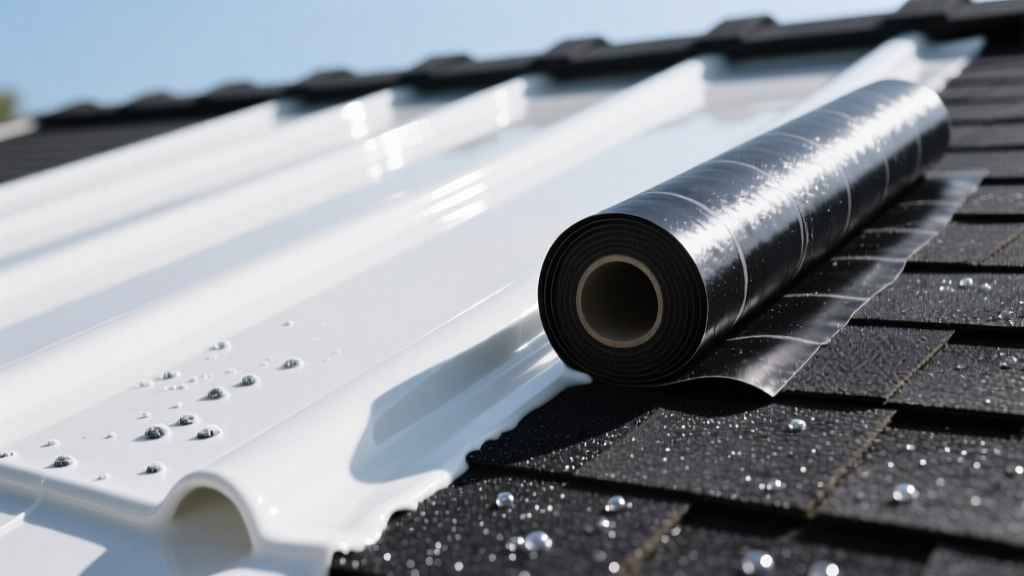
The term roll on roofing material is frequently used by contractors and DIYers to describe any low-slope or flat roofing system that arrives in cylindrical rolls or is applied via a roller. However, grouping these materials together masks massive differences in chemical composition, weather resistance, and installation methodology. In 2026, the market is dominated by three distinct roll-based systems: Mineral Surfaced Roll Roofing (MSR), Self-Adhered Modified Bitumen, and Liquid Roll-On Membrane Coatings. Selecting the wrong system for your specific roof pitch and climate is the primary cause of premature membrane failure.
Quick Comparison Matrix: Cost, Lifespan, and Tolerances
| Material Type | Material Cost (per sq. ft.) | Expected Lifespan | Ponding Water Tolerance | Minimum Roof Pitch |
|---|---|---|---|---|
| Asphalt MSR (Mineral Surfaced) | $0.65 - $1.20 | 5 - 10 Years | Poor (Degrades rapidly) | 2:12 (Inches per foot) |
| Modified Bitumen (SBS Peel-and-Stick) | $2.50 - $4.10 | 15 - 20 Years | Moderate | 1:4 (Low-slope) |
| Liquid Silicone Roll-On Coating | $1.80 - $3.50 | 20+ Years (with maintenance) | Excellent (Impervious) | Flat (0:12) to Steep |
Mineral Surfaced Roll Roofing (MSR): The Budget Utility Option
MSR is essentially an asphalt shingle manufactured in a continuous 36-inch wide, 33-foot long roll, covering exactly one roofing square (100 sq. ft.). Governed by ASTM D224 standards, it features a fiberglass or organic mat saturated in asphalt and topped with ceramic-coated mineral granules.
Technical Specifications and Installation
- Dimensions: 36" x 33' (108 sq. ft. total, allowing for 2" side laps and 4" end laps to yield 100 sq. ft. coverage).
- Fastening: Requires 1-inch galvanized roofing nails spaced 12 inches on center along the edges, or a cold-process asphalt adhesive for concealed-nail applications.
- Best Use Case: Sheds, detached garages, barns, and temporary structures where a 2:12 or greater pitch exists to ensure rapid water runoff.
Modified Bitumen (Self-Adhered): The Heavy-Duty Membrane
When professionals refer to high-grade roll roofing, they are usually discussing Modified Bitumen. Specifically, SBS (Styrene-Butadiene-Styrene) modified bitumen utilizes a synthetic rubber polymer that gives the asphalt extreme elasticity and cold-weather flexibility. Unlike traditional torch-down APP systems, modern self-adhered (peel-and-stick) rolls like GAF Liberty or Henry Pro-Grade eliminate the fire hazard of open-flame installation.
Why SBS Outperforms Standard Asphalt
Standard asphalt becomes brittle below 40°F (4°C) and softens above 140°F (60°C). SBS polymers expand the operational temperature range, allowing the membrane to stretch during thermal shock without tearing at the fastener points. A standard two-ply SBS system consists of a smooth base sheet mechanically fastened to the decking, followed by a granular cap sheet adhered via a factory-applied butyl adhesive strip.
"The secret to a 20-year modified bitumen roof isn't the cap sheet; it's the primer. Applying an ASTM D41 asphalt primer to the substrate before laying the base sheet increases peel adhesion strength by over 40%, preventing wind uplift failures at the perimeter."
Liquid Roll-On Coatings: Silicone vs. Acrylic
Liquid coatings are applied using a heavy-nap roller or airless sprayer, curing into a seamless, monolithic membrane. This category is split into two distinct chemistries, and confusing them is the most costly mistake in flat roof restoration.
100% Silicone (e.g., Henry 887 Tropi-Cool, Gaco Western)
Silicone is moisture-cured and chemically inert. It is the only roll-on liquid coating that can withstand indefinite ponding water. According to the Department of Energy's Cool Roof guidelines, white silicone coatings also reflect up to 90% of solar radiation, drastically reducing cooling loads in commercial buildings. It requires no primer on most single-ply membranes (TPO/EPDM) and remains permanently flexible.
Cost Factor: High upfront material cost ($3.00+ per sq. ft.), but eliminates the need to tear off existing roofing, saving thousands in landfill and labor fees.
Acrylic and Polyurethane Hybrids
Acrylics are water-based and highly UV resistant, but they will re-emulsify and wash away if subjected to ponding water for more than 48 hours. They must only be used on roofs with positive drainage (minimum 1/4" per foot slope). Acrylics are best suited for steep-slope metal roof restorations or sloped concrete tile sealing.
Substrate Preparation: The Hidden Cost Driver
The longevity of any roll on roofing material is dictated by the deck beneath it. Budgeting must account for substrate remediation:
- Moisture Scanning: Use a non-destructive Tramex moisture meter to map wet insulation. Trapped moisture will vaporize under summer sun, causing 12-inch blisters in MSR and Mod-Bit systems.
- Fastener Back-Out: On existing metal roofs receiving a liquid roll-on coating, all exposed screws must be tightened and encapsulated with a mastic and polyester mesh detail coat before the main roller application.
- Tapered Insulation: If applying a liquid coating over a flat roof with negative drainage, install tapered polyisocyanurate (ISO) insulation boards to create a minimum 1/8" per foot slope toward the scuppers.
Failure Mode Analysis: What Goes Wrong in Year 3?
Understanding how these materials fail informs your purchasing decision. The National Roofing Contractors Association (NRCA) identifies the following primary failure modes for roll-based systems:
- MSR Alligatoring: UV radiation oxidizes the asphalt binder, causing the surface to crack in a pattern resembling alligator skin. Once the mat is exposed, leaks are imminent. Fix: Apply an aluminum roof coating annually to reflect UV rays.
- Mod-Bit Seam Shrinkage: If the side laps on peel-and-stick mod-bit are not rolled with a 75-lb weighted seam roller immediately after application, microscopic air channels remain. Freeze-thaw cycles will pry these laps open. Fix: Mandatory use of a heavy seam roller and lap cement on all T-joints.
- Silicone Dirt Pick-Up: Silicone is slightly tacky and attracts airborne dirt and pollen, which can reduce its solar reflectance index (SRI) over time. Fix: Specify a 'high-solids' silicone formulated with dirt-shedding fluoropolymers, or plan for a low-pressure power wash every 5 years.
Final Procurement Framework
Choose MSR only for pitched, unheated outbuildings where budget is the absolute primary constraint. Choose Self-Adhered Modified Bitumen for residential low-slope additions, porches, and balconies where a granular, shingle-like aesthetic and puncture resistance are required. Choose Liquid Silicone Roll-On Coatings for large commercial flat roofs, aged EPDM/TPO restorations, or any surface prone to ponding water where a seamless, tear-off-free application is desired.
Written by
James ThorntonJames Thornton is a construction industry veteran with 25 years of hands-on experience in wood framing, lumber grading, and residential building codes. He started as a framing carpenter in rural Oregon, earned his ICC Residential Building Inspector certification, and eventually became a senior plan reviewer for the City of Portland Bureau of Development Services. James holds a B.S. in Wood Science & Technology from Oregon State University and is a certified lumber grader through the West Coast Lumber Inspection Bureau (WCLIB). He has inspected over 3,000 residential construction sites and authored the city's internal guide on advanced framing techniques (2x6 at 24" O.C.). James lives in Bend, OR, where he builds custom timber-frame cabins and competes in lumberjack sports.
More from James Thornton
View all
Insulation
Best Home Insulation Materials: Complete 2026 Guide
Compare top home insulation materials for 2026. Find R-values, installed costs per square foot, and best uses for fiberglass, spray foam, and mineral wool.
Aug 4, 2026

Sustainable Building
Certify Your Green Building Material for LEED and WELL
Step-by-step guide to certifying a green building material for LEED v5 and WELL v2. Master EPDs, HPDs, and VOC limits for 2026 project specifications.
Aug 4, 2026

Stone & Masonry
Veneer Stacked Stone Panels: Interior Design & Style Showcase
Discover how veneer stacked stone panels transform interiors. Explore modern design profiles, material pairings, and technical installation specs.
Aug 4, 2026