Roof Fascia Lifespan: Durability Analysis & Material Failure Modes
Compare roof fascia durability across wood, aluminum, vinyl, and fiber cement. Discover lifespans, failure modes, and maintenance costs.
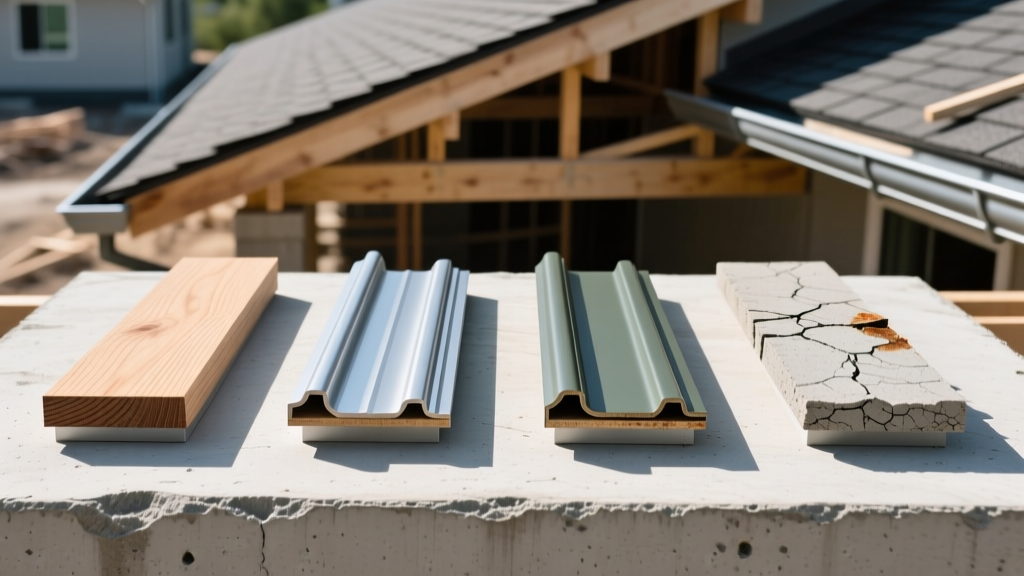
The Structural Reality of Roof Fascia
Roof fascia is frequently misclassified as a purely cosmetic trim element. In reality, it serves as the primary structural bridge between the roof edge and the gutter system, while simultaneously acting as the critical barrier against wind-driven rain entering the soffit and attic cavity. When fascia fails, the resulting moisture intrusion compromises the roof decking, truss tails, and interior ceilings. Understanding the material-specific failure modes and true lifespans of fascia systems is essential for long-term building envelope integrity.
This analysis evaluates the four dominant fascia materials—wood, aluminum, cellular PVC, and fiber cement—breaking down their expected lifespans, environmental vulnerabilities, and the specific installation tolerances that dictate their longevity.
Material Lifespan & Durability Matrix
The following matrix outlines the baseline performance characteristics of standard fascia materials under normal environmental conditions. Lifespans assume proper installation, including back-priming for wood and appropriate fastener selection.
| Material | Expected Lifespan | Moisture Tolerance | Thermal Expansion | 2026 Avg Installed Cost (per linear ft) |
|---|---|---|---|---|
| Finger-Jointed Pine (Primed) | 12 - 18 Years | Low | Moderate | $5.50 - $8.00 |
| Clear Cedar (Vertical Grain) | 25 - 40 Years | Moderate-High | Low | $11.00 - $16.00 |
| Aluminum (0.024" Coil) | 40 - 50 Years | High (Surface) | High | $7.50 - $12.00 |
| Cellular PVC (e.g., AZEK) | 50+ Years | Very High | High | $9.00 - $14.50 |
| Fiber Cement (e.g., JamesHardie) | 50+ Years | Moderate (Edge Vulnerability) | Very Low | $8.50 - $13.00 |
Deep Dive: Material-Specific Failure Modes
Every fascia material possesses a distinct failure profile. Recognizing these specific vulnerabilities allows builders and homeowners to implement targeted preventative measures.
Wood Fascia: Biological Decay and Coating Failure
Wood remains the most common fascia material in residential construction, primarily due to cost and ease of milling. However, its lifespan is entirely dependent on the protective coating system. The most common failure mode is paint delamination at the end-grains and bottom edges. When moisture wicks into unsealed end-grains, it becomes trapped behind the paint film, causing blistering and eventual fungal decay.
Expert Directive: Never install raw wood fascia. All six sides of the board must be back-primed with an oil-based or high-quality acrylic primer before installation. According to building science principles regarding moisture management, trapping moisture within wood assemblies accelerates rot exponentially. Using clear, vertical-grain cedar naturally resists decay due to its high tannin content and tight grain structure, drastically outperforming painted pine.
Aluminum Fascia: The Hidden Condensation Trap
Aluminum fascia (typically wrapped over existing wood or installed as pre-formed panels) is highly resistant to surface water and biological growth. Its primary failure mode is not the aluminum itself, but hidden condensation and trapped moisture. When warm, moist attic air meets the cold inner surface of the aluminum during winter, condensation forms. If the underlying wood was not properly sealed or if the aluminum is wrapped too tightly without a drainage plane, the trapped water rots the structural wood beneath the metal.
Installing aluminum fascia with electroplated (standard bright) nails guarantees galvanic corrosion. The dissimilar metals will react, causing the nails to rust through the aluminum within 3 to 5 years, leaving rust streaks and compromising the hold. Always use aluminum or hot-dipped galvanized fasteners with aluminum fascia.
Cellular PVC: Thermal Sag and Fastener Pull-Through
Cellular PVC (polyvinyl chloride) is impervious to water absorption and insect damage, making it an exceptional choice for high-humidity climates. However, PVC has a high coefficient of thermal expansion. The primary failure mode is thermal buckling and sagging between fasteners. If installed on a hot day and fastened at standard 24-inch on-center (OC) spacing, the boards will expand and buckle when temperatures drop, or sag under the weight of heavy snow-loaded gutters.
Expert Directive: Limit fastener spacing to a maximum of 16 inches OC. Pre-drill holes slightly larger than the shank diameter to allow for lateral movement, and use stainless steel trim screws with weather-sealing washers rather than standard nails to prevent pull-through during thermal cycling.
Fiber Cement: The Cut-Edge Wicking Vulnerability
Fiber cement offers the rigidity of wood with the rot-resistance of masonry. It does not expand or contract significantly with temperature changes. Its Achilles heel is the uncut edge vulnerability. While the factory-coated surfaces are highly water-resistant, the porous core at cut ends will wick moisture like a sponge if left exposed or improperly sealed, leading to freeze-thaw spalling and delamination of the factory finish.
Every field cut on fiber cement fascia must be immediately sealed with a 100% silicone or high-grade polyurethane sealant, or touched up with the manufacturer's specific color-matched sealant (e.g., ColorPlus touch-up). Never rely on standard latex caulk for end-grain sealing on fiber cement.
Environmental Stressors & Regional Adjustments
The baseline lifespans provided in the matrix assume temperate climates. Regional environmental stressors require material adjustments to prevent premature failure:
- Coastal/Salt-Spray Zones: Aluminum fascia will pit and oxidize rapidly within 1 mile of the ocean unless treated with a Kynar 500 (PVDF) fluoropolymer coating. Cellular PVC or fiber cement are superior choices here. Fasteners must be 316-grade stainless steel.
- High-UV / Arid Climates: Dark-colored PVC and wood fascia will suffer from UV degradation, chalking, and thermal warping. Specify lighter colors or materials with integrated UV inhibitors (like co-extruded PVC) to reflect solar radiation.
- Freeze-Thaw Regions: Fiber cement and wood are highly susceptible to spalling and checking if moisture penetrates the surface and freezes. Ensure a minimum 2-inch clearance between the bottom of the fascia and the roof surface to prevent snow/ice dam back-up.
Installation Tolerances That Dictate Longevity
Material selection is only half the equation; installation geometry determines whether a fascia lasts 15 years or 50. The most critical geometric tolerance is the integration of the roof drip edge.
The metal drip edge must extend over the top edge of the fascia board by a minimum of 1/2 inch to 1 inch. If the drip edge is installed flush with the fascia face, capillary action will draw wind-driven rain directly behind the fascia board, bypassing the gutter entirely and rotting the sub-fascia and truss tails. Always verify this overhang before gutter installation.
Additionally, proper attic ventilation must be maintained. If continuous soffit vents are used, the fascia must not block the intake airflow. Installing a vented fascia or ensuring a 1-inch clearance between the top of the fascia and the roof decking allows critical air intake, preventing attic condensation that can rot the fascia from the inside out. For comprehensive guidelines on moisture and ventilation dynamics, refer to the Building Science Corporation resources on attic assembly management.
Maintenance & Inspection Framework
To maximize the lifespan of any fascia system, implement a bi-annual inspection protocol focusing on the following critical failure indicators:
- Gutter Pitch and Sagging: Gutters pulling away from the fascia indicate fastener failure or sub-fascia rot. Address this immediately before the weight of the water tears the fascia off the truss tails.
- Sealant Joint Degradation: Inspect the miter joints at the corners and the seam where the fascia meets the soffit. Re-caulk with polyurethane sealant if cracking is observed.
- Biological Growth: Green algae or mold on the north-facing fascia indicates chronic moisture retention. While primarily cosmetic on PVC and aluminum, on wood, it signals that the paint film is failing and retaining water. The EPA's guidelines on moisture and mold emphasize that exterior biological growth is a primary indicator of trapped moisture that will inevitably lead to structural decay if unaddressed.
Summary: Selecting the Right System
There is no universal 'best' roof fascia material; there is only the correct material for the specific budget, climate, and maintenance tolerance of the project. Wood offers the lowest upfront cost but demands rigorous maintenance. Aluminum provides a cost-effective, rot-proof surface but hides underlying vulnerabilities. Cellular PVC and fiber cement demand higher initial capital and strict installation tolerances but deliver multi-generational durability with minimal upkeep. By matching the material properties to the environmental stressors and adhering to strict installation geometries, building professionals can eliminate fascia failure as a recurring maintenance liability.